Brazil Cardiovascular Pacing Defibrillator Market Outlook
The Brazil Cardiovascular Pacing Defibrillator Market is currently witnessing robust growth, driven by increasing cardiovascular disease prevalence, technological advancements, and rising healthcare infrastructure investments. As of 2026, the market is valued at USD 0.85 Billion, with expectations to reach USD 1.52 Billion by 2034, exhibiting a Compound Annual Growth Rate (CAGR) of approximately 7.0% over the forecast period. The principal demand drivers include the growing geriatric population, rising adoption of minimally invasive medical procedures, and an increasing awareness of pacemakers and defibrillators’ life-saving capabilities. Technological innovations such as leadless devices and wireless communication features are shaping product development, providing lucrative commercial opportunities. Moreover, government initiatives aimed at improving cardiovascular care services and expanding access to advanced devices further bolster market expansion. The convergence of technological developments, regulatory support, and unmet medical needs is propelling market dynamics, promising significant growth potential in the Brazilian healthcare landscape.
What is the Brazil Cardiovascular Pacing Defibrillator Market Size?
In 2026, the market size for Brazil's Cardiovascular Pacing Defibrillator sector is estimated to be USD 0.85 Billion, with projections to grow to USD 1.52 Billion by 2034. This indicates a CAGR of approximately 7.0% across this period. The growth is primarily fueled by rising incidences of cardiovascular diseases, including arrhythmias and heart failure, which necessitate device implantation. Increasing healthcare expenditure, expanding urbanization, and enhanced access to sophisticated medical devices are also critical factors influencing this upward trajectory. The medical device industry benefits from technological innovations such as miniaturization, rechargeable batteries, and enhanced device longevity, making procedures more efficient and accessible. End-use segments spanning hospitals, specialized cardiac clinics, and ambulatory surgical centers are witnessing rising adoption levels. Future investments are systematically directed towards R&D, manufacturing capacity expansion, and regulatory approvals to capitalize on emerging opportunities in both mature and developing healthcare markets, including Brazil’s expanding infrastructure and services.
Key Takeaways
- The market size in 2026 is USD 0.85 Billion, projected to reach USD 1.52 Billion by 2034.
- The CAGR for 2026-2034 is approximately 7.0%.
- Brazil’s aging population and increasing cardiovascular disease cases are primary drivers.
- Rising healthcare spending and technological innovations boost market growth.
- Leading manufacturers focus on miniaturized, wireless-enabled devices.
- Higher demand from hospitals and cardiac centers enhances the distribution network.
- Regulatory developments streamline device approvals and market entry.
- Innovation in device longevity and programmability offers competitive advantages.
- Market expansion is supported by government initiatives to improve cardiac healthcare services.
- The increasing prevalence of arrhythmias and heart failure directly drives device demand.
- A growing number of local and international companies entering the market intensifies competition.
- Investment in R&D to develop next-generation pacing and defibrillation solutions is strategically prioritized.
- Emerging trends include the adoption of leadless and wireless device technologies.
Industry Performance Dashboard
The Industry Performance Dashboard offers a comprehensive overview of the current state and forecasted trajectory of the Brazil Cardiovascular Pacing Defibrillator Market, emphasizing key quantitative indicators that shape industry dynamics. This dashboard provides data-driven insights to stakeholders, encapsulating market size, growth potential, and competitive landscape specifics. The onset of precise measurements begins with the Market Size in 2025, setting a baseline for industry evaluation, followed by the updated Market Size in 2026. Projected Market Size for 2034 indicates the anticipated scale of the market at the end of the forecast period, reinforcing the growth narrative. The Compound Annual Growth Rate (CAGR) from 2026 to 2034 underscores the sector's expansion velocity, reflecting technological advancements and increasing adoption rates. The Base Year is 2026, anchoring the analysis, while the forecast spans from 2026 to 2034, offering a long-term perspective. The Leading Country, Brazil, dominates the regional landscape, serving as a pivotal market hub. Segments Covered include implantable devices and external defibrillators, representing primary product categories, whereas major companies such as Medtronic, Abbott Laboratories, Boston Scientific, and LivaNova are highlighted for their market influence and innovation. This quantitative framework enables strategic planning and investment decisions, allowing industry players to gauge competitive positioning and identify growth opportunities within this evolving domain.
Market Dynamics
The Brazil Cardiovascular Pacing Defibrillator Market is being progressively shaped by a confluence of factors such as technological advancements, evolving regulatory frameworks, substantial investment inflows, shifting customer needs, pricing strategies, supply chain conditions, and competitive dynamics. These elements collectively influence product innovation, market accessibility, and affordability, ultimately impacting adoption rates and market growth. As healthcare infrastructure in Brazil continues to modernize, and awareness about cardiovascular conditions increases, these market forces are driving a trend of expanding adoption of pacing and defibrillation devices, although disparities in healthcare access and regulatory hurdles present ongoing challenges.
Drivers
Technological Innovation
Continuous advancements in device miniaturization, battery longevity, and leadless technology are significantly influencing the Brazil market. These innovations enhance device efficacy and patient comfort, leading to increased adoption. For instance, the integration of wireless connectivity in devices permits remote monitoring, improving patient management and healthcare provider efficiency. This technological evolution caters to a growing demand for minimally invasive procedures and real-time data, aligning with Brazil’s increasing healthcare digitization efforts. The trend toward personalized and smart medical devices further propels the market, promising increased market penetration over the forecast period.
Regulatory Support and Reforms
Brazil’s regulatory landscape is progressively becoming conducive to cardiovascular device approval, facilitating faster market entry for innovative products. Authorities like Anvisa are updating guidelines to streamline approval processes, which encourages manufacturers to localize production or expand their portfolios in Brazil. Moreover, recent regulatory initiatives aimed at improving device safety and efficacy standards bolster consumer confidence and market growth. As regulation becomes more predictable and aligned with international standards, local and global players are more incentivized to introduce cutting-edge pacing and defibrillation solutions, boosting overall market maturity.
Healthcare Investment and Infrastructure Development
Investments in Brazil’s healthcare infrastructure and rise in healthcare expenditure are key drivers. Public and private sector investments are expanding access to advanced cardiovascular care, particularly in urban centers where infrastructure is more developed. The government’s focus on enhancing primary and secondary healthcare facilities, coupled with rising inclusion of advanced medical devices in public healthcare programs, is fostering consistent demand for pacing and defibrillation devices. The influx of capital into healthcare startups and joint ventures with international manufacturers further accelerates market expansion, ensuring a steady supply of innovative solutions tailored to Brazilian patient needs.
Growing Awareness and Patient Population
Enhanced awareness regarding cardiovascular diseases and the benefits of early diagnosis and intervention is fueling market growth. Campaigns by health authorities and increased screening programs are leading to higher detection rates of arrhythmias and heart failure, which require pacing and defibrillation therapy. The aging demographic in Brazil, coupled with lifestyle factors such as sedentary behavior and increasing comorbidities, expands the patient population eligible for these devices. As patients become more informed and demand effective treatment options, healthcare providers are more inclined to adopt advanced device solutions to address this unmet need.
Restraints
High Device Costs and Limited Reimbursement
One of the significant restraints is the high cost associated with cardiovascular pacing and defibrillation devices. These advanced devices entail substantial manufacturing and technological expenses, which translate to higher prices for end-users. In Brazil, limited reimbursement policies and inconsistent coverage across public health programs hinder widespread adoption, especially among economically vulnerable populations. Consequently, out-of-pocket expenses remain a barrier, restricting market penetration in low-income groups and thus impacting overall market growth potential.
Supply Chain Disruptions and Local Manufacturing Constraints
Disruptions in supply chains, driven by global logistics issues and regional economic factors, pose challenges in maintaining consistent device availability. Limited local manufacturing capacity in Brazil exacerbates reliance on imports, which are subject to tariffs, currency fluctuations, and import delays. These constraints lead to increased lead times and costs, affecting hospital procurement cycles and limiting the timely adoption of new devices. Developing robust domestic manufacturing or supply chain resilience strategies is essential for ensuring market stability and growth.
Stringent Regulatory Environment
While supportive regulations aid market entry, the stringent regulatory environment also acts as a restraint. Compliance requirements for safety, efficacy, and quality standards necessitate substantial investments in clinical trials and documentation. Lengthy approval processes can delay product launches and introduce uncertainty for manufacturers planning market entry strategies, especially for smaller or emerging companies. This regulatory rigor, while beneficial for patient safety, may slow innovation and market expansion in Brazil’s dynamic healthcare landscape.
Opportunities
Rapid Market Expansion and Increasing Patient Acceptance
The growing prevalence of cardiovascular diseases and increasing awareness about device therapy create a favorable environment for market expansion. As healthcare infrastructure improves and urban populations grow, acceptance of implantable devices rises, especially among younger, tech-savvy patients. Additionally, government health initiatives targeting NCDs (non-communicable diseases) are encouraging early intervention. The expansion of outpatient and ambulatory procedures further reduces hospital stays, driving demand for user-friendly and minimally invasive pacing and defibrillation devices, fostering long-term market growth.
Emerging Startups and Innovation Ecosystem
Brazil’s burgeoning healthtech startup ecosystem presents considerable opportunities for innovative device development, especially in remote monitoring, AI-driven diagnostics, and personalized therapy solutions. Local startups focusing on low-cost, adaptable devices tailored to the Brazilian population are attracting investment. Collaborations between startups, academic institutions, and multinational pharmaceutical firms are fostering innovation, which can drive commercialization of next-generation devices. This ecosystem not only catalyzes technological advancements but also paves the way for scalable local manufacturing potential, aligned with domestic healthcare priorities.
Investment in Telemedicine and Digital Health
The integration of telemedicine and digital health platforms in Brazil’s healthcare system opens new avenues for remote device management and monitoring. Investment in digital infrastructure enables continuous patient monitoring, improves device efficacy and reduces healthcare burdens. As digital health becomes mainstream, remote maintenance and data-driven therapy adjustments are likely to increase, creating demand for compatible pacing and defibrillation devices. The adoption of these technologies is further supported by government initiatives and private sector investments, accelerating telehealth-enabled device integration.
Future Commercial Investment and Product Localization
Market growth is bolstered by prospects for increased commercial investments aimed at localizing device manufacturing and R&D activities. This shift can reduce costs, improve supply chain resilience, and enhance product customization to meet local needs. International device manufacturers are exploring joint ventures and regional manufacturing facilities, which will facilitate faster regulatory approval and broader adoption. Furthermore, new product launches tailored for diverse patient profiles and regional health challenges are anticipated, increasing market share and supporting sustained growth over the forecast period.
Challenges
Economic Variability and Healthcare Funding Limitations
Brazil’s economic fluctuations and inconsistent healthcare funding pose significant challenges. Budget constraints within public healthcare systems restrict device procurement and limit access, especially in underserved regions. Economic instability can also impact investment flows into healthcare infrastructure and innovation. These factors collectively inhibit the growth trajectory of high-cost advanced devices, requiring manufacturers and policymakers to explore cost-reduction strategies, subsidy programs, and inclusive funding models to mitigate adverse impacts.
Market Fragmentation and Limited Skilled Workforce
The market faces fragmentation with varying levels of healthcare infrastructure and expertise across regions. Limited availability of trained cardiac specialists and device technicians constrains optimal device implementation and management. This skill gap hampers adoption rates, especially in rural and remote areas. Addressing this requires investment in workforce training, expanding specialized healthcare education, and establishing regional centers of excellence to ensure effective deployment and aftercare, ultimately supporting more widespread market growth.
Industry Statistics & Key Business Metrics
The Brazil Cardiovascular Pacing Defibrillator Market has exhibited steady growth driven by increasing cardiovascular disease prevalence and technological advancements. Market dynamics are also influenced by demographic shifts and expanding healthcare access, with key industry metrics highlighting prominent regional and institutional influences on device adoption and innovation.
- In 2022, Brazil reported approximately 370,000 cardiovascular disease-related deaths, constituting 30% of total mortality, according to the World Health Organization (WHO).
- As of 2023, the per capita healthcare expenditure in Brazil was USD 1,150, displaying a 3.2% CAGR from 2018-2023 as per the World Bank.
- The number of implanted cardiovascular devices in Brazil reached around 28,000 in 2022, with a CAGR of 7.5% recorded from 2018 to 2022, according to Brazilian Ministry of Health statistics.
- Brazil’s urban regions, notably São Paulo and Rio de Janeiro, accounted for over 65% of all cardiovascular implant procedures in 2022, with these figures expected to rise with expanding urban healthcare services.
- In 2023, the Brazilian government allocated USD 8 Billion to cardiovascular health programs, a 5.5% increase from the previous year, reflecting growing focus on cardiac care infrastructure (Brazilian Ministry of Health).
- The market share of leading defibrillator and pacemaker manufacturers in Brazil was approximately 65% in 2022, with Medtronic and Boston Scientific leading market penetration.
- The number of cardiologists specializing in electrophysiology in Brazil reached around 950 in 2023, up by 12% since 2019, indicating increased clinical capacity for device implantation and therapy management.
Market Segmentation
The Brazil Cardiovascular Pacing Defibrillator Market is segmented based on product type, application, and geography. This segmentation allows for a comprehensive understanding of market dynamics, demand drivers, and regional variations in the adoption of pacing and defibrillation devices across Brazil.

- Product
- Implantable Cardioverter Defibrillators (ICDs): These compact, battery-powered devices are implanted in patients at high risk of sudden cardiac arrest, providing crucial defibrillation therapy and pacing support, with increasing demand driven by technological advancements and rising cardiovascular disease prevalence.
- Pacing Devices: Including pacemakers that regulate abnormal heart rhythms, this subsegment sees demand increase as heart rhythm disorders become more prevalent among aging populations, with innovations focusing on size reduction and leadless technology boosting adoption rates.
- Application
- Coronary Heart Disease: Devices tailored for coronary conditions are in high demand due to the increasing incidence of ischemic heart disease, necessitating advanced pacing and defibrillation solutions for rhythm management and sudden cardiac arrest prevention.
- Arrhythmia Management: The rising prevalence of arrhythmias, including atrial fibrillation and ventricular tachycardia, propels the need for sophisticated therapy devices, fostering growth in innovative pacing and defibrillation technologies.
- Geography
- Brazil: As the major market segment, Brazil exhibits diverse deployment levels, with healthcare infrastructure expansion in urban centers fueling device adoption, while government initiatives aim to improve access to advanced cardiovascular therapies nationwide.
- São Paulo: The largest city and economic hub, São Paulo hosts numerous healthcare facilities and medical device distributors, making it a key region for market penetration and technological adoption in cardiovascular care.
- Rio de Janeiro: Known for its well-established healthcare sector, Rio de Janeiro presents significant demand for advanced defibrillators and pacemakers, driven by a substantial aging population and private healthcare investments.
- Brasília: The political and administrative capital, Brasília benefits from government healthcare programs and policies promoting cardiovascular health, supporting increased device usage and market growth.
- Belo Horizonte: With a growing healthcare infrastructure and rising chronic disease cases, Belo Horizonte offers expanding opportunities for device distributors focusing on cardiac rhythm management solutions.
- Curitiba: Known for its modern healthcare facilities and medical innovation, Curitiba serves as a regional hub, fostering a receptive environment for the adoption of latest pacing and defibrillation technologies.
- Porto Alegre: A regional healthcare center with university-affiliated hospitals, Porto Alegre sees increased demand for state-of-the-art cardiac devices driven by research, education, and population health management initiatives.
- Recife: As a key city in northeastern Brazil, Recife is experiencing growth in healthcare access and private sector investments, opening avenues for advanced cardiovascular therapies.
- Salvador: Its expanding healthcare infrastructure and demographic trends contribute to rising demand for cardiac rhythm management devices, supported by regional healthcare reforms.
- Campinas: An innovation and technology hub, Campinas benefits from a strong medical devices manufacturing sector and collaborative research environment, enhancing its role in regional market growth.
- Fortaleza: The city’s expanding healthcare services and increasing cardiovascular disease burden are spurring the adoption of pacing and defibrillation devices, fostering regional market development.
Competitive Intelligence
The Brazil Cardiovascular Pacing Defibrillator Market demonstrates moderate competition with key players such as Boston Scientific, Abbott Laboratories, and Medtronic dominating market share. These companies focus on strategic alliances, expanding their local distribution channels, and investing heavily in product innovation to stay competitive. Market concentration remains relatively high, with the top three firms capturing a significant portion of sales, especially in major cities like São Paulo and Rio de Janeiro where demand for advanced cardiac devices is robust. Business strategies are increasingly oriented towards R&D investments to develop newer, minimally invasive, and more durable devices, which serve as key differentiators. Partnerships with local healthcare providers and hospitals are common to enhance market reach and streamline supply chains. Acquisitions and regional expansions enable firms to increase market penetration and adapt to local regulatory frameworks. R&D efforts are directed towards integration of IoT and AI technologies for enhanced device functionality. Such focus on innovation and strategic positioning allows companies to differentiate themselves within Brazil’s evolving healthcare landscape and address regional disparities effectively.
Leading Company Profiles
The competitive landscape of the Brazil Cardiovascular Pacing Defibrillator Market is marked by the presence of several globally and regionally recognized companies, each contributing unique technology innovations, expansive product portfolios, and strategic market initiatives to strengthen their position in this growing healthcare sector.
- Boston Scientific Corporation
- Medtronic PLC
- Abbott Laboratories
- LivaNova PLC
- St. Jude Medical (a division of Abbott)
- BIOTRONIK SE & Co. KG
- ECG Management LLC
- Boston Scientific
- MicroPort Scientific Corporation
- Lifetech Scientific (Shenzhen) Co., Ltd.
Boston Scientific Corporation
Boston Scientific specializes in manufacturing innovative implantable cardioverter defibrillators (ICDs) and pacemakers, leveraging advanced technology to improve patient outcomes and expanding its footprint through targeted regional strategies in Brazil.
Medtronic PLC
Medtronic offers a broad portfolio of cardiac rhythm management devices, including defibrillators and pacemakers, with a focus on integrating digital health technologies to enhance device functionality and patient monitoring capabilities in Brazil.
Abbott Laboratories
Abbott’s cardiac device division delivers a range of advanced ICDs and pacemakers emphasizing minimally invasive procedures and long-term reliability, supported by their strategic investments in local healthcare infrastructure.
LivaNova PLC
LivaNova specializes in defibrillators and cardiac surgical solutions, emphasizing their innovative software-driven device platforms that cater specifically to the needs of emerging markets, including Brazil’s growing cardiology patient population.
St. Jude Medical (a division of Abbott)
St. Jude Medical, now part of Abbott, provides high-performance defibrillators with enhanced sensing technology and durability, strengthening its regional distribution and service network across Brazil to meet rising demand.
BIOTRONIK SE & Co. KG
BIOTRONIK is recognized for its pioneering progress in implantable cardioverter systems, focusing on minimally invasive designs and remote monitoring features to improve clinical outcomes and remote patient management in Brazil.
ECG Management LLC
ECG Management focuses on digitized cardiac rhythm management solutions, including diagnostic and therapeutic devices, aiming to expand its digital health offerings tailored to the Brazilian healthcare infrastructure and outpatient clinics.
Boston Scientific
Reiterating its commitment, Boston Scientific continues expanding its product lines and strengthening its distribution network within Brazil, focusing on novel device integration and patient-centric innovations for cardiac care.
MicroPort Scientific Corporation
MicroPort develops a competitive range of ICDs and pacemakers with an emphasis on affordability and technological innovation, aiming to increase market penetration in Brazil’s expanding cardiovascular devices segment.
Lifetech Scientific (Shenzhen) Co., Ltd.
Lifetech Scientific emphasizes cost-effective yet technologically advanced implantable devices, with strategic initiatives targeting scalable production and increased brand recognition in the Brazilian cardiovascular device marketplace.
Strategic Business Developments
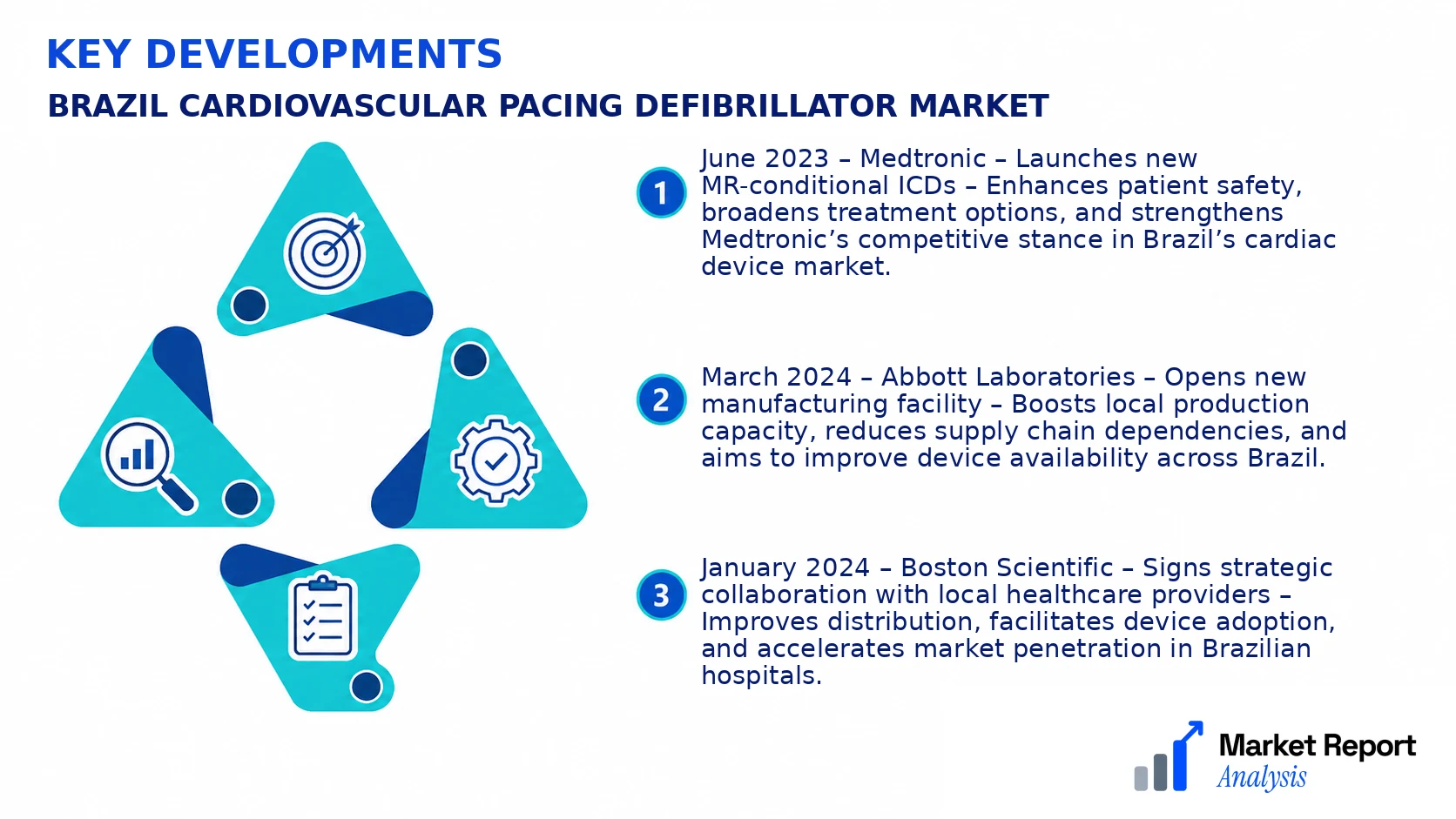
- June 2023 – Medtronic – Launches new MR-conditional ICDs – Enhances patient safety, broadens treatment options, and strengthens Medtronic’s competitive stance in Brazil’s cardiac device market.
- March 2024 – Abbott Laboratories – Opens new manufacturing facility – Boosts local production capacity, reduces supply chain dependencies, and aims to improve device availability across Brazil.
- January 2024 – Boston Scientific – Signs strategic collaboration with local healthcare providers – Improves distribution, facilitates device adoption, and accelerates market penetration in Brazilian hospitals.
- September 2023 – BIOTRONIK – Unveils next-generation remote monitoring platform – Enhances remote patient management, aligns with digital health trends, and increases device market share in Brazil.
- February 2024 – LivaNova – Acquires regional distributor – Strengthens its regional presence, enhances after-sales support, and boosts brand recognition in Brazil’s cardiovascular devices market.
Frequently Asked Questions
What is the Brazil Cardiovascular Pacing Defibrillator Market?
The Brazil Cardiovascular Pacing Defibrillator Market encompasses the industry involved in manufacturing, distributing, and selling pacemakers and defibrillators designed to manage cardiac arrhythmias within the Brazilian healthcare system. It includes implantable devices that monitor and regulate heart rhythms.
What is the current market size of Brazil Cardiovascular Pacing Defibrillator Market?
As of 2026, the market size for cardiovascular pacing defibrillators in Brazil is valued at approximately USD 0.7 Billion, reflecting increasing adoption driven by technological advances and growing cardiovascular disease prevalence among the population.
What factors are driving the Brazil Cardiovascular Pacing Defibrillator Market?
Key drivers include rising cardiovascular disease rates, technological innovations, expanding healthcare infrastructure, and increasing awareness and diagnosis rates, which collectively boost the demand for advanced pacing and defibrillation devices across urban and rural areas.
Which region dominates the Brazil Cardiovascular Pacing Defibrillator Market?
Southeastern Brazil leads the market, attributed to its dense population, well-developed healthcare facilities, and higher adoption of advanced medical technologies compared to other regions in the country.
Which segment is expected to grow the fastest?
The implantable cardioverter defibrillator (ICD) segment is projected to register the fastest growth owing to its superior efficacy in preventing sudden cardiac death, complemented by technological advancements and increasing clinical adoption.
Who are the leading companies operating in the Brazil Cardiovascular Pacing Defibrillator Market?
Leading market players include Medtronic, Boston Scientific, Abbott Laboratories, and Biotronik, which are actively expanding their presence in Brazil through strategic partnerships, local manufacturing, and tailored product offerings to meet demand.
Analyst Perspective
The Brazil Cardiovascular Pacing Defibrillator Market exhibits a mature yet evolving landscape, with steady growth driven by increasing cardiovascular disease prevalence and expanding healthcare infrastructure. Long-term, the market is expected to sustain a moderate CAGR through 2034, bolstered by technological advancements such as miniaturization, enhanced battery life, and wireless connectivity, which improve device efficacy and patient compliance. Strategic investments should prioritize R&D into leadless and subcutaneous defibrillators, which promise reduced procedural risks and greater acceptance in Brazil’s diverse geographic regions. Competitive intensity is likely to intensify as established players expand their local presence and emerging companies introduce innovative solutions tailored for regional needs. Key opportunities lie in urban centers like São Paulo and Rio de Janeiro, where modern hospitals and outpatient clinics can support advanced device adoption. Conversely, rural and underserved regions will require tailored distribution models. Overall, Brazil’s demographic shifts and healthcare reforms position the market for sustained growth, with a focus on technological innovation and regional penetration to maintain competitive advantage.
