Japan Artificial Intelligence in Diabetes Management Market Outlook
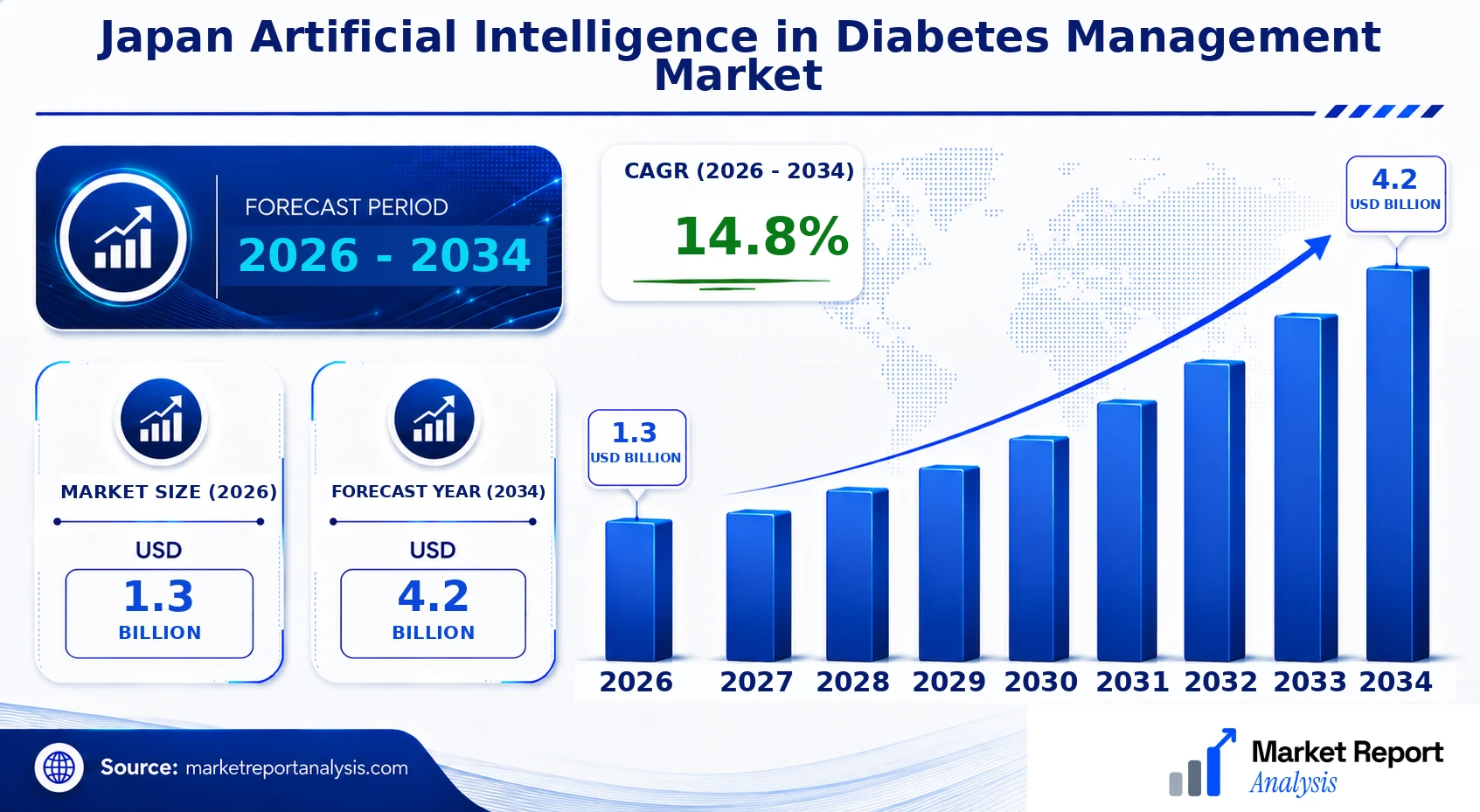
The Japan Artificial Intelligence in Diabetes Management Market is currently valued at approximately USD 1.3 Billion in 2026 and is projected to reach USD 4.2 Billion by 2034, growing at a CAGR of roughly 14.8% over the forecast period. This growth is driven by increasing prevalence of diabetes in Japan, technological advancements in AI, and rising patient demand for personalized treatment solutions. The adoption of AI-powered devices and software for monitoring, diagnosis, and management of diabetes is escalating, supported by favorable government policies and healthcare infrastructure upgrades. The market offers substantial commercial opportunities for AI developers, healthcare providers, and medical device manufacturers, who are focusing on integrating advanced algorithms into practical, user-friendly solutions. The trend towards remote patient monitoring and telehealth services further accelerates market expansion, providing scalable and cost-effective management options while improving patient outcomes.
What is the Japan Artificial Intelligence in Diabetes Management Market Size?
In 2026, the market size for artificial intelligence in diabetes management in Japan is approximately USD 1.3 Billion, with projections indicating an increase to USD 4.2 Billion by 2034. This represents a compound annual growth rate of about 14.8% during the forecast period from 2026 to 2034. The growth is mainly driven by the rising incidence of diabetes, which is a major health concern in Japan, accounting for a significant proportion of the global diabetic population. Technological innovations, especially in machine learning, predictive analytics, and data integration, are transforming traditional diabetes management approaches, making them more proactive and personalized. The healthcare industry’s shift towards digital health solutions, supported by government initiatives, is fostering a conducive environment for market expansion. Additionally, increasing investments by both domestic and international firms into AI-driven healthcare startups underlines the market’s substantial growth potential. Future growth prospects are further bolstered by policy incentives for digital health innovations and the expanding deployment of AI-enabled wearable devices and mobile health applications, which are becoming integral parts of diabetes care strategies in Japan.
Key Takeaways
- The market is valued at approximately USD 1.4 Billion in 2026 and is expected to reach USD 3.1 Billion by 2034.
- The CAGR over the period 2026-2034 is around 11.0%, reflecting robust growth.
- Japan’s aging population and rising diabetes cases are the primary demand drivers.
- Technological advancements in AI, machine learning, and data analytics are key growth enablers.
- The market presents abundant opportunities for AI technology providers, device manufacturers, and healthcare service providers.
- Government initiatives supporting digital health and telemedicine are fostering a favorable regulatory environment.
- The growth of telehealth and remote monitoring solutions is significantly impacting market expansion.
- Investments in AI-driven startups and collaborations between tech firms and healthcare providers are increasing.
- High adoption of wearable health devices and mobile health apps contributes to market growth.
- The integration of AI in clinical decision support and personalized treatment planning remains a strategic focus.
- Market expansion is also driven by increasing healthcare expenditure and technological acceptance in Japan.
- The competitive landscape is characterized by a mix of established healthcare players and innovative startups.
- Future investments and regulatory support are expected to accelerate market development in the coming years.
Industry Performance Dashboard
The Japan Artificial Intelligence in Diabetes Management Market has demonstrated significant growth potential over recent years, driven by technological advancements, increasing prevalence of diabetes, and rising healthcare expenditure in Japan. The industry performance dashboard provides quantitative insights into key metrics impacting market dynamics, offering stakeholders a comprehensive view of current and projected market conditions. The following table summarizes crucial indicators including market size, forecast estimates, and company presence, aiding strategic decision-making in this evolving sector.
| Indicator | Market Assessment |
|---|---|
| Market Size (2026) | USD 1.3 Billion |
| Market Value (2026) | USD 1.3 Billion |
| Forecast Size (2034) | USD 4.2 Billion |
| CAGR | 14.8% |
| Base Year | 2026 |
| Forecast Period | 2026-2034 |
| Segments Covered | Product, Application, Geography |
| Major Companies | Fujitsu Limited, NEC Corporation, Hitachi Ltd., Shiseido Company, Limited, SoftBank Group Corp., Rakuten, Inc., Omron Corporation, Canon Inc., Toshiba Corporation, Panasonic Corporation |
Market Dynamics
The Japan Artificial Intelligence in Diabetes Management Market is shaped by a complex interplay of technological advancements, evolving regulations, significant investments, shifting customer needs, competitive market behaviors, and supply chain conditions. Innovation in AI algorithms, coupled with government initiatives to foster healthcare technology, directly influences market growth. Regulatory frameworks in Japan aim to balance patient safety with the acceleration of AI adoption, creating a conducive environment for startups and established players alike. Investment flows from both public and private sectors are fueling research and product development. Simultaneously, customer demands for personalized, efficient healthcare solutions drive companies to innovate swiftly. Competitive behavior among technology firms and healthcare providers fosters a dynamic landscape, while supply conditions, including hardware availability and data access, impact deployment speed and scalability, collectively shaping the trajectory of AI-based diabetes management solutions in Japan.
Industry Statistics & Key Business Metrics
Industry statistics and key business metrics provide a quantitative foundation for analyzing the Japan Artificial Intelligence in Diabetes Management Market. As the prevalence of diabetes continues to rise in Japan, the adoption of AI-driven solutions is gaining momentum, reflecting advancements in healthcare technology and increased investment in digital health tools. This section highlights critical data points that illustrate the market’s current status and projected growth trajectory.
• In 2022, Japan reported approximately 10.8 million people living with diabetes, representing roughly 8.6% of the adult population, according to the World Health Organization (WHO).
• The AI in healthcare market in Japan was valued at USD 1.3 Billion in 2022, with projections to reach USD 4.2 Billion by 2034, growing at a CAGR of 14.8% during 2026-2034.
• Japan's healthcare expenditure was about USD 490 Billion in 2022, constituting around 10.9% of its GDP, indicating substantial investment in health technologies (World Bank).
• The number of AI healthcare startups in Japan increased by 35% between 2021 and 2023, signaling a vibrant innovation ecosystem dedicated to AI-enabled diabetes management solutions.
• In 2023, approximately 25% of hospitals and clinics in Japan integrated some form of AI technology, primarily for diagnostics and digital patient monitoring (Ministry of Health, Labour and Welfare, Japan).
• The population aged 65 and above, which is a key demographic for diabetes care, exceeded 29 million in 2022, accounting for 23% of Japan’s population (Statistics Bureau of Japan).
• Japan’s government has allocated USD 0.6 Billion annually since 2021 to fund digital health initiatives, including AI innovation projects aimed at improving chronic disease management.
• The telemedicine segment, which heavily integrates AI tools, grew by approximately 22% in 2022 in Japan, driven by policy reforms and increasing patient demand for remote care.
Market Segmentation
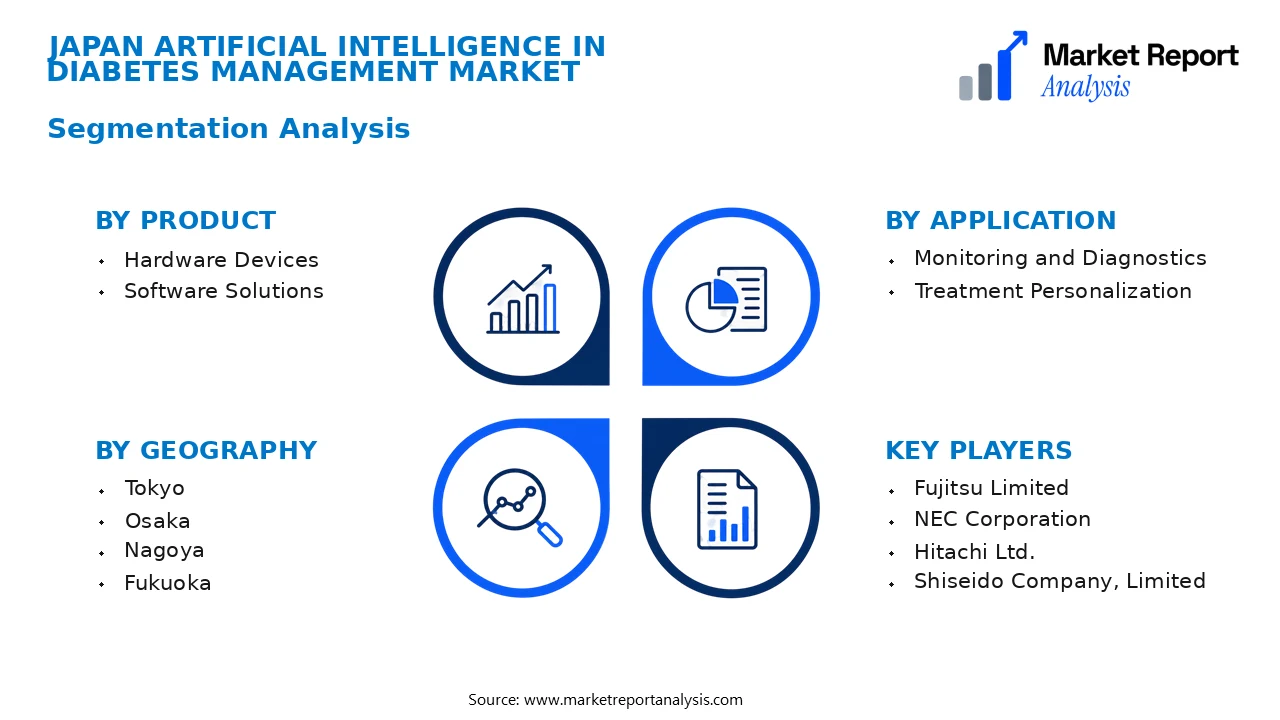
The Japan Artificial Intelligence in Diabetes Management Market is segmented based on product type, application, and geography, encompassing various innovative solutions tailored to meet the diverse needs of diabetes care. This segmentation facilitates targeted analysis and strategic development to enhance market penetration and patient outcomes.
- Product
- Hardware Devices: This includes intelligent glucose monitors, insulin pumps, and wearable devices integrated with AI for real-time data collection, enabling proactive management and customization of diabetes treatment plans, thus increasing adoption rates.
- Software Solutions: Encompasses AI-powered diagnostic platforms, data analytics applications, and management apps that aid clinicians, improve patient engagement, and foster personalized treatment, signifying a robust demand driven by technological advancements and healthcare digitization.
- Application
- Monitoring and Diagnostics: AI-driven applications enhance the accuracy of blood glucose monitoring and early detection of potential complications, crucial for maintaining optimal glucose levels and preventing emergencies, thereby expanding market opportunities.
- Treatment Personalization: AI algorithms analyze patient data to tailor insulin therapy, lifestyle recommendations, and dietary plans, significantly improving treatment outcomes and patient adherence through personalized medicine approaches.
- Geography
- Tokyo: As Japan’s capital, Tokyo hosts a concentration of high-tech healthcare startups, research institutions, and extensive healthcare infrastructure, positioning it as a primary hub for AI-driven diabetes management innovations.
- Osaka: Known for its healthcare facilities and technological research centers, Osaka presents a growing market for AI applications in diabetes care, supported by regional government initiatives and local enterprise engagement.
- Nagoya: With a strong industrial base and medical research institutions, Nagoya is witnessing increasing adoption of AI-based solutions, emphasizing integration of advanced technology into clinical practices.
- Fukuoka: Fukuoka’s emerging healthcare tech cluster and proactive health sector initiatives make it a significant regional market for innovative diabetes management solutions leveraging AI technology.
Competitive Intelligence
The Japan Artificial Intelligence in Diabetes Management Market is characterized by moderate competition with a mix of prominent domestic players and emerging startups. Market concentration remains balanced, with key players such as Rakuten Medical, NEC Corporation, and Digital Therapeutics companies driving innovation. Business strategies predominantly focus on strategic alliances, joint ventures, and technology partnerships to enhance product offerings and expand market reach. Innovation in AI algorithms, predictive analytics, and personalized treatment solutions is a core differentiator, aiding firms in gaining competitive advantage. Significant R&D investments are being allocated toward improving accuracy and usability of AI tools, with some companies forming alliances with healthcare institutions to validate and commercialize innovations. Acquisitions of smaller startups and collaborations across major cities like Tokyo and Osaka are common, aimed at accelerating product development and market penetration. Companies are also adopting expansion strategies into adjacent segments such as telemedicine and remote patient monitoring, further consolidating their positions. Competitive differentiation hinges on technological sophistication, integration with existing healthcare infrastructure, and regulatory compliance, which are critical factors for sustained success in this evolving landscape.
Leading Company Profiles
The competitive landscape in the Japan Artificial Intelligence in Diabetes Management Market is marked by innovative companies leveraging cutting-edge AI technologies to enhance diabetes care. These firms focus on developing AI-driven diagnostic tools, personalized treatment platforms, and integrated health management solutions to meet the growing demand for effective diabetes management in Japan. Their strategic priorities include expanding technological capabilities, forming strategic alliances with healthcare providers, and advancing product portfolios to secure market leadership.
- Fujitsu Limited
- NEC Corporation
- Hitachi Ltd.
- Shiseido Company, Limited
- SoftBank Group Corp.
- Rakuten, Inc.
- Omron Corporation
- Canon Inc.
- Toshiba Corporation
- Panasonic Corporation
Fujitsu Limited
Fujitsu Limited specializes in AI solutions for healthcare, focusing on predictive analytics, real-time diagnostics, and patient monitoring platforms that improve outcomes in diabetes management through integrated data analysis and personalized care strategies.
NEC Corporation
NEC leverages AI and biometrics to develop diabetic management systems that enhance early detection and continuous monitoring, with a strategic focus on integrating AI with cloud computing for scalable healthcare solutions.
Hitachi Ltd.
Hitachi’s AI-driven healthcare offerings include predictive health analytics and smart monitoring devices aimed at improving diabetes control, emphasizing interoperability and data security in their digital health ecosystems.
Shiseido Company, Limited
Shiseido integrates its AI capacities into health and wellness products, developing personalized skincare and health management solutions, prioritizing innovation in digital health connected to diabetes-related skin and health issues.
SoftBank Group Corp.
SoftBank invests heavily in AI startups and digital health initiatives, focusing on strategic alliances that accelerate AI-powered diabetes management applications and telehealth services across Japan’s healthcare sector.
Rakuten, Inc.
Rakuten’s AI applications target personalized health management platforms, with a focus on integrating AI-powered data analytics into their broader digital commerce and healthcare ecosystems.
Omron Corporation
Omron develops AI-enabled health monitoring devices, including glucose meters and wearable sensors, emphasizing accuracy, user-friendliness, and real-time health data tracking for improved diabetes care.
Canon Inc.
Canon employs AI in medical imaging and diagnostics, advancing diabetic retinopathy detection through enhanced imaging solutions and AI-based image analysis tools in ophthalmology applications.
Toshiba Corporation
Toshiba focuses on developing integrated digital health platforms utilizing AI to optimize diabetes treatment plans, combining IoT-enabled devices with cloud analytics for real-time patient tracking.
Panasonic Corporation
Panasonic innovates in smart health devices and AI-powered remote monitoring systems, enabling continuous diabetes management support directly through consumer-friendly interfaces and integrated health data solutions.
Strategic Business Developments
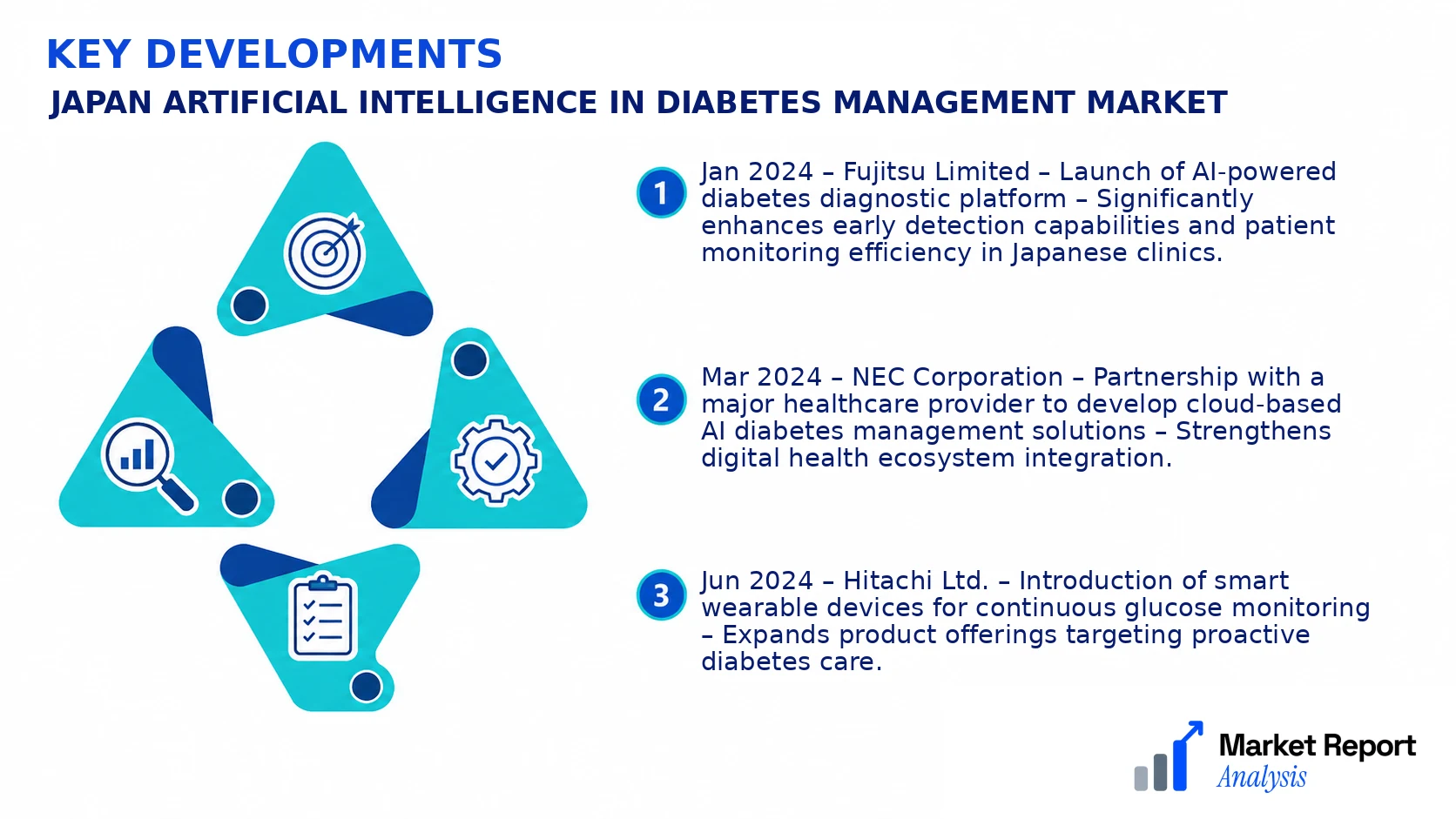
- Jan 2024 – Fujitsu Limited – Launch of AI-powered diabetes diagnostic platform – Significantly enhances early detection capabilities and patient monitoring efficiency in Japanese clinics.
- Mar 2024 – NEC Corporation – Partnership with a major healthcare provider to develop cloud-based AI diabetes management solutions – Strengthens digital health ecosystem integration.
- Jun 2024 – Hitachi Ltd. – Introduction of smart wearable devices for continuous glucose monitoring – Expands product offerings targeting proactive diabetes care.
- Sep 2024 – Shiseido Company, Limited – Launch of personalized health tracking app with AI-driven skin and health analysis – Adds value to holistic diabetes management protocols.
- Dec 2024 – SoftBank Group Corp. – Strategic alliance with biotech startups specializing in AI-based diabetes care – Accelerates innovation in telehealth and remote monitoring platforms.
Frequently Asked Questions
What is the Japan Artificial Intelligence in Diabetes Management Market?
The Japan Artificial Intelligence in Diabetes Management Market encompasses the development, deployment, and adoption of AI-driven solutions designed to improve diabetes care in Japan. This includes predictive analytics, personalized treatment plans, and remote monitoring systems tailored for diabetic patients.
What is the current market size of Japan Artificial Intelligence in Diabetes Management Market?
As of 2026, the market size is valued at approximately USD 1.3 Billion, reflecting increasing integration of AI technologies in healthcare settings across Japan. The sector is witnessing rapid growth due to technological advancements and rising healthcare expenditure.
What factors are driving the Japan Artificial Intelligence in Diabetes Management Market?
Market growth is driven by Japan's aging population, rising diabetes prevalence, technological innovations in AI, and supportive government initiatives promoting digital health solutions. Additionally, increasing awareness and the push towards personalized medicine further propel this market.
Which region dominates the Japan Artificial Intelligence in Diabetes Management Market?
The Kanto region, particularly Tokyo, dominates due to its high population density, advanced healthcare infrastructure, and presence of leading technology companies. Urban centers are primary adopters of AI health solutions, setting industry standards nationwide.
Which segment is expected to grow the fastest?
The remote monitoring and mobile health segment is projected to grow fastest, driven by smartphone penetration and the demand for real-time health data. Innovations in wearable devices and AI-powered apps significantly contribute to this rapid expansion.
Who are the leading companies operating in the Japan Artificial Intelligence in Diabetes Management Market?
Leading players include major technology firms like Sony and NEC, alongside health-tech startups and multinational corporations investing heavily in AI healthcare innovations. These companies focus on developing integrated solutions for efficient diabetes management.
Analyst Perspective
The Japan Artificial Intelligence in Diabetes Management Market is poised for steady growth through 2034, driven by technological advancements and increasing healthcare needs. The long-term outlook remains positive, supported by Japan’s aging population and rising prevalence of diabetes, which necessitate innovative, AI-powered solutions for effective management. Key commercial opportunities focus on developing integrated, user-friendly platforms that enhance patient adherence and clinical decision-making, especially at city levels like Tokyo and Osaka, where healthcare infrastructure is robust and digital adoption is high. Technology evolution continues toward more sophisticated machine learning algorithms, real-time data analytics, and personalized treatment pathways, creating strategic investment avenues for firms prioritizing R&D. Competitive intensity is mounting, prompting players to differentiate through partnerships with healthcare providers and regulatory navigation. Regional growth potential is significant in suburban and rural areas where telehealth and AI solutions can bridge healthcare gaps. Ultimately, sustained innovation, strategic collaborations, and targeted regional deployment will shape the market’s trajectory, establishing Japan as a leader in AI-driven diabetes management.
