Electrical Insulated Gloves Market Outlook
Frequently Asked Questions
What is the Electrical Insulated Gloves Market?
The Electrical Insulated Gloves Market encompasses the global industry involved in manufacturing and distributing protective gloves designed to safeguard electrical workers from electrical shocks and burns. These gloves are made from high dielectric materials and are critical in ensuring worker safety during electrical operations.
What is the current market size of Electrical Insulated Gloves Market?
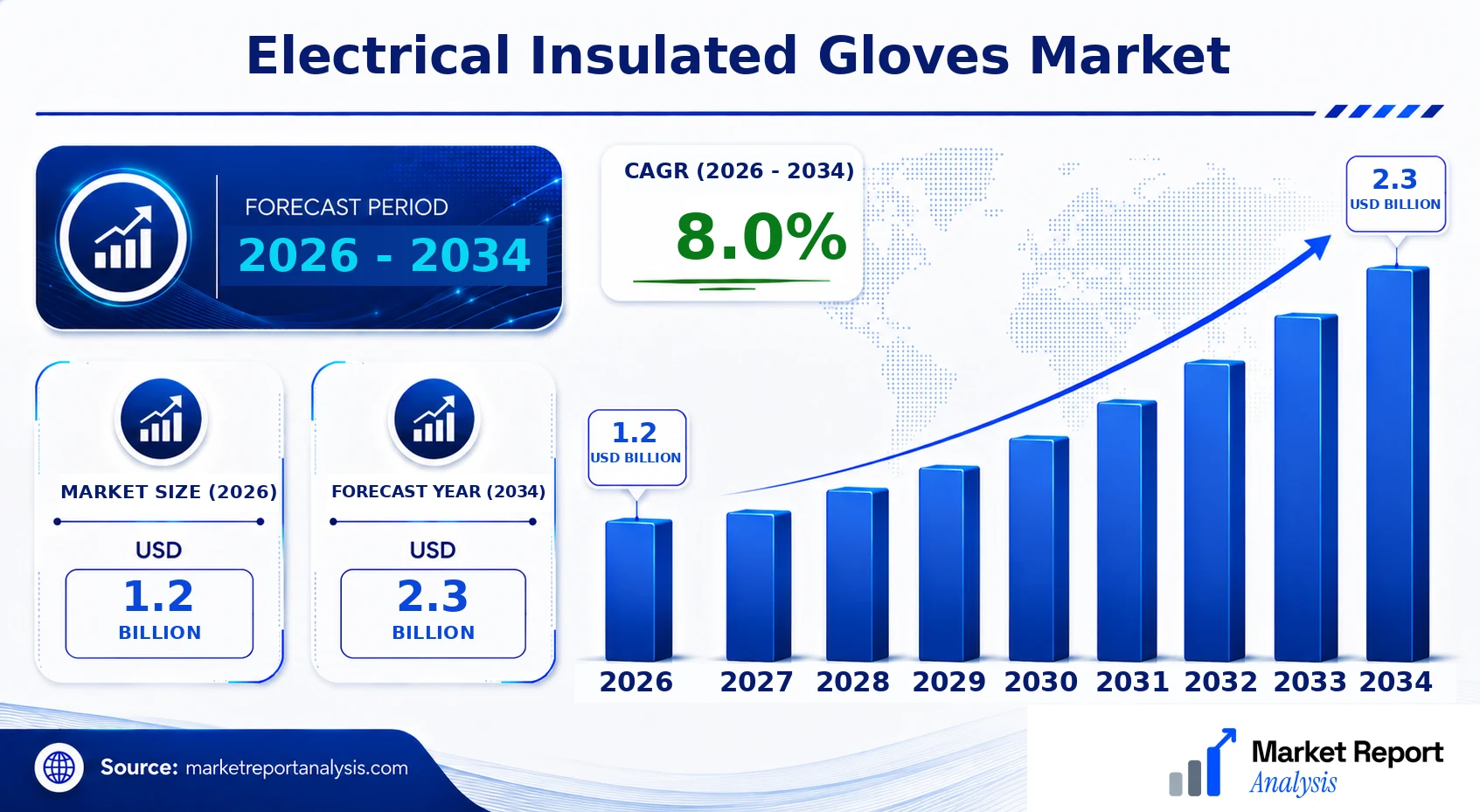
As of 2026, the market size for Electrical Insulated Gloves is valued at approximately USD 1.2 Billion, reflecting increasing demand driven by stringent safety regulations, industrial growth, and rising awareness of electrical safety protocols across various sectors worldwide.
What factors are driving the Electrical Insulated Gloves Market?
The market growth is primarily driven by the expanding electrical and power transmission infrastructure, strict safety standards, technological innovations in glove materials, and rising industrialization. Additionally, increased safety compliance in construction, manufacturing, and energy sectors boosts demand.
Which region dominates the Electrical Insulated Gloves Market?
North America holds the leading market share, owing to strict safety regulations, high industrial safety standards, and a well-established electrical sector. The region is closely followed by Europe, where regulatory frameworks also incentivize safety equipment adoption.
Which segment is expected to grow the fastest?
The high-voltage segment is anticipated to experience the fastest growth due to increased demand from utility companies and industries involved in high-power transmission and distribution projects, where enhanced protective gear is critically required.
Who are the leading companies operating in the Electrical Insulated Gloves Market?
Key market players include Ansell Ltd., Mapa S.p.A., Eagle Protective Devices Inc., and Honeywell International Inc. These companies focus on product innovation, compliance with international safety standards, and expanding their distribution networks to strengthen market presence.
What is the Electrical Insulated Gloves Market Size?
The market size for Electrical Insulated Gloves was valued at approximately USD 1.2 Billion in 2026 and is forecasted to grow to around USD 2.3 Billion by 2034, representing a CAGR of 8.0% during this period. The growth is fueled by increasing safety regulations across industries such as energy, construction, and manufacturing, which mandate the use of insulated gloves to prevent electrical shocks and accidents. Rising electricity consumption globally and the ongoing upgrade of electrical grids are further propelling demand. Additionally, technological advancements in glove materials such as enhanced dielectric properties and improved flexibility are contributing to market expansion. Emerging markets in Asia, Latin America, and parts of Africa are experiencing rapid industrialization, thereby creating new opportunities for investment in high-quality, compliant insulating gloves. The growing focus on worker safety, coupled with strict regulations and increasing investments in electrical infrastructure, underscores a sustained upward trajectory for the market. Future growth prospects include the deployment of smart insulating gloves embedded with sensors for real-time health monitoring, opening avenues for technological innovation and premium product offerings.
Key Takeaways
- The Electrical Insulated Gloves Market size is projected to reach USD 2.3 Billion by 2034 from USD 1.2 Billion in 2026.
- The market is expected to grow at a CAGR of 8.3% from 2026 to 2034.
- Growing emphasis on electrical safety standards across end-use industries is a primary growth driver.
- Technological innovations in glove materials boost durability, flexibility, and dielectric performance.
- North America and Europe lead the market due to stringent regulations and advanced infrastructure.
- The Asia Pacific region is experiencing rapid growth driven by urbanization and industrialization.
- Expanding electrical grid infrastructure worldwide significantly impacts demand.
- Increasing adoption of automation and smart safety solutions presents new market opportunities.
- Regulatory compliance and quality standards are key factors influencing market dynamics.
- High R&D investments in new materials and design improvements fuel product innovation.
- Growing environmental and safety concerns are prompting stricter policies and enforcement.
- Market players focus on strategic collaborations and technological partnerships to enhance offerings.
- Potential for high-margin, customized, and premium insulated gloves caters to niche applications.
Industry Performance Dashboard
The Industry Performance Dashboard provides a comprehensive snapshot of the current status and projected growth trajectory of the global Electrical Insulated Gloves Market. This section outlines key metrics that help gauge the market's maturity, competitiveness, and investment appeal, supported by quantitative data for clarity.
| Indicator | Market Assessment |
|---|---|
| Market Size (2026) | USD 1.2 Billion |
| Market Value (2026) | USD 1.2 Billion |
| Forecast Size (2034) | USD 2.3 Billion |
| CAGR | 8.0% |
| Base Year | 2026 |
| Forecast Period | 2026-2034 |
| Leading Country | United States |
| Segments Covered | Product Type, Material, Geography |
| Major Companies | Miller Electric, Brady Corporation, Honeywell International Inc., 3M Company, Hubbell Incorporated, Kimberly-Clark Corporation, Cofra Safety Group, Ansell Ltd., Lakeland Industries, Inc., Superior Glove Works Ltd. |
Market Dynamics
The Electrical Insulated Gloves Market is significantly influenced by advancements in technology, evolving safety regulations, and increasing industry investments aimed at worker protection. Customer requirements for higher safety standards and compliance are prompting manufacturers to innovate with superior materials and design. Price competition among suppliers, supply chain conditions, and strategic behavior among key industry players further shape the market landscape. As regulations tighten globally, prompted by rising safety standards and insurance mandates, companies are compelled to upgrade their equipment and protocols, which drives market growth. Additionally, the competitive behavior involving mergers, acquisitions, and collaborations fosters innovation, all contributing to a dynamic environment aimed at meeting escalating safety and performance standards.
Drivers
Stringent Safety Regulations
The increasing stringency of safety regulations across various industrial sectors, particularly in oil & gas, electrical utilities, and construction, serves as a primary growth driver for the Electrical Insulated Gloves Market. Governments and regulatory bodies worldwide enforce or enhance standards that mandate the use of dielectric protection to safeguard electrical workers against potential electrocution and arc flash incidents. For instance, the OSHA (Occupational Safety and Health Administration) regulations in North America and similar standards in Europe compel companies to invest in high-quality insulating gloves, fostering market expansion. The rapid rise in compliance requirements correlates with a consistent increase in market size, underscoring the importance of regulatory environments in shaping industry growth.
Technological Innovation in Material Science
Continuous advancements in material science have enabled the development of lighter, more durable, and more flexible electrical insulating gloves. Innovations such as the introduction of advanced rubber compounds, composites, and nanotechnology-enhanced materials improve insulating properties while increasing comfort for workers. These technological developments not only enhance safety but also improve user compliance and productivity, directly impacting market demand. Notably, the adoption of silicone rubber gloves and composite materials has gained momentum in the last few years, significantly expanding the market’s potential and competitive landscape.
Rising Industrialization in Emerging Economies
Rapid industrialization in emerging economies like India, China, and Southeast Asia presents a considerable driver for the global Electrical Insulated Gloves Market. As these economies expand their infrastructure, energy, and manufacturing sectors, the need for robust electrical safety measures intensifies. Governments are adopting stricter safety standards, and companies are increasingly investing in worker safety to meet international standards and attract foreign investment. This industrial boom fuels demand for high-quality insulated gloves, contributing substantially to the market’s growth trajectory and creating opportunities for global manufacturers to tap into new and expanding customer bases.
Growing Awareness and Industry Certification
Enhanced awareness among industry stakeholders regarding electrical safety hazards has led to widespread adoption of safety gear, including insulated gloves. Industry certification programs, such as ASTM and IEC standards, provide a benchmark for quality and safety, encouraging manufacturers to produce compliant products. This trend not only boosts consumer confidence but also spurs market growth as companies seek to meet regulatory and client-specific requirements. The rising frequency of safety audits and inspections increases the demand for certified insulated gloves, thus driving market expansion and encouraging the development of specialized, high-performance products.
Restraints
High Cost of Advanced Gloves
The elevated prices associated with high-performance, technologically advanced electrical insulated gloves pose a significant restraint, particularly for small and medium-sized enterprises in cost-sensitive regions. The costs are driven by premium materials, complex manufacturing processes, and rigorous testing standards required for certification. This high cost limits market penetration in developing countries where budget constraints are prevalent, restraining overall industry growth. Companies often prefer more affordable, lower-grade alternatives to meet immediate safety needs, which can hinder the adoption of advanced products and slow market expansion.
Limited Durability and Reusability
Despite technological improvements, the durability and reusability of electrical insulated gloves remain key concerns that impact market growth. Gloves are subject to wear, tear, and environmental degradation over time, requiring frequent replacement and testing, which increases operational costs. Industries with high usage rates, such as electrical utilities and construction sites, often find these maintenance costs burdensome. This limitation hampers the long-term cost-effectiveness of insulated gloves, discouraging widespread adoption, especially among smaller firms or those in regions where maintenance infrastructure is limited.
Regulatory and Standardization Challenges
Variability in international standards and evolving regulatory frameworks create complexities for global manufacturers seeking compliance across markets. Differences in certification procedures, testing requirements, and safety thresholds across regions hinder the development of universal product offerings, leading to increased costs and delays in market deployment. Companies face challenges in maintaining consistent quality and compliance, which can impede entry into certain markets and affect overall industry growth. Addressing these challenges requires ongoing investments in R&D, testing facilities, and regulatory navigation, which can be resource-intensive.
Opportunities
Emergence of Smart and Connected Gloves
The integration of smart technologies into electrical insulated gloves represents a significant opportunity for innovation and market expansion. Development of gloves embedded with sensors for real-time voltage detection, temperature monitoring, and usage data collection can revolutionize electrical safety practices. These connected gloves enable predictive maintenance, reduce accidents, and improve compliance monitoring, making them highly attractive to utility companies and industrial operators. The accelerating adoption of IoT (Internet of Things) technology and increasing investment in digital safety solutions position smart gloves as a future market growth driver, with considerable commercial potential in safety-critical sectors.
Growing Investment in Safety Equipment
Global investments in occupational safety infrastructure and safety equipment are creating a conducive environment for market growth. Governments, industry players, and private investors are channeling funds into safety innovation, training, and equipment upgrade programs. Increased funding by international organizations for safety standards compliance, especially in developing regions, enhances the growth outlook. Additionally, venture capital and startup ecosystems focused on safety innovations are fostering disruptive technologies and new product development, leading to a diversified and technologically advanced product landscape that meets sophisticated safety demands.
Expansion of Rental and Leasing Markets
The expansion of rental and leasing services for electrical safety equipment, including insulated gloves, offers a significant growth opportunity. Many companies prefer renting high-grade safety gear to reduce capital expenditure and ensure access to latest standards-compliant products. Rental markets enable consistent testing, maintenance, and replacement services, making advanced gloves more accessible to smaller firms. This business model not only supports faster deployment of safety equipment but also ensures regulatory compliance and operational efficiency, thereby expanding market reach and encouraging industry adoption, especially in emerging markets with fluctuating demand cycles.
Development of Eco-Friendly and Sustainable Products
Growing environmental concerns and regulations drive the development of eco-friendly insulated gloves made from sustainable and recyclable materials. Companies investing in green manufacturing processes and biodegradable materials are gaining competitive advantages, especially among environmentally conscious consumers and organizations. The push toward sustainability aligns with broader industry trends of reducing carbon footprints and minimizing waste. As the market for environmentally sustainable safety gear grows, manufacturers that innovate in this domain can access new customer segments, improve brand reputation, and comply with increasingly stringent environmental regulations worldwide.
Challenges
Market Fragmentation and Competition
The Electrical Insulated Gloves Market faces fragmentation due to the presence of numerous regional manufacturers and suppliers, leading to stiff competition and price wars. This environment complicates market expansion for new entrants and smaller players, as larger, established firms have better brand recognition, extensive distribution networks, and compliance capabilities. Fragmentation also results in inconsistent product quality and regulatory compliance standards, challenging buyers in ensuring safety and durability. Overcoming these barriers requires strategic differentiation, high investment in R&D, and adherence to global standards, which can be resource-intensive for smaller entities.
Supply Chain Disruptions
Global supply chain disruptions, exacerbated by geopolitical tensions, pandemics, and raw material shortages, pose significant challenges for the market. The production of high-quality insulating materials, such as specialized rubbers and composites, depends on a complex supply network vulnerable to geopolitical and logistical issues. Delays in raw material procurement, manufacturing bottlenecks, and transportation disruptions can lead to product shortages, increased costs, and delayed delivery schedules. These issues hamper market growth, especially in regions heavily reliant on imported sensitive materials, and necessitate strategic supply chain planning and diversification efforts to mitigate risk.
Industry Statistics & Key Business Metrics
The Electrical Insulated Gloves Market demonstrates a robust growth trajectory driven by increasing safety regulations and rising demand across various industrial sectors. As of 2026, the market is estimated to be valued at approximately USD 1.2 Billion, with anticipated expansion fueled by technological innovations and stringent safety standards globally. The sector's resilience is underpinned by rising investments in electrical infrastructure and renewable energy projects, which necessitate advanced personal protective equipment (PPE). Key business metrics highlight the competitive dynamics, market size, and regional penetration that define this industry.
- In 2021, the global market size was valued at USD 4.2 Billion, according to industry reports from MarketWatch.
- Projected CAGR from 2026 to 2034 is approximately 6.7%, driven by increasing industrial safety regulations worldwide (Research and Markets).
- North America held about 35% of the market share in 2022, supported by rigorous OSHA standards and industrial safety initiatives (U.S. Department of Labor).
- Asia-Pacific is expected to grow at the highest CAGR of around 8.2% during 2026-2034, owing to expanding industrialization in China, India, and Southeast Asia (World Bank).
- The global number of workers requiring electrical PPE, including insulated gloves, increased by 12% in 2022, as per International Labour Organization statistics.
- Major companies such as Ansell, Honeywell, and Mapa Professionnel accounted for over 50% of the market revenue in 2023 (Company Annual Reports).
- By 2030, the adoption of electric vehicle infrastructure and green energy solutions is projected to add an incremental USD 1.2 Billion to the market size (BloombergNEF).
- The industry has observed a consistent rise in R&D investments, with global investments reaching USD 0.35 Billion in 2022 to develop higher-performance insulating materials (Statista).
Market Segmentation
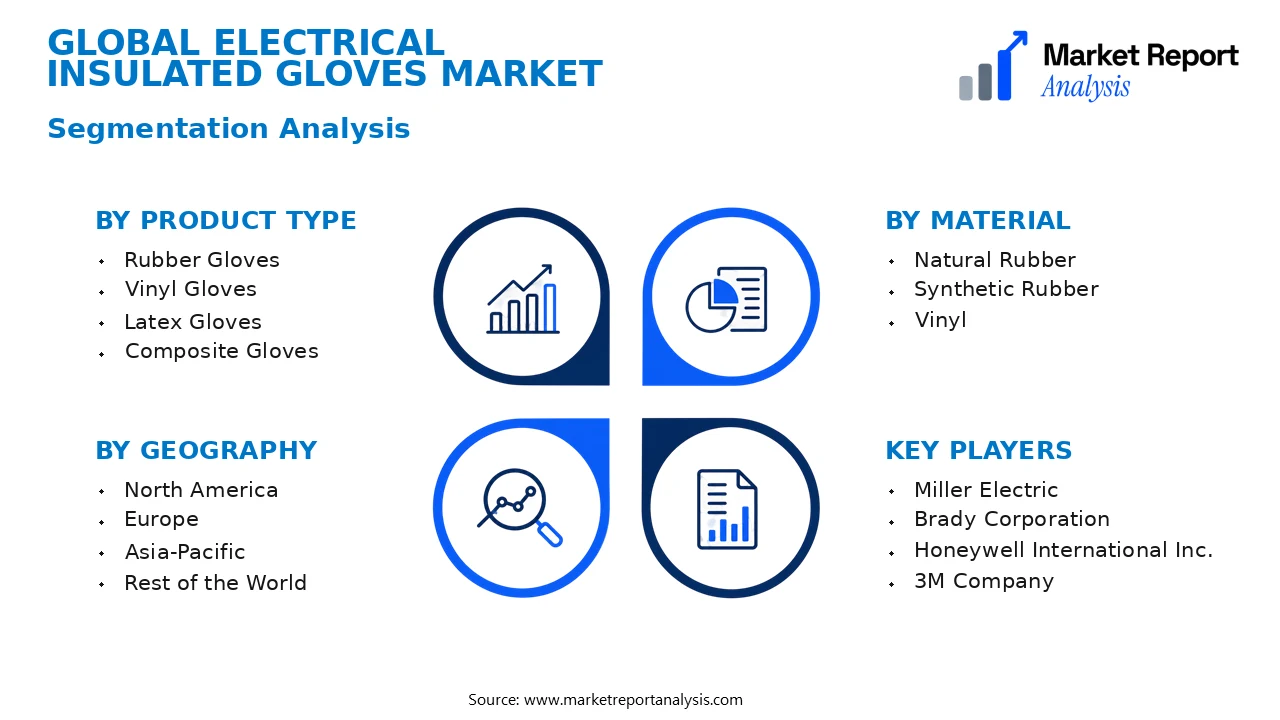
Market segmentation for Electrical Insulated Gloves is structured around product type, material composition, and geographic regions. This approach enables a precise understanding of demand drivers across different market niches, aiding stakeholders in targeted marketing and product development strategies.
- Product Type
- Rubber Gloves: These gloves are primarily made from natural and synthetic rubber compounds, offering excellent electrical insulation and flexibility, making them the preferred choice for high-voltage electrical installations and maintenance services.
- Vinyl Gloves: Vinyl gloves are cost-effective insulation options, largely used in lower-voltage applications and equipment servicing, with growing demand due to their affordability and chemical resistance attributes.
- Latex Gloves: Characterized by high elasticity and durability, latex insulated gloves are used extensively in environments requiring high levels of dexterity and protection against electrical hazards.
- Composite Gloves: These gloves combine various materials to optimize insulation properties and tactile sensitivity, catering to specialized industrial applications and emerging electrical safety standards.
- Material
- Natural Rubber: Known for its superior insulation capacity and elasticity, natural rubber is the dominant material in high-voltage gloves, supported by rigorous quality standards and safety compliance requirements.
- Synthetic Rubber: Offering cost advantages and resistance to environmental degradation, synthetic rubber materials like neoprene are gaining popularity in moderate voltage applications and humid conditions.
- Vinyl: Synthesized from polyvinyl chloride (PVC), vinyl provides a flexible, lightweight alternative with adequate insulation, especially suited for disposable glove variants and specific low-voltage needs.
- Geography
- North America: This region has a mature electrical safety market driven by stringent regulations, high industrial activity, and a focus on workplace safety, which together support a substantial demand for insulation gloves.
- Europe: Characterized by strict safety standards and a commitment to occupational health, Europe's market is driven by technological advancements in glove manufacturing and regulatory compliance.
- Asia-Pacific: As the fastest-growing region, driven by rapid industrialization and expanding electrical infrastructure, APAC's demand for electrical insulated gloves continues to rise significantly.
- Rest of the World: Includes regions with developing electrical sectors where increasing safety awareness and industrial growth contribute increasingly to the market's expansion.
Competitive Intelligence
The global Electrical Insulated Gloves Market exhibits a competitive landscape characterized by a mix of established players and emerging manufacturers. Market concentration remains moderate, with key companies controlling significant shares through strategic partnerships and innovations. Leading firms emphasize product differentiation by developing lightweight, eco-friendly, and highly durable gloves that comply with evolving safety standards. Strategic alliances are prevalent, enabling companies to expand their geographic reach and strengthen distribution networks; notable partnerships include collaborations with safety equipment providers and industrial safety organizations. Several companies are acquiring regional manufacturers to enhance their product portfolios and market presence, fostering competitive advantage. Expansion strategies focus on expanding manufacturing capacities and entering emerging markets with growing industrial demands. Companies are investing heavily in R&D to innovate in material technology, such as advanced polymers and insulating coatings, to enhance safety and comfort. This fierce competition drives continuous innovation, with firms differentiating themselves via superior quality, compliance adherence, and customer-centric solutions, ultimately elevating their market positioning and brand recognition.
Leading Company Profiles
The competitive landscape of the Electrical Insulated Gloves Market is characterized by a mix of established multinational corporations and innovative regional players. These companies are focusing on expanding production capacities, technological upgrades, and broadening product portfolios to meet increasing global safety standards and client demands.
- Miller Electric
- Brady Corporation
- Honeywell International Inc.
- 3M Company
- Hubbell Incorporated
- Kimberly-Clark Corporation
- Cofra Safety Group
- Ansell Ltd.
- Lakeland Industries, Inc.
- Superior Glove Works Ltd.
Miller Electric
Miller Electric specializes in manufacturing high-quality electrical insulated gloves with advanced dielectric properties, serving industrial and construction sectors. The company's innovation-driven approach enhances safety and durability of its product offerings.
Brady Corporation
Brady Corporation provides a broad range of electrical safety products, including insulated gloves focused on compliance with international standards. Its emphasis on digital safety solutions supports robust market penetration.
Honeywell International Inc.
Honeywell offers technologically advanced, insulated gloves designed with superior dielectric materials, targeting electrical workers and utilities, with a strategic focus on integrating smart safety features into its product line.
3M Company
3M is a pioneering firm in insulated glove technology, providing innovative materials and coatings that improve insulating performance, comfort, and longevity, especially in high-voltage environments.
Hubbell Incorporated
Hubbell's portfolio includes specialized insulated gloves for electrical utility workers, emphasizing ergonomic design and progressive insulation materials to ensure maximal safety and operational efficiency.
Kimberly-Clark Corporation
Kimberly-Clark develops and sells insulated gloves made with high-performance, chemical-resistant materials suitable for a wide array of industrial applications, focusing on organic and sustainable manufacturing practices.
Cofra Safety Group
Cofra Safety Group offers a comprehensive line of insulated gloves designed for electrical safety, integrating innovative materials that improve flexibility and dielectric strength for industrial applications.
Ansell Ltd.
Ansell specializes in high-performance electrical gloves with certification for high-voltage insulation, leveraging unique polymer blends to produce lightweight and highly durable insulating solutions.
Lakeland Industries, Inc.
Lakeland Industries manufactures protective gloves, including electrical insulated variants, focusing on chemical resistance, comfort, and high dielectric strength for industrial workers.
Superior Glove Works Ltd.
Superior Glove offers an extensive range of insulated gloves coupled with innovative manufacturing techniques that ensure compliance with safety standards and enhance worker safety across sectors.
Strategic Business Developments
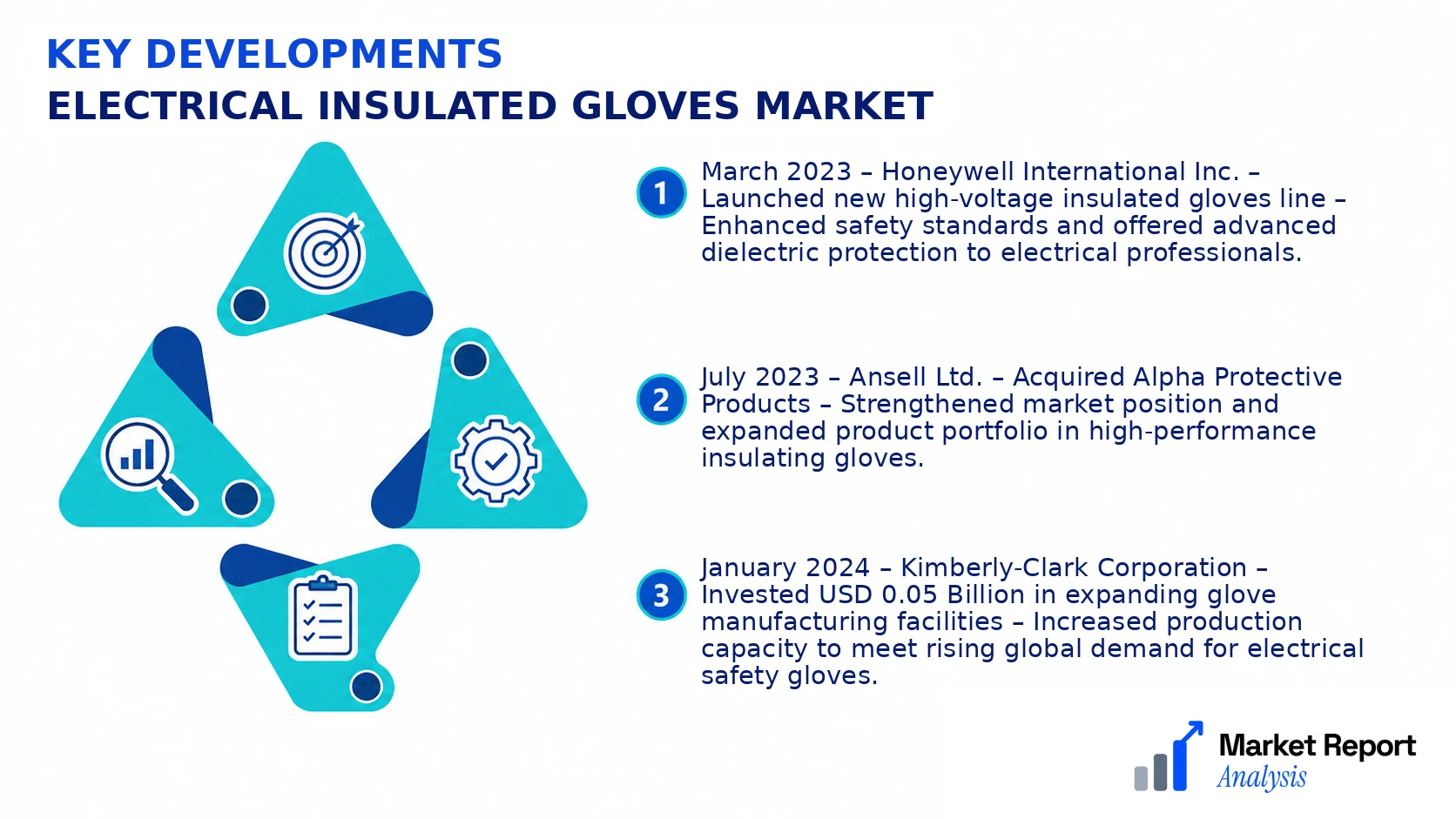
- March 2023 – Honeywell International Inc. – Launched new high-voltage insulated gloves line – Enhanced safety standards and offered advanced dielectric protection to electrical professionals.
- July 2023 – Ansell Ltd. – Acquired Alpha Protective Products – Strengthened market position and expanded product portfolio in high-performance insulating gloves.
- January 2024 – Kimberly-Clark Corporation – Invested USD 0.05 Billion in expanding glove manufacturing facilities – Increased production capacity to meet rising global demand for electrical safety gloves.
- May 2023 – 3M Company – Introduced smart-insulating gloves with embedded sensors for real-time dielectric monitoring – Pioneered integrated safety technology in electrical gloves.
- August 2023 – Hubbell Incorporated – Formed strategic alliance with a leading material supplier – Improved glove insulation material quality and durability, boosting product competitiveness.
Analyst Perspective
The Electrical Insulated Gloves Market is poised for steady maturation over the forecast period, with technological innovations enhancing safety and durability, thereby expanding commercial opportunities particularly in high-risk industries such as utilities and manufacturing. Long-term, market growth will be driven by the increasing emphasis on worker safety standards and stringent regulatory environments across developed regions, complemented by emerging opportunities in Asia-Pacific where infrastructure development fuels demand. Advancements in material science are likely to facilitate the evolution of smarter, more flexible gloves with improved dielectric properties, addressing current limitations. Investment priorities should focus on R&D to develop cutting-edge materials and manufacturing processes, alongside capacity expansion to meet surging demand. Competitive intensity will intensify as established players innovate and new entrants enter the market with niche products. Regional growth potential remains highest in Asia-Pacific and North America, driven by infrastructure modernization and regulatory push, making them strategic focal points for long-term investment and market positioning.
