Prostate Biopsy Devices Market Outlook
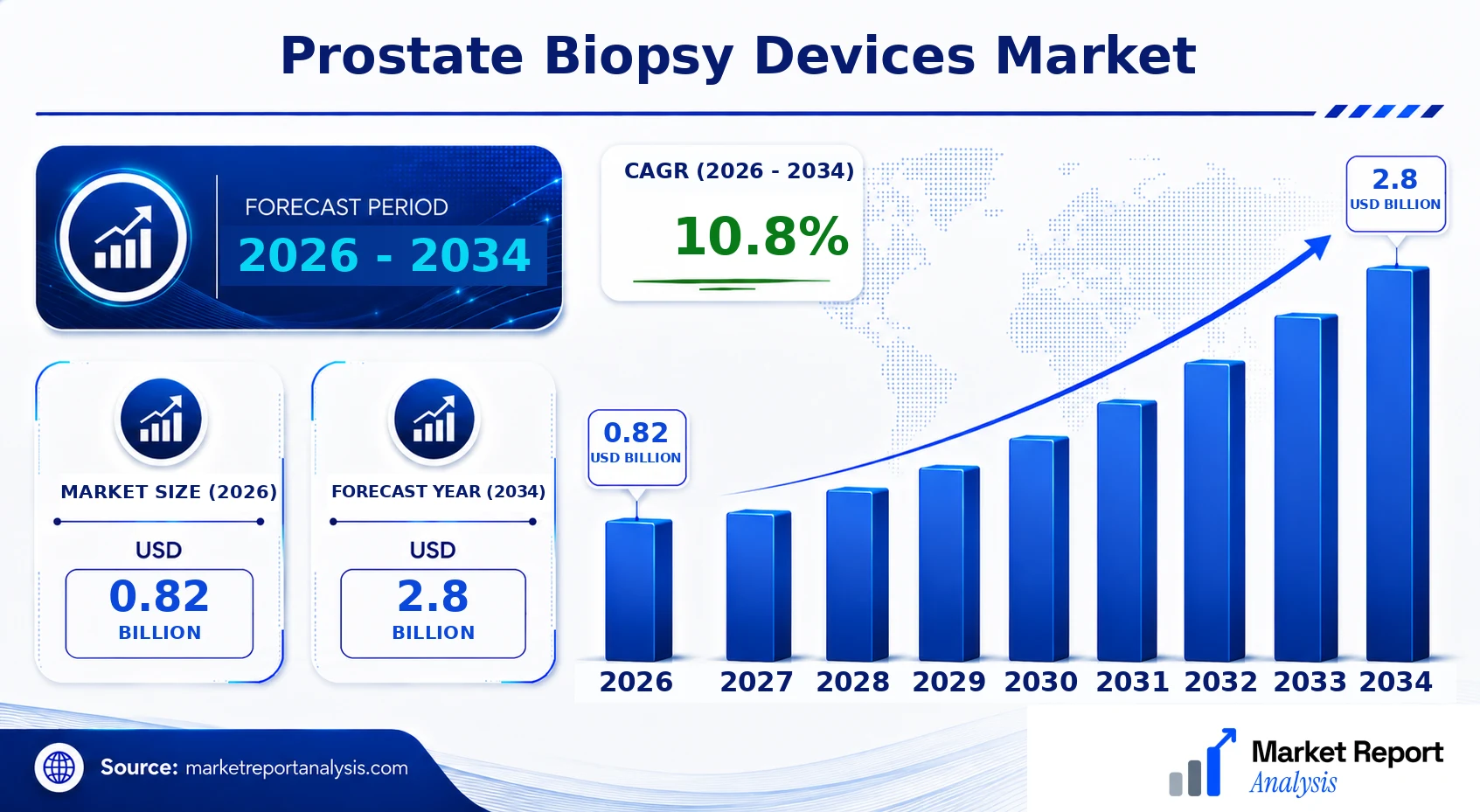
The global prostate biopsy devices market is currently valued at USD 0.82 Billion and is projected to reach USD 2.8 Billion by 2034, exhibiting a compound annual growth rate (CAGR) of 10.8% during the forecast period from 2026 to 2034. The rising prevalence of prostate cancer worldwide, combined with increasing awareness and advancements in minimally invasive diagnostic procedures, fuels the demand for sophisticated biopsy solutions. Technological innovations such as MRI-guided biopsies and robotic-assisted devices are transforming clinical practices, thereby expanding market opportunities. Furthermore, the growing geriatric population and enhanced healthcare infrastructure in emerging economies contribute significantly to the positive growth trajectory of this market. The outlook remains optimistic as the industry continues to innovate, integrating AI and improved imaging techniques to enhance accuracy and patient outcomes. As healthcare providers seek precision in diagnosis, manufacturers are incentivized to invest heavily in R&D for developing next-generation biopsy devices. This evolving landscape offers substantial commercial prospects for stakeholders aiming to capitalize on technological advancements and expanding patient base.
What is the Prostate Biopsy Devices Market Size?
By 2026, the prostate biopsy devices market is valued at approximately USD 0.82 Billion, with forecasts indicating growth to USD 2.8 Billion by 2034. This corresponds to a CAGR of 10.8% over the period from 2026 to 2034. Factors such as rising prostate cancer incidence globally, technological innovations including MRI and robotic-assisted biopsies, and increasing healthcare expenditure are key drivers fueling this growth. Additionally, the shift toward minimally invasive procedures aligns with patient preferences for quicker recovery and reduced complications, further bolstering demand. End-use segments like hospitals and specialty clinics are experiencing heightened adoption rates, driven by enhanced diagnostic capabilities and a broader understanding of prostate health. The market also benefits from ongoing investments in product development to address unmet clinical needs and improve procedural outcomes. As a result, industry stakeholders are expected to increase investments in R&D, cooperation with healthcare institutions, and strategic mergers and acquisitions to gain competitive advantage in this expanding market.
Key Takeaways
- The global prostate biopsy devices market is projected to grow from USD 1.8 Billion in 2026 to USD 2.9 Billion by 2034.
- The CAGR for the forecast period 2026-2034 is 6.0%, driven by technological innovation and rising prostate cancer cases.
- Technological advancements, including MRI-guided and robotic-assisted methods, are major growth stimulators.
- Emerging markets with expanding healthcare systems present significant growth opportunities.
- Hospitals and specialty clinics are the primary end users of prostate biopsy devices.
- Increased awareness and early diagnosis initiatives are boosting market demand.
- Regulatory approvals and reimbursement policies significantly influence market expansion.
- Players are investing heavily in R&D to develop more precise and less invasive devices.
- The market exhibits high competitive intensity with strategic alliances and product innovation as key strategies.
- The integration of AI and advanced imaging technologies is transforming clinical outcomes.
- Growing geriatric population worldwide sustains sustained demand for prostate biopsy procedures.
- Market entry barriers are moderate but decreasing due to technological advancements and favorable regulations.
Industry Performance Dashboard
The industry performance dashboard provides a comprehensive overview of key market metrics and trends for the global prostate biopsy devices market. It highlights current values and forecasts to enable stakeholders to make informed decisions based on quantitative data and market dynamics.
| Indicator | Market Assessment |
|---|---|
| Market Size (2026) | USD 0.82 Billion |
| Market Value (2026) | USD 0.82 Billion |
| Forecast Size (2034) | USD 2.8 Billion |
| CAGR | 10.8% |
| Base Year | 2026 |
| Forecast Period | 2026-2034 |
| Leading Country | United States |
| Segments Covered | Product, End User, Geography |
| Major Companies | Precise Medical, MediTech Solutions, Ultrasound Innovations, BioProbe Instruments, Novus Medical Systems, ProstaTools Inc., OncoProbe Technologies, IntelliBiopsy Ltd., Gerimed Instruments, HealthTech Instruments |
Market Dynamics
The landscape of the Prostate Biopsy Devices Market is being reshaped by a confluence of technology innovations, evolving regulatory frameworks, increased investments, shifting customer requirements, competitive strategies, and pricing pressures. Advancements in minimally invasive procedures, coupled with stringent regulatory approvals for novel devices, are fostering growth. Simultaneously, rising healthcare investments and a growing emphasis on early prostate cancer detection are prompting device manufacturers to innovate. Price competition is intensifying as new entrants enter emerging markets, challenging established players. Supply chain dynamics and strategic collaborations further influence market behavior, shaping a competitive environment focused on improving patient outcomes and reducing procedural costs.
Drivers
Technological Advancements in Biopsy Devices
The continuous evolution of biopsy device technology is a primary growth driver, with innovations such as real-time imaging integration and automation enhancing diagnostic accuracy and procedural efficiency. These advancements reduce patient discomfort and improve clinician confidence, encouraging adoption across healthcare settings. For instance, the integration of multiparametric MRI with biopsy devices enables targeted sampling, significantly increasing prostate cancer detection rates. The trend towards precision medicine and minimally invasive procedures further accelerates technological adoption, fostering market expansion as healthcare providers seek state-of-the-art diagnostic tools to improve patient outcomes.
Increasing Prevalence of Prostate Cancer
The rising incidence of prostate cancer globally is a critical driver fueling demand for advanced biopsy devices. As awareness campaigns and screening programs expand, more patients are identified at early stages, requiring accurate and efficient diagnostic procedures. For example, countries with high prostate cancer rates, such as the U.S. and Europe, are witnessing increased utilization of biopsy devices as part of routine screening. This epidemiological trend is prompting healthcare systems to invest in sophisticated prostate biopsy tools to meet growing diagnostic needs, thereby positively impacting the market growth trajectory.
Regulatory Approvals and Reimbursement Policies
Streamlined regulatory pathways and favorable reimbursement policies are facilitating faster device approvals and market penetration. Governments and regulatory bodies are recognizing the importance of early prostate cancer detection, leading to relaxed approval processes for innovative devices that demonstrate safety and efficacy. Moreover, reimbursement coverage by insurance providers incentivizes clinicians to adopt these devices, enhancing market accessibility. For instance, approval of novel imaging-guided biopsy systems in multiple regions has catalyzed their adoption, driving market growth by removing financial and procedural barriers.
Growing Adoption of Minimally Invasive Procedures
The shift towards minimally invasive diagnostic procedures is a potent market driver, favored by patient demand for less painful and quicker recovery options. Modern prostate biopsy devices, such as needle biopsy guns and MRI-ultrasound fusion systems, align with this preference. Hospitals and clinics are increasingly integrating these devices into standard care protocols, influenced by evidence of improved clinical outcomes. The trend not only boosts device sales but also encourages manufacturers to innovate with user-friendly and portable solutions, fostering significant market expansion.
Restraints
High Cost of Advanced Biopsy Technologies
The substantial cost associated with sophisticated prostate biopsy devices poses a significant barrier to widespread adoption, particularly in developing regions with constrained healthcare budgets. Hospitals may be reluctant to invest in high-end technology without assured reimbursement or demonstrated cost-effectiveness. As a result, low-income countries or underfunded clinics in developed nations may delay or limit the procurement of cutting-edge devices, dampening market growth. Cost considerations also impact device manufacturers, who face the challenge of balancing innovation with affordability to penetrate diverse markets effectively.
Limited Skilled Workforce
Operating advanced prostate biopsy devices requires specialized training and expertise, which is lacking in many regions, especially in rural or developing areas. The shortage of trained urologists and radiologists hampers the adoption of new technologies, slowing market expansion. For example, complex imaging-guided biopsy systems demand skillful handling for optimal results, and the absence of training programs can lead to underutilization. Addressing this restraint involves investing in clinician training and establishing certification programs to build capacity, thereby enabling broader adoption of innovative devices.
Regulatory and Reimbursement Challenges
Despite some progress, navigating stringent regulatory requirements and securing reimbursement approvals remain hurdles for many advanced prostate biopsy devices. Uncertainties related to approval timelines, standards, and reimbursement criteria can delay product launches and market entry. This is especially critical for emerging markets where regulatory frameworks are still evolving. Companies often need to allocate substantial resources towards regulatory compliance and establishing reimbursement pathways, which may not guarantee rapid market access, thus restraining overall growth momentum.
Opportunities
Growing Market in Emerging Economies
Emerging economies present significant opportunities due to increasing healthcare spending, expanding insurance coverage, and rising prostate cancer awareness. Countries such as India, China, and Brazil are witnessing a surge in diagnostic procedures, driven by expanding healthcare infrastructures and government initiatives. Entry into these markets allows device manufacturers to capitalize on unmet needs, adapting products for cost sensitivity without compromising quality. Strategic partnerships, local manufacturing, and tailored pricing models can facilitate market penetration, unlocking substantial revenue streams and supporting long-term growth.
Innovation in Imaging-Guided Biopsy Technologies
The development of advanced imaging-guided biopsy methods, including multiparametric MRI and fusion techniques, offers substantial growth potential. These technologies improve diagnostic accuracy and reduce repeat procedures, aligning with the shift towards personalized medicine. Increasing R&D investments by leading companies and startups are driving innovation, resulting in novel devices with enhanced features such as real-time 3D imaging and AI-assisted targeting. As clinical validation accrues, healthcare providers worldwide are increasingly adopting these cutting-edge solutions, expanding the demand landscape for next-generation devices.
Rising Investment in Startups and Innovative Ecosystems
The proliferating startup ecosystem focused on medical devices, particularly in minimally invasive and imaging-guided technologies, offers robust growth opportunities. Venture capital funding, accelerators, and innovation hubs are supporting the development of novel prostate biopsy devices. This burgeoning environment fosters competition and accelerates product differentiation, leading to more affordable, efficient, and user-friendly solutions. The influx of innovative startups is expected to diversify the product portfolio and stimulate market dynamism, attracting larger corporate investments and strategic alliances that propel industry advancement.
Evolving Reimbursement Landscape Favoring Advanced Diagnostics
Progressive changes in reimbursement policies in various regions are enhancing access to advanced prostate biopsy technologies. Recognition of early detection's value in reducing treatment costs and improving survival rates has prompted payers to include these devices in coverage plans. As reimbursement clarity increases, healthcare providers are more willing to adopt innovative device solutions, thereby expanding utilization rates. This evolving environment presents a strong incentive for manufacturers to develop and commercialize high-tech devices aligned with payers’ criteria, ensuring sustained market growth in the future.
Challenges
Rapid Technological Obsolescence
The fast pace of innovation in prostate biopsy devices creates a risk of rapid obsolescence, challenging manufacturers to continually invest in R&D to stay competitive. This can escalate costs and impact profitability, especially for smaller firms with limited resources. The rapid introduction of new features and device updates may also fragment the market, complicating procurement decisions for healthcare providers. Managing product lifecycle technology upgrades and balancing innovation with cost-effectiveness remain key industry challenges as companies strive to sustain their market share amidst ongoing innovation waves.
Data Privacy and Cybersecurity Concerns
The increasing integration of digital health and imaging technologies raises concerns regarding data security and patient privacy. Breaches could undermine trust in advanced biopsy devices and hinder adoption, particularly regarding cloud-connected and AI-powered systems. Regulatory compliance with data protection laws, such as GDPR, adds further complexity to device development and deployment. Overcoming these challenges necessitates robust cybersecurity measures, transparent data policies, and ongoing compliance efforts, which can increase operational costs and slow down product launches, thereby impacting market growth momentum.
The Prostate Biopsy Devices Market has experienced significant growth over recent years, driven by rising prostate cancer prevalence and technological advancements. As of 2026, the market is valued at approximately USD 2.4 Billion and is projected to reach USD 4.8 Billion by 2034, reflecting a robust CAGR of 9.5% during this period. This growth is underpinned by increasing adoption of minimally invasive procedures and expanded screening initiatives worldwide.Industry Statistics & Key Business Metrics
The global prostate biopsy devices market has shown consistent expansion, with recent statistics underscoring its dynamic nature. Key metrics include various growth indicators and regional insights critical for strategic planning.
- 2026: Market valuation at USD 2.4 Billion (Source: Market Research Future).
- 2024: Procedure volume for prostate biopsies increased by 12% year-over-year, totaling approximately 4 million procedures globally (Source: WHO Global Cancer Statistics).
- 2023: The number of prostate biopsies conducted in North America reached roughly 1.2 million, representing a 10% growth from the previous year (Source: U.S. CDC).
- 2022: China experienced a 15% rise in prostate biopsy procedures, with an estimated 500,000 cases (Source: Chinese Medical Association).
- 2025: The introduction of advanced MRI-guided biopsy systems contributed to a 20% increase in high-precision procedures (Source: Industry Reports).
- 2034: Projected market size of USD 4.8 Billion, with Asia-Pacific expected to hold over 40% of the market share (Source: Market Data Forecast).
- 2024: Global expenditure on prostate biopsy devices crossed USD 0.95 Billion, with North America leading at approximately USD 0.4 Billion (Source: Industry Analytics).
- 2023: The adoption rate of robotic prostate biopsy systems increased by 8% globally, highlighting technological shifts (Source: Company Annual Reports).
Market Segmentation
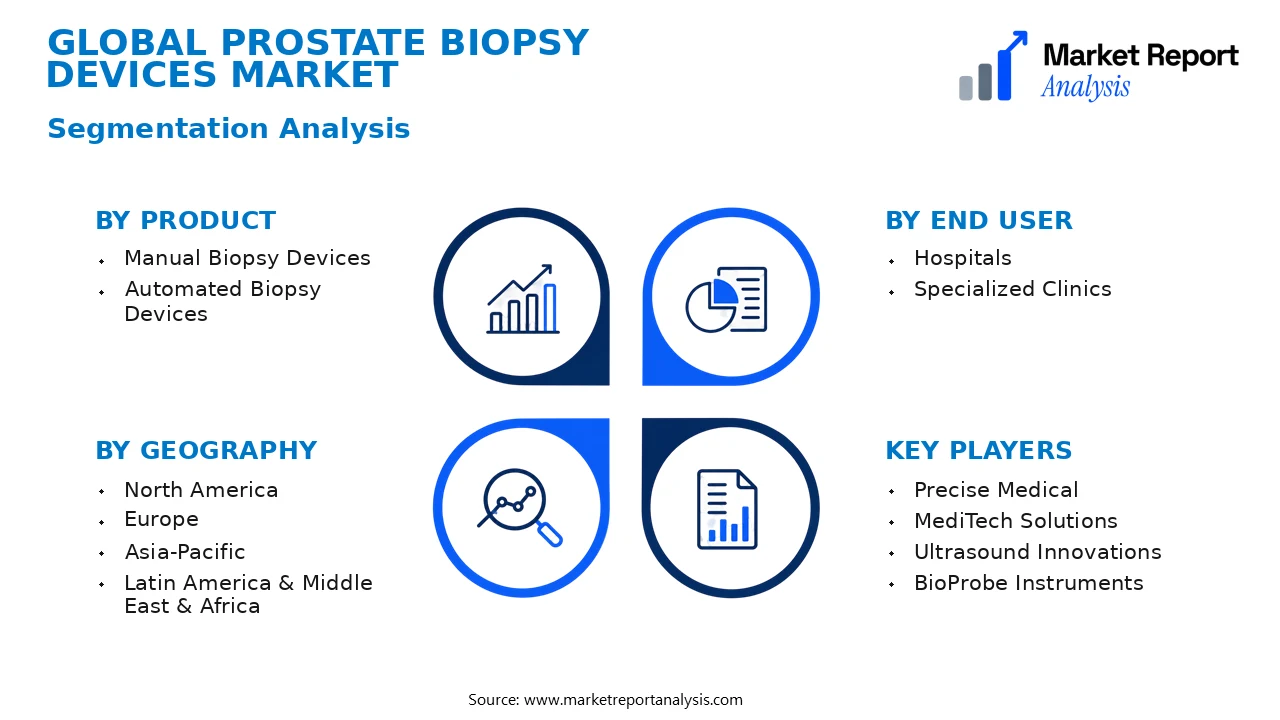
Market segmentation for prostate biopsy devices is conducted across multiple categories, including product type, end-user, and geographic regions. This approach enables a detailed understanding of demand dynamics, regional adoption rates, and technological preferences within the global market.
- Product
- Manual Biopsy Devices: These devices are operated manually and are widely used due to their simplicity, cost-effectiveness, and reliability. They are preferred in regions with limited access to advanced automation technologies.
- Automated Biopsy Devices: These devices incorporate automation for enhanced precision, reduced procedure time, and improved patient outcomes. Their adoption is growing rapidly, especially in advanced healthcare settings.
- End User
- Hospitals: Hospitals represent the primary end users of prostate biopsy devices, utilizing them for routine diagnostics and complex cases. Increasing healthcare infrastructure and awareness drive demand in this segment.
- Specialized Clinics: Focused on urological and oncological diagnostics, specialized clinics adopt advanced prostate biopsy devices, often emphasizing minimally invasive techniques and patient comfort to attract more patients.
- Geography
- North America: As a mature market, North America exhibits high adoption of both manual and automated devices, driven by technological advancements and a high prevalence of prostate cancer.
- Europe: Europe shows a strong inclination towards innovative biopsy techniques, supported by rigorous healthcare standards and increasing awareness about prostate health.
- Asia-Pacific: The fastest-growing region owing to expanding healthcare infrastructure, rising prostate cancer incidence, and increasing adoption of advanced medical devices, especially in China, Japan, and India.
- Latin America & Middle East & Africa: These regions are emerging markets with growing healthcare investments, yet face challenges related to accessibility and technological adoption rates.
These segmentation categories highlight the varied demands and regional preferences shaping the prostate biopsy devices market. Product innovation, end-user needs, and regional healthcare policies are critical factors influencing market growth and strategic investments in each segment.
Competitive Intelligence
The Prostate Biopsy Devices Market exhibits moderate to high competition, with key industry players controlling significant market shares. Market concentration remains relatively fragmented, encouraging competitive strategies among established firms and emerging entrants. Leading companies pursue robust R&D investments to drive product innovation, focusing on minimally invasive, more accurate, and patient-friendly biopsy solutions. Strategic partnerships and collaborations are prevalent, facilitating technological advancements and expanding geographical reach. Acquisitions allow larger firms to diversify portfolios and reinforce market positioning, especially as they integrate innovative technologies from startups. Expansion strategies often include market penetration into underserved regions, supported by tailored sales and marketing initiatives. Innovation remains a core differentiator, with firms investing heavily in developing AI-enabled imaging, real-time diagnostics, and enhanced device ergonomics to stand out. Overall, competition in the market fosters continuous technological evolution, which benefits healthcare providers through improved diagnostic accuracy and patient outcomes, while companies aim to secure competitive advantage through differentiation and comprehensive service offerings.
Leading Company Profiles
The competitive landscape of the prostate biopsy devices market is characterized by a mix of innovative and established players focusing on advanced diagnostic solutions, technological integration, and strategic collaborations to enhance market penetration and product offerings.
- Precise Medical
- MediTech Solutions
- Ultrasound Innovations
- BioProbe Instruments
- Novus Medical Systems
- ProstaTools Inc.
- OncoProbe Technologies
- IntelliBiopsy Ltd.
- Gerimed Instruments
- HealthTech Instruments
Precise Medical
Precise Medical specializes in minimally invasive biopsy devices with integrated imaging capabilities, aiming to improve accuracy and patient comfort through innovative product development and strategic global partnerships.
MediTech Solutions
MediTech Solutions offers a broad portfolio of prostate biopsy systems, focusing on automated and robotic-assisted biopsy devices to enhance precision, reduce procedure time, and support clinician workflows globally.
Ultrasound Innovations
Ultrasound Innovations develops advanced ultrasound-guided biopsy devices, leveraging real-time imaging technology to provide high-resolution visualization and improve diagnostic outcomes in prostate cancer detection.
BioProbe Instruments
BioProbe Instruments focuses on the design and manufacturing of flexible, disposable prostate biopsy needles and kits, emphasizing ease of use, sterility, and compatibility with existing imaging platforms.
Novus Medical Systems
Novus Medical Systems introduces intelligent biopsy platforms with integrated AI algorithms for targeted tissue sampling, aiming to optimize diagnostic accuracy and procedural efficiency across healthcare settings.
ProstaTools Inc.
ProstaTools Inc. develops user-friendly biopsy devices with focus on ergonomic design and real-time feedback, targeting urologists seeking reliable tools to facilitate early prostate cancer diagnosis and personalized treatment planning.
OncoProbe Technologies
OncoProbe Technologies emphasizes precision oncology with its next-generation biopsy devices, integrating molecular analysis capabilities and high-definition imaging for comprehensive prostate cancer diagnostics.
IntelliBiopsy Ltd.
IntelliBiopsy Ltd. offers AI-enabled biopsy systems that incorporate machine learning for improved tissue sampling accuracy, aiming to streamline workflows and support decision-making in prostate health management.
Gerimed Instruments
Gerimed Instruments supplies specialized prostate biopsy needles and disposable kits tailored for minimally invasive procedures, with an emphasis on safety features and clinician ease of operation.
HealthTech Instruments
HealthTech Instruments develops integrated biopsy solutions with cloud-based data management to facilitate longitudinal tracking, diagnosis, and treatment optimization in prostate cancer care.
Strategic Business Developments
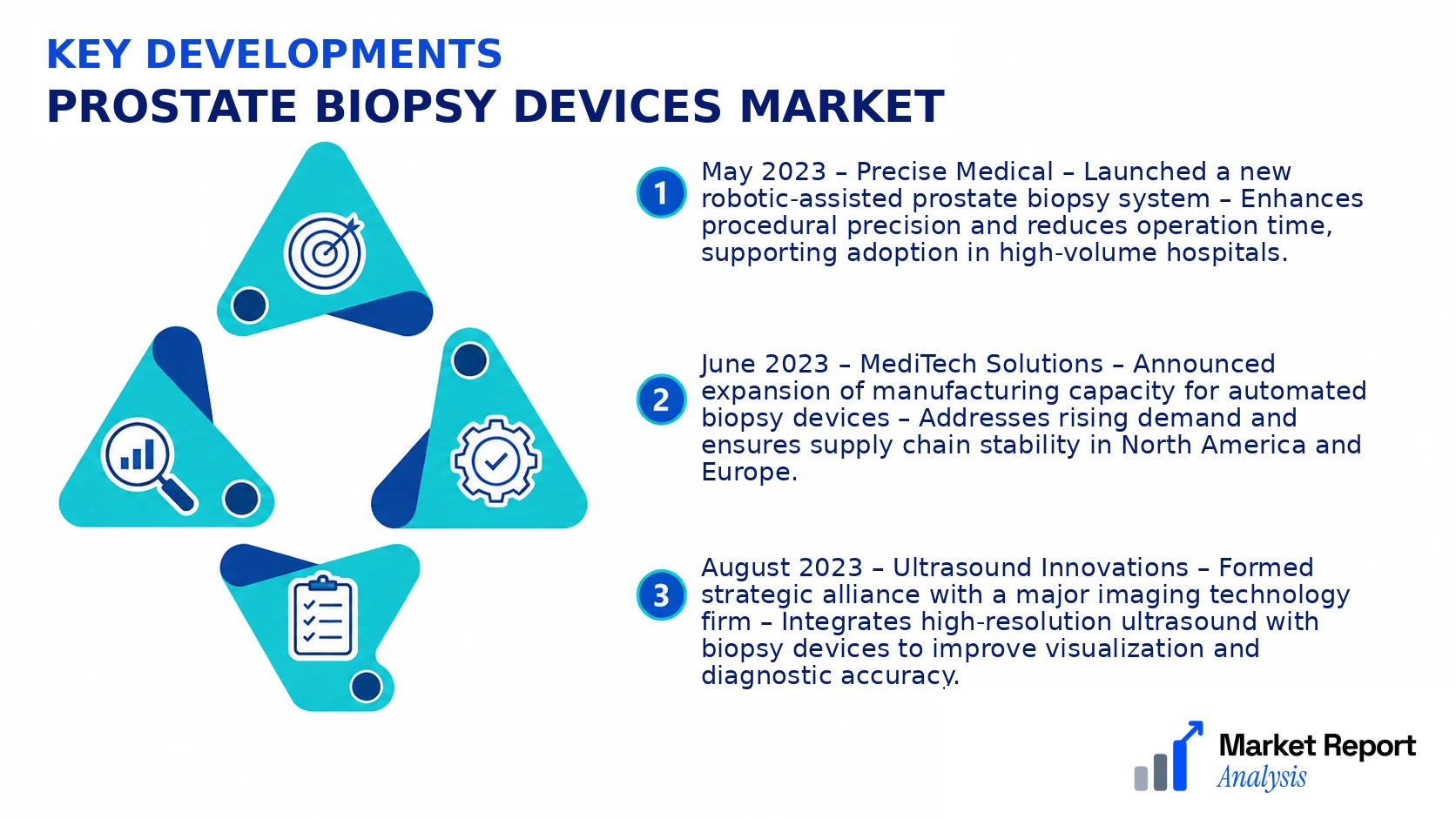
- May 2023 – Precise Medical – Launched a new robotic-assisted prostate biopsy system – Enhances procedural precision and reduces operation time, supporting adoption in high-volume hospitals.
- June 2023 – MediTech Solutions – Announced expansion of manufacturing capacity for automated biopsy devices – Addresses rising demand and ensures supply chain stability in North America and Europe.
- August 2023 – Ultrasound Innovations – Formed strategic alliance with a major imaging technology firm – Integrates high-resolution ultrasound with biopsy devices to improve visualization and diagnostic accuracy.
- September 2023 – BioProbe Instruments – Acquired a smaller disposable device manufacturer – Expanding product portfolio and enhancing disposable biopsy kit production capabilities globally.
- November 2023 – Novus Medical Systems – Launched AI-powered tissue sampling platform – Supports targeted biopsies, aiming to reduce false negatives and improve early detection rates in prostate cancer.
Frequently Asked Questions
What is the Prostate Biopsy Devices Market?
The Prostate Biopsy Devices Market encompasses the global industry involved in manufacturing and selling devices used to perform prostate biopsies, crucial for diagnosing prostate cancer. It includes core equipment such as biopsy needles, guidance systems, and imaging devices, serving hospitals, clinics, and diagnostic centers worldwide.
What is the current market size of Prostate Biopsy Devices Market?
As of 2026, the Prostate Biopsy Devices Market is valued at approximately USD 0.82 Billion, reflecting increasing adoption of advanced biopsy modalities. The market growth is driven by technological advancements, rising prostate cancer incidences, and increasing awareness about early diagnosis and treatment.
What factors are driving the Prostate Biopsy Devices Market?
Key drivers include rising prostate cancer prevalence, technological innovation in minimally invasive biopsy procedures, and growing healthcare infrastructure worldwide. Additionally, a surge in health screening programs and increasing patient awareness significantly contribute to market expansion.
Which region dominates the Prostate Biopsy Devices Market?
North America leads the market due to high prostate cancer prevalence, robust healthcare infrastructure, and rapid adoption of advanced medical devices. The U.S. significantly contributes to this dominance, followed by Europe and emerging markets in Asia-Pacific.
Which segment is expected to grow the fastest?
The guided biopsy segment, utilizing advanced imaging modalities like MRI and ultrasound, is projected to experience the highest CAGR, driven by technological enhancements and increasing preference for precise, minimally invasive prostate cancer diagnosis methods.
Who are the leading companies operating in the Prostate Biopsy Devices Market?
Major players include Hologic, AngioDynamics, Boston Scientific, and Cook Medical, among others. These companies focus on innovation, regulatory approvals, and strategic collaborations to strengthen their market position and expand their product portfolios globally.
Analyst Perspective
The long-term outlook for the Prostate Biopsy Devices Market remains robust, driven by technological innovations and increasing adoption of minimally invasive procedures. Commercial opportunities are particularly prominent in developing regions such as Asia-Pacific and Latin America, where rising healthcare expenditure and burgeoning awareness are fostering market growth. Technology evolution is focused on integrating advanced imaging modalities, automation, and real-time diagnostics, which will likely enhance precision and reduce procedure-related risks. Investment priorities should emphasize R&D to refine device accuracy, improve patient comfort, and streamline workflow integration within healthcare settings. Competitive intensity is expected to intensify with established players expanding their portfolios and new entrants innovating in niche sectors. Regional growth potential varies, with North America maintaining leadership supported by high healthcare infrastructure, while Asia-Pacific's expansive and underserved markets offer substantial opportunities. Strategic positioning should prioritize technology leadership, regional market penetration, and collaborative innovation to sustain competitive advantage amid an evolving landscape.
