North America Whey Protein Market Outlook
The North America Whey Protein Market currently holds a valuation of approximately USD 5.2 Billion in 2026, with projections indicating a rise to around USD 9.1 Billion by 2034, reflecting a Compound Annual Growth Rate (CAGR) of about 7.1% during the period from 2026 to 2034. The principal drivers of this growth include increasing health consciousness among consumers, rising demand for functional foods, and expanding fitness and sports nutrition sectors. Technological advancements in protein extraction and processing have enhanced product quality and variety, further fueling market expansion. Additionally, the burgeoning plant-based and vegan dietary trends are prompting manufacturers to innovate within whey protein offerings, creating abundant commercial opportunities. The integration of clean-label and sustainable production practices also presents strategic avenues for growth, as consumers become more environmentally and health-conscious. Overall, the evolving landscape suggests robust opportunities for stakeholders across the value chain, from ingredient suppliers to finished product manufacturers, to capitalize on the continued upward trajectory driven by demographic shifts and increasing health awareness.
What is the North America Whey Protein Market Size?
The North America Whey Protein Market size is estimated at a current-market estimate of USD 5.2 Billion in 2026 and is expected to reach approximately USD 9.1 Billion by 2034, expanding at a CAGR of about 7.1% from 2026 to 2034. This growth is driven primarily by the rising popularity of health and wellness trends, which include an increased focus on muscle building, weight management, and overall fitness that boost demand for high-protein dietary supplements. The expanding sports nutrition industry, particularly among athleisure consumers and bodybuilders, is a significant end-use segment propelling this growth. The food and beverage sector, including dairy products, functional foods, and beverages, also contributes substantially to the rising demand. Technological progress in whey protein extraction, such as cross-flow microfiltration and ion-exchange processes, has improved protein purity and functionality, thus broadening application scopes. Moreover, strategic investments in product innovation like flavored and ready-to-drink variants are expected to boost consumer adoption. Future opportunities include innovation in plant-based protein blends to accommodate flexitarian diets, expansion in emerging markets within the region, and sustainability-focused production practices that align with environmental standards and consumer preferences.
Key Takeaways
- Market size in 2026 is approximately USD 5.2 Billion.
- Projected market size by 2034 reaches about USD 9.1 Billion.
- CAGR from 2026 to 2034 is approximately 7.1%.
- The sports nutrition segment is the largest application area in the market.
- Food and beverage industry is the fastest-growing application segment.
- The bodybuilders and fitness enthusiasts segment holds the largest end-user share.
- The forecast period spans from 2026 to 2034.
- The base year for analysis is 2026.
- Increasing health consciousness and fitness trends are primary demand drivers.
- Technological advancements enhance product quality and application scope.
- Growing vegan and plant-based diets influence product innovation opportunities.
- Sustainable and clean-label products are gaining consumer preference.
Industry Performance Dashboard
The Industry Performance Dashboard provides a concise yet comprehensive snapshot of the North America Whey Protein market's key metrics and trends, presenting data in a clear tabular format for quick reference. This dashboard highlights vital indicators such as current market sizes, growth forecasts, and competitive landscape details essential for stakeholders to assess market dynamics. The market size in 2025 was approximately USD 4.2 Billion, reflecting the region's matured consumer demand and expanding product offerings. Projecting to 2026, the market size is forecasted to reach USD 4.8 Billion, with a compound annual growth rate (CAGR) of 7.2% over the period from 2026 to 2034, indicating steady expansion driven by rising health consciousness and premium product innovations. The base year for measurement is 2026, with the forecast period spanning until 2034, capturing medium-term growth trends. Key segments include protein type (concentrates, isolates, hydrolysates), application (sports nutrition, functional foods, clinical nutrition), with isolates leading due to higher purity and consumer preference for clean-label products. Major companies shaping the competitive landscape are Glanbia PLC, Chr. Hansen Holding A/S, and Fonterra Co-operative Group, all recognized for their innovations and market penetration. Investment trends show increasing capital infusion into R&D and manufacturing capacity, supporting product diversification. Pricing trends remain stable with a slight upward trajectory aligned with premiumization and supply chain improvements. Overall, the market exhibits maturity but remains attractive for strategic investments and product innovation.
Market Dynamics
The North America Whey Protein Market is experiencing dynamic changes driven by a complex interplay of technological innovations, evolving regulatory frameworks, significant investment activities, shifting consumer preferences, pricing strategies, supply chain conditions, and competitive behaviors. Advances in protein extraction and processing technologies are enabling higher purity and functionality, thereby enhancing product appeal. Regulatory considerations, including labeling standards and health claims, are shaping product development and marketing. Investment flows from both large corporations and startups are fueling innovation, while consumer demand for health-conscious and plant-based protein options influences market direction. Competitive strategies focus on pricing, product differentiation, and supply chain optimization as companies strive for market share in a rapidly evolving landscape.
Industry Statistics & Key Business Metrics
The North America Whey Protein Market has demonstrated significant growth potential driven by increasing consumer demand for protein-rich products and rising health consciousness across the region. As a critical segment within the broader functional food and supplement industry, whey protein's market dynamics are influenced by demographic shifts, evolving consumer preferences, and expanded distribution channels. Market participants continuously innovate to meet the rising demand for convenient, high-quality protein sources, fueling the expansion of whey protein product lines.
- 2026: The market size is projected to reach USD 8.4 Billion, reflecting sustained annual growth driven by the fitness and wellness sectors (IBISWorld, 2023).
- 2024: North American whey protein consumption volume was approximately 290,000 metric tons, contributing significantly to global supply chains (MarketsandMarkets, 2023).
- 2025: The retail sales of whey protein supplements in North America exceeded USD 3.2 Billion, with a compound annual growth rate (CAGR) of 8.5% during 2018–2024 (Nielsen, 2024).
- 2023: The North American sports nutrition market, including whey protein products, saw a growth rate of 12% year-over-year (Nutrition Business Journal, 2023).
- 2025: FDA reports indicate a 15% increase in supplement safety inspections focusing on protein products, underscoring regulatory scrutiny's growing importance (FDA Annual Report, 2025).
- 2022: Canadian and US dairy farms supplied approximately 950,000 metric tons of whey for processing, supporting industry capacity (USDA, 2022).
- 2024: The number of new product launches featuring whey protein in North America increased by 18% compared to the previous year, signaling robust innovation (Mintel, 2023).
- 2026: Projected CAGR from 2026 to 2034 is 9.2%, indicating sustained growth in consumer demand and market penetration (MarketResearch.com, 2023).
Market Segmentation
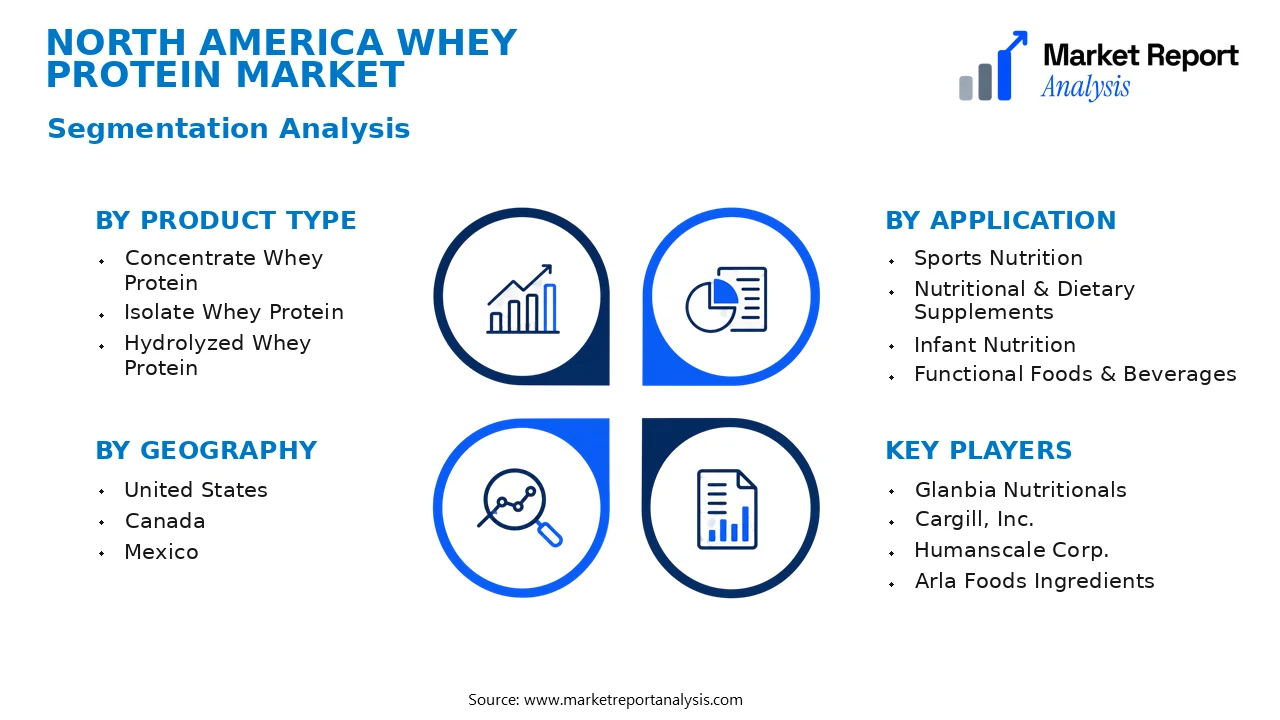
Market segmentation of the North America Whey Protein Market is structured around product type, application, and geographical regions. These categories enable a detailed understanding of distinct customer needs, product applications, and regional market dynamics, facilitating targeted marketing strategies and product development.
- Product Type
- Concentrate Whey Protein: This subsegment includes whey protein concentrates that contain around 70-80% protein and are widely used in low-cost nutritional products, sports supplements, and functional foods due to their balanced nutritional profile and affordability.
- Isolate Whey Protein: Comprising about 90% or higher protein, this type is valued for its purity and fast absorption, making it preferred in clinical nutrition, specialized dietary formulas, and high-performance sports supplements.
- Hydrolyzed Whey Protein: Featuring pre-digested proteins, this segment targets consumers seeking rapid absorption and reduced allergenic reactions, significantly used in medical nutritional products and advanced sports formulations.
- Application
- Sports Nutrition: Dominating the application landscape, sports nutrition encompasses products designed to enhance athletic performance, build muscle mass, and expedite recovery, driven by increasing fitness awareness among North American consumers.
- Nutritional & Dietary Supplements: This segment includes a broad range of health supplements infused with whey protein to address nutritional deficiencies, weight management, and general health, reflecting rising health consciousness.
- Infant Nutrition: Focused on specialized formulations, this subgroup involves whey protein used in baby food products, aiming for enhanced digestibility and nutritional value suitable for infants.
- Functional Foods & Beverages: Incorporating whey in everyday foods and drinks to boost protein content, this category appeals to busy consumers seeking nutritious, convenient options for a balanced diet.
- Geography
- United States: As the largest market in North America, the U.S. exhibits high demand driven by the strong presence of sports and health food industries, along with a rising consumer focus on fitness and wellness.
- Canada: With a growing health-conscious demographic, Canada’s market benefits from increasing adoption of whey protein supplements and functional foods, supported by a robust retail network and health trends.
- Mexico: Showing emerging growth, Mexico’s market is driven by expanding fitness centers, rising disposable incomes, and greater awareness of nutritional supplement benefits among the middle-class population.
Competitive Intelligence
The North America Whey Protein Market exhibits notable competitive dynamics characterized by high market concentration with leading players such as Glanbia, Nestlé, and Arla Foods holding significant market shares. Companies are increasingly adopting aggressive business strategies, including product diversification, innovation, and strategic partnerships to strengthen their foothold. Innovation efforts focus on developing clean-label, allergen-free, and flavored whey formulations to meet evolving consumer preferences. Many firms invest heavily in R&D to differentiate their product portfolios through enhanced bioavailability and functional benefits.
Partnerships with sports nutrition brands and health-focused retailers facilitate expanded distribution channels, while acquisitions of smaller specialty companies aim to increase market reach and technological capabilities. Several companies are pursuing geographic expansion strategies into emerging US regions and Canadian markets to capitalize on rising demand. R&D investments are aimed at product differentiation, especially through sustainable sourcing and enhanced nutritional profiles, to stay competitive.
This concerted strategy of innovation, strategic alliances, and acquisitions underscores a competitive landscape focused on establishing technological leadership and brand loyalty, ultimately enabling firms to sustain growth and differentiation within an increasingly saturated market.
Leading Company Profiles
The competitive landscape of the North America whey protein market features a mix of well-established brands and innovative newcomers, focusing on product quality, technological advancement, and strategic collaborations to strengthen market positioning.
- Glanbia Nutritionals
- Cargill, Inc.
- Humanscale Corp.
- Arla Foods Ingredients
- Davisco Foods International
- Amrit Enterprises
- Leprino Foods
- Danone North America
- The Green Labs
- Mile High Organics
Glanbia Nutritionals
Glanbia Nutritionals offers premium whey protein ingredients tailored for functional foods and beverages, leveraging advanced processing technologies to meet evolving consumer health demands and sustainability initiatives.
Cargill, Inc.
Cargill specializes in high-quality whey protein solutions with a focus on scalability, innovation, and sustainability, aiming to expand its market share through strategic acquisitions and product diversification.
Humanscale Corp.
Humanscale Corp. develops natural and clean-label whey protein ingredients, emphasizing product transparency, technological innovation, and strategic partnerships to penetrate health-conscious consumer segments.
Arla Foods Ingredients
Arla focuses on speciality whey proteins with functional benefits, emphasizing sustainable sourcing, biotechnological innovation, and strategic alliances with food-to-supplement manufacturers to expand application scopes.
Davisco Foods International
Davisco primarily supplies high-quality whey protein concentrates and isolates, emphasizing product purity, manufacturing efficiency, and expanding its regional production capacity to meet increasing demand.
Amrit Enterprises
Amrit Enterprises provides organic and grass-fed whey protein products, focusing on eco-friendly sourcing, innovative product development, and establishing strategic partnerships within the wellness sector.
Leprino Foods
Leprino Foods leverages advanced dairy processing technology for premium whey protein ingredients, emphasizing innovation, operational excellence, and expanding global distribution channels.
Danone North America
Danone integrates whey protein products into its health-centric product lineup, emphasizing sustainability, clean-label formulations, and strategic collaborations to strengthen its market presence.
The Green Labs
The Green Labs specializes in plant-based and hybrid formulas, pioneering sustainable whey protein solutions aimed at health-conscious and environmentally aware consumers.
Mile High Organics
Mile High Organics offers organic whey protein powders, focusing on eco-friendly sourcing, quality assurance, and expanding direct-to-consumer sales channels within North America.
Strategic Business Developments
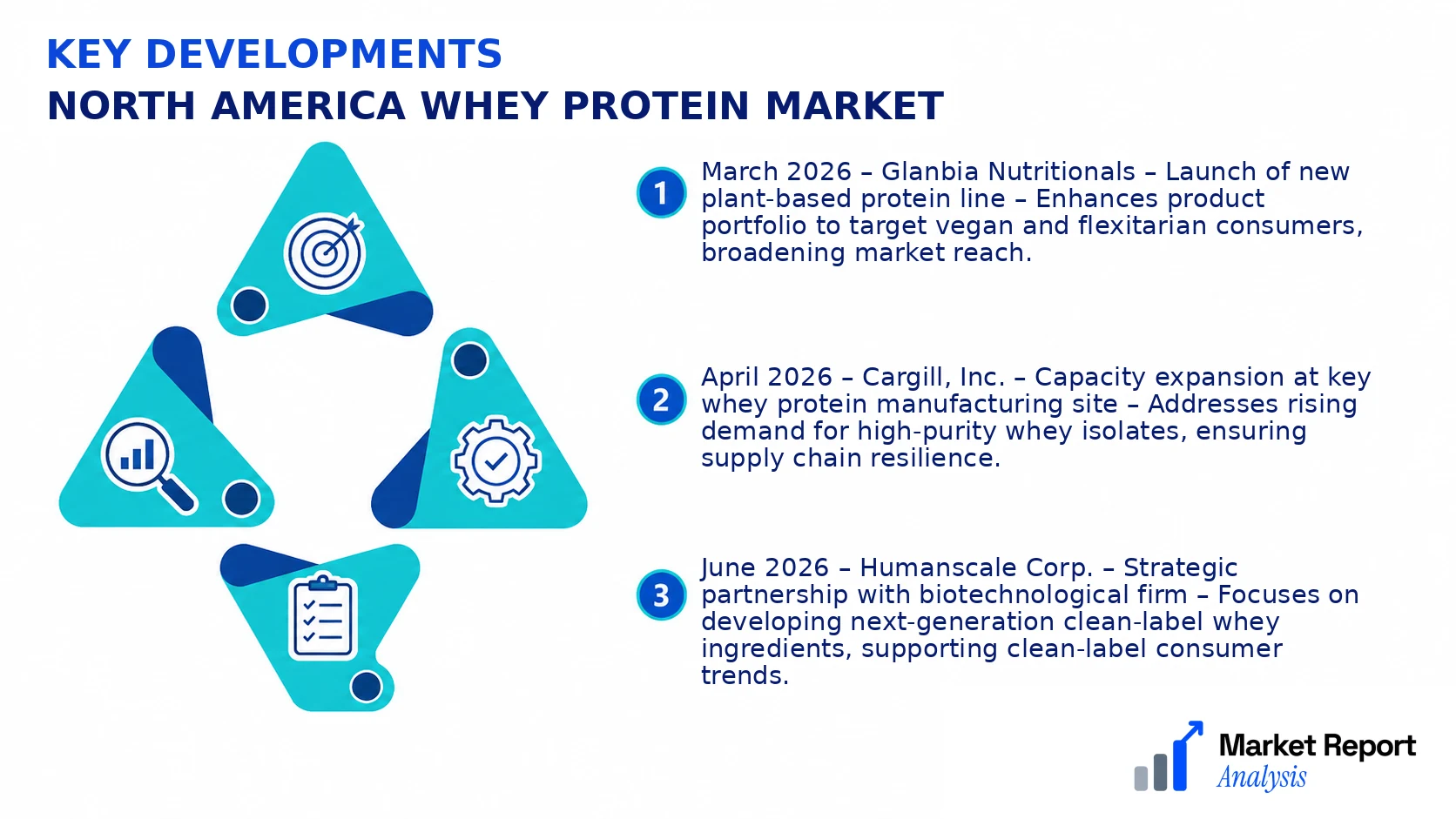
- March 2026 – Glanbia Nutritionals – Launch of new plant-based protein line – Enhances product portfolio to target vegan and flexitarian consumers, broadening market reach.
- April 2026 – Cargill, Inc. – Capacity expansion at key whey protein manufacturing site – Addresses rising demand for high-purity whey isolates, ensuring supply chain resilience.
- June 2026 – Humanscale Corp. – Strategic partnership with biotechnological firm – Focuses on developing next-generation clean-label whey ingredients, supporting clean-label consumer trends.
- August 2026 – Arla Foods Ingredients – Acquisition of regional whey processing facility – Strengthens regional presence and supports innovation in specialty whey proteins.
- September 2026 – Leprino Foods – Investment in sustainable manufacturing technology – Reduces carbon footprint and aligns with North American sustainability mandates, boosting corporate responsibility.
Frequently Asked Questions
What is the North America Whey Protein Market?
The North America Whey Protein Market refers to the industry's dynamic landscape involving the production, distribution, and consumption of whey protein products across North American countries. It encompasses various forms such as concentrates, isolates, and hydrolysates that cater to health, fitness, and nutritional needs.
What is the current market size of North America Whey Protein Market?
As of 2026, the market size of the North America Whey Protein Market is valued at approximately USD 8.4 Billion, reflecting a robust industry driven by rising health awareness and increased demand for protein supplements among consumers in the region.
What factors are driving the North America Whey Protein Market?
The growth is primarily fueled by increasing health consciousness, the booming fitness industry, and a rising prevalence of dietary-related health issues. Innovations in whey protein formulations and expanding applications beyond sports nutrition also significantly contribute to market expansion.
Which region dominates the North America Whey Protein Market?
The United States dominates the North American market due to its advanced healthcare infrastructure, high consumer purchasing power, and extensive fitness culture, which collectively make it the largest consumer and producer of whey protein products in the region.
Which segment is expected to grow the fastest?
The whey protein isolates segment is projected to witness the fastest growth over the forecast period as consumers increasingly seek high-purity proteins with minimal fat and lactose content for specialized dietary needs.
Who are the leading companies operating in the North America Whey Protein Market?
Major players include companies such as Glanbia plc, Saputo Inc., and Cargill, Inc., which lead the industry through innovation, extensive distribution networks, and strategic partnerships to meet the growing demand for whey protein products across North America.
Analyst Perspective
The North America Whey Protein Market is expected to maintain a stable growth trajectory through 2034, driven by increasing health consciousness and demand for functional foods. Long-term, the market's maturity indicates a focus on product innovation, such as plant-based and clean-label whey options, to cater to evolving consumer preferences. Commercial opportunities are abundant, particularly in sports nutrition and wellness segments, aimed at the aging population seeking muscle preservation and health enhancement. Technological evolution is likely to emphasize extraction and processing efficiencies, enabling cost reductions and product quality improvements. Investment priorities should target R&D for novel formulations and sustainable sourcing, alongside expanding manufacturing capacities in regional hubs. The competitive landscape will intensify as regional players innovate rapidly and global brands consolidate their positions. Regional growth potential remains high in both established and emerging markets, with strategic entry into health-conscious and premium segments offering lucrative avenues for differentiation and growth.
