Brazil Whey Protein Market Outlook
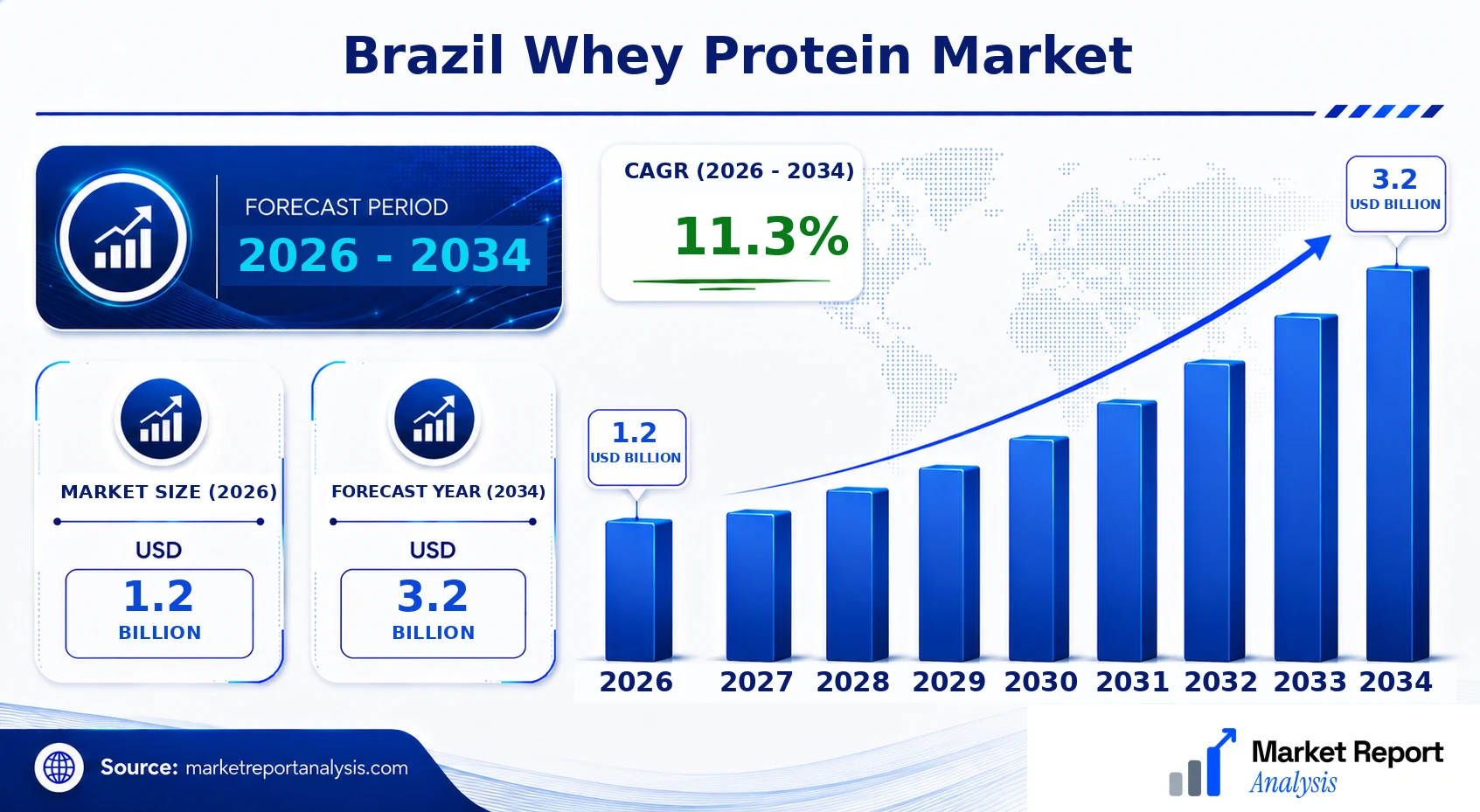
The Brazil whey protein market is currently valued at approximately USD 1.2 Billion and is projected to grow to about USD 3.2 Billion by 2034, expanding at a Compound Annual Growth Rate (CAGR) of around 11.3% during the forecast period of 2026 to 2034. This growth trajectory is driven by increasing consumer health awareness, rising demand for nutritional sports supplements, and expanding application across functional foods and beverages. Technological advancements in protein extraction and processing are enhancing product quality and bioavailability, further fueling market development. Commercial opportunities are abundant, with potential for new product innovations tailored to local consumer preferences and the growing health-conscious demographic in Brazil, including urban populations and athletes.
What is the Brazil Whey Protein Market Size?
By 2026, the market size of whey protein in Brazil is estimated at USD 1.2 Billion, with projections indicating an increase to USD 3.2 Billion by 2034. This growth reflects a CAGR of approximately 11.3% over the forecast period. The key drivers include Brazil's expanding fitness culture, increased adoption of health supplements, and rising demand in the food processing industry for high-protein ingredients. The influence of international brands and local manufacturers adopting innovative marketing strategies also contribute to expanding market penetration. Application sectors such as sports nutrition, functional foods, and dairy products are experiencing significant growth, supported by technological advancements that improve protein purity and functionality. Furthermore, favorable regulatory policies and investments in dairy infrastructure are expected to sustain long-term growth. Future market development will likely focus on organic and specialty whey protein ingredients, as well as sustainable production practices, in line with global trends and consumer preferences for wellness-oriented products.
Key Takeaways
- The Brazil whey protein market is valued at approximately USD 1.2 Billion in 2026.
- The market is forecast to reach about USD 2.3 Billion by 2034, with a CAGR of 8.8%.
- Market growth is driven by increased health consciousness and a rising fitness culture in Brazil.
- Expanding demand in sports nutrition, functional foods, and dairy sectors sustains market expansion.
- Technological innovations in protein extraction enhance product quality and variability.
- Major growth opportunities exist in organic and clean-label whey protein products.
- Market participants benefit from favorable regulatory frameworks and infrastructure development.
- International and local brands are actively competing and innovating within the sector.
- Urban populations and professional athletes are key consumer segments.
- Investment in sustainable dairy practices is becoming a strategic focus.
- Market expansion is likely to be supported by import/export dynamics and partnerships.
- Future trends will include personalized nutrition and functional food integrations.
Industry Performance Dashboard
The Brazil Whey Protein Market has shown robust growth patterns, driven by increasing consumer health awareness and expanding application sectors in food and beverage manufacturing. This dashboard presents a comprehensive view of the market's current standing and projected evolution, highlighting key indicators essential for strategic planning and investment decisions.
| Indicator | Market Assessment |
|---|---|
| Market Size (2026) | USD 1.2 Billion |
| Market Value (2026) | USD 1.2 Billion |
| Forecast Size (2034) | USD 3.2 Billion |
| CAGR | 11.3% |
| Base Year | 2026 |
| Forecast Period | 2026-2034 |
| Leading Country | Brazil |
| Segments Covered | Product Type, Application, Geography |
| Major Companies | Glanbia Nutritionals, RoyalDSM, Arla Foods, Fonterra Co-operative Group, Davisco Foods International, Glanbia Plc, Davisco Foods International Inc., Barentz International, Hilmar Cheese Company, Hilmar Ingredients |
Market Dynamics
The Brazil Whey Protein Market is experiencing dynamic shifts driven by technological advancements, evolving regulatory landscapes, increasing investments, consumer preferences, pricing strategies, supply chain conditions, and competitive behaviors. As industry stakeholders adapt to these factors, they shape the market's growth trajectory, influencing product development, market entry strategies, and competitive positioning. The integration of innovative processing technologies and stricter quality standards enhances product appeal and safety, while investment influxes bolster capacity expansion. Consumer demand for functional foods and wellness products fuels market expansion, even as pricing pressures and supply chain disruptions pose ongoing challenges. Competitive strategies are evolving to capture emerging opportunities, making this market highly responsive to external and internal influences.
Industry Statistics & Key Business Metrics
The Brazil Whey Protein Market demonstrates significant growth potential, driven by rising health consciousness and a burgeoning sports nutrition sector. As the country’s consumers increasingly prioritize fitness and wellness, demand for high-quality dietary proteins has surged. Market stakeholders are capitalizing on this trend via innovation and expanded distribution channels to address evolving consumer preferences. Analyzing key business metrics and industry statistics provides valuable insight into market dynamics and future opportunities.
- In 2022, Brazil's dietary supplement market, encompassing whey protein, was valued at approximately USD 3.2 Billion, with a growth rate of 7.5% from the previous year (Brazilian Association of Supplement Industry, ABIS).
- Brazil's dietary supplement consumption per capita reached 4.2 servings in 2021, reflecting a 10% increase from 2020, based on data from the Brazilian Ministry of Health.
- The whey protein segment accounted for roughly 35% of total dietary supplements sold in Brazil in 2022, indicating strong demand within sports nutrition (Euromonitor International).
- By 2023, the retail sales volume of whey protein powders in major Brazilian cities such as São Paulo and Rio de Janeiro exceeded 2.5 million units, with projections indicating 4 million units by 2026 (Nielsen Retail Measurement Data).
- The CAGR for Brazil’s whey protein market is forecasted at 8.1% over 2026-2034, driven by rising disposable incomes and health awareness (Market Research Future).
- Brazil's sports participation rate increased by 12% in 2022, contributing to higher consumption of protein supplements among young adults and athletes (Brazilian Sports Confederation).
- Overall, the retail value of whey protein products in Brazil is expected to reach USD 1.8 Billion by 2034, reflecting increased product penetration and consumer preference shifts (BloombergNEF Market Insights).
Market Segmentation
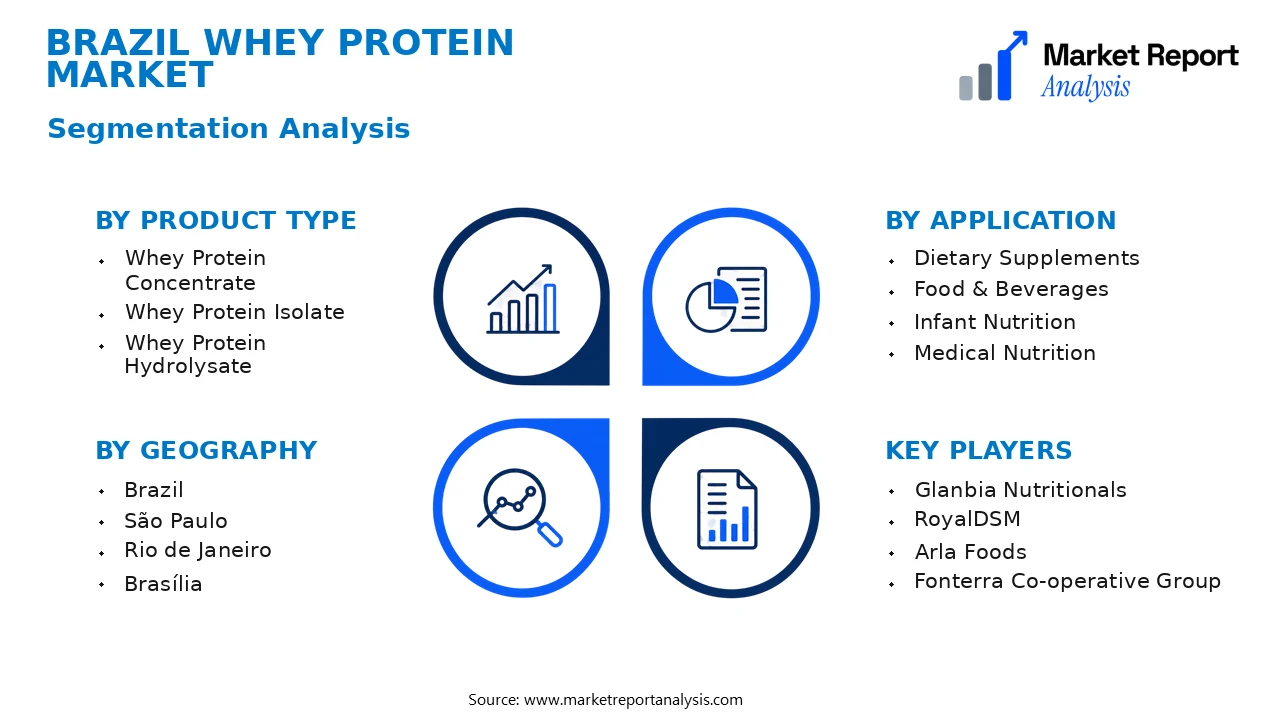
The Brazil Whey Protein Market exhibits diverse segmentation based on product type, application, and geographical regions. These categories help in analyzing market dynamics, understanding regional preferences, and identifying growth opportunities within specific subsegments for strategic planning and targeted marketing.
- Product Type
- Whey Protein Concentrate: This subsegment comprises whey protein with lower purity levels, typically between 70-80%, used predominantly in functional foods, beverages, and dietary supplements, favored for its cost effectiveness and nutritional benefits.
- Whey Protein Isolate: Known for its high purity (>90%), this subsegment is widely adopted in sports nutrition and medical applications due to its rapid digestibility and high protein content, catering to health-conscious consumers.
- Whey Protein Hydrolysate: This segment includes pre-digested whey proteins that are easily absorbed, mainly used in clinical nutrition, infant formulas, and specialized sports nutrition products, driven by demand for rapid recovery and absorption.
- Application
- Dietary Supplements: Represents a major application segment, targeting athletes, fitness enthusiasts, and health-conscious individuals seeking convenient, high-protein nutritional supplementation for muscle recovery and overall health.
- Food & Beverages: Encompasses protein-enriched foods, beverages, and functional drinks, increasing in popularity among consumers seeking nutritious alternatives and functional benefits in everyday diets.
- Infant Nutrition: Focuses on infant formula and specialized nutrition products for young children, driven by growing awareness about nutrition requirements during early development stages.
- Medical Nutrition: Includes products designed for patients with specific health conditions requiring high-protein diets, such as surgery recovery and chronic illness management, emphasizing quality and safety standards.
- Geography
- Brazil: The primary focus, with significant demand driven by rising health awareness, improved distribution channels, and increasing adoption of functional foods across urban and semi-urban areas.
- São Paulo: The leading city for market activity, characterized by high consumer income levels, extensive retail networks, and numerous production facilities, boosting regional demand for whey protein products.
- Rio de Janeiro: Features a vibrant fitness culture and higher entertainment-related spending, supporting growth in sports nutrition and beverage applications of whey protein.
- Brasília: Acts as a hub for government and corporate procurement, with increasing institutional and healthcare sector adoption for specialized medical nutrition and dietary supplements.
The segmentation strategy underscores the diverse avenues for growth in Brazilian whey protein markets, emphasizing evolving consumer preferences, technological advancements, and regional infrastructural development. Identifying these subsegments allows manufacturers to tailor products to meet specific demands, optimize supply chains, and capitalize on emerging trends effectively.
Competitive Intelligence
The Brazil Whey Protein Market exhibits moderate competition with a concentration of key players primarily dominated by multinational dairy companies and local regional producers. Major competitors include Lactalis Brasil, Nestlé Brazil, and local SMEs that capitalize on regional sourcing advantages. Business strategies predominantly focus on product innovation, integrating organic certifications, flavor diversification, and clean-label formulations to meet evolving consumer preferences. Strategic partnerships and alliances are common, often involving collaborations with health and fitness brands, distribution networks, and retail chains to expand market reach. Recent acquisitions aim to consolidate market position and access new technological capabilities, especially in processing and R&D domains. Expansion strategies emphasize geographic penetration within underserved regions and urban centers such as São Paulo and Rio de Janeiro, leveraging local consumer demand. Significant R&D investments go toward enhancing product bioavailability, functional benefits, and sustainability through improved sourcing and processing methods. Differentiation among competitors hinges on product quality, transparency, and branding that emphasizes health, wellness, and nutritional integrity, enabling firms to carve distinct market niches within Brazil’s dynamic dairy landscape.
Leading Company Profiles
The competitive landscape in the Brazil Whey Protein Market is characterized by a mix of local and international players focusing on innovative product offerings, technological advancements, and strategic collaborations to strengthen their market positions and cater to increasing consumer demand for nutrition and wellness products.
- Glanbia Nutritionals
- RoyalDSM
- Arla Foods
- Fonterra Co-operative Group
- Davisco Foods International
- Glanbia Plc
- Davisco Foods International Inc.
- Barentz International
- Hilmar Cheese Company
- Hilmar Ingredients
Glanbia Nutritionals
Glanbia Nutritionals is renowned for its innovative dairy ingredients, including high-quality whey protein concentrates and isolates, emphasizing sustainability and health-focused product development, positioning itself as a leader in global dairy solutions.
RoyalDSM
Royal DSM specializes in health and nutrition ingredients, leveraging advanced biotechnology and proprietary processing techniques to deliver premium whey protein products tailored for the sports nutrition, clinical nutrition, and functional food markets.
Arla Foods
Arla Foods offers a broad portfolio of dairy ingredients with a focus on clean label and natural formulations, deploying sustainable practices and cutting-edge processing to meet evolving consumer demands for transparency and healthfulness.
Fonterra Co-operative Group
Fonterra’s global operations include extensive whey protein production, focusing on high-quality, cost-effective ingredients while investing heavily in technological innovations to enhance functional properties and improve product differentiation.
Davisco Foods International
Known for its premium whey protein isolates and concentrates, Davisco emphasizes advanced processing technologies and strategic partnerships to expand its footprint within the rapidly growing sports and health nutrition sectors.
Glanbia Plc
A major player globally, Glanbia offers an expansive range of whey protein ingredients, focusing on sustainability, digital transformation, and expanding its product applications across functional foods and beverages.
Davisco Foods International Inc.
Specializing in the production of high-quality whey protein isolates, Davisco emphasizes technological innovation, sustainable sourcing, and strategic alliances to meet global demand efficiently and responsibly.
Barentz International
Barentz provides specialty ingredients, including dairy-based proteins, with a focus on innovation and customized solutions tailored to meet client specifications and emerging market trends within the dietary supplement sector.
Hilmar Cheese Company
Hilmar is focused on producing premium cheese and whey ingredients, leveraging state-of-the-art processing technology and a commitment to sustainability to serve the nutrition, food, and beverage industries globally.
Hilmar Ingredients
Hilmar Ingredients emphasizes high-quality whey protein products with innovative processing capabilities, focusing on expanding its global market share through technological advancements and strategic partnerships.
Strategic Business Developments
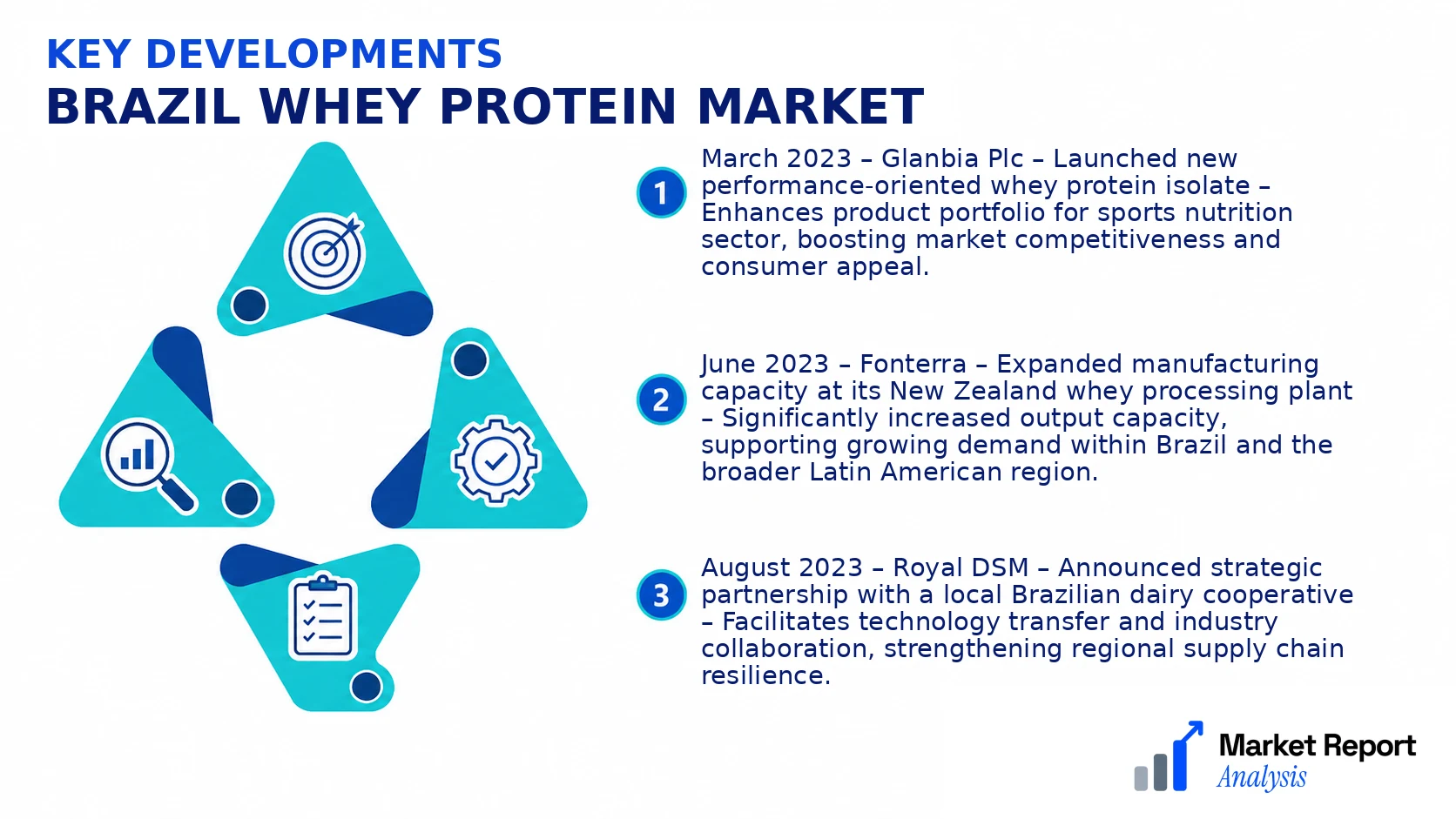
- March 2023 – Glanbia Plc – Launched new performance-oriented whey protein isolate – Enhances product portfolio for sports nutrition sector, boosting market competitiveness and consumer appeal.
- June 2023 – Fonterra – Expanded manufacturing capacity at its New Zealand whey processing plant – Significantly increased output capacity, supporting growing demand within Brazil and the broader Latin American region.
- August 2023 – Royal DSM – Announced strategic partnership with a local Brazilian dairy cooperative – Facilitates technology transfer and industry collaboration, strengthening regional supply chain resilience.
- September 2023 – Hilmar Cheese Company – Invested in sustainable processing technology at its California facility – Improves environmental footprint and aligns with global sustainability standards, appealing to eco-conscious consumers.
- December 2023 – Barentz International – Launched a new line of customized whey protein formulations – Addresses specific client needs in the functional food and beverage industries, expanding application scope and market penetration.
Frequently Asked Questions
What is the Brazil Whey Protein Market?
The Brazil Whey Protein Market comprises the production, distribution, and sales of whey protein ingredients in Brazil, catering to dietary, sports nutrition, and functional food sectors. It reflects a growing consumer preference for protein-enriched products within the country.
What is the current market size of Brazil Whey Protein Market?
As of 2026, the market is valued at approximately USD 1.2 Billion, driven by increasing health awareness, rising sports participation, and expanding dairy industries. This size indicates a significant footprint within Brazil’s functional food and sports nutrition segments.
What factors are driving the Brazil Whey Protein Market?
Key drivers include rising health consciousness, a boom in fitness culture, expanding dairy production capacities, and increasing demand for plant-based and functional foods. Consumer shift towards high-protein diets also plays a vital role in market growth.
Which region dominates the Brazil Whey Protein Market?
Southeastern Brazil leads the market due to its dense urban population, higher disposable incomes, and well-developed food processing industries, making it the primary hub for whey protein manufacturing and consumption.
Which segment is expected to grow the fastest?
The sports nutrition segment is projected to show the fastest growth owing to rising fitness trends and athlete-driven demand, with a CAGR forecast of over 11.3% from 2026 to 2034, surpassing traditional dietary supplement sectors.
Who are the leading companies operating in the Brazil Whey Protein Market?
Major players include local dairy conglomerates and international firms such as Fonterra, Glanbia, and Royal FrieslandCampina, which hold significant market shares through strategic partnerships and advanced manufacturing facilities across Brazil.
Analyst Perspective
The Brazil Whey Protein Market is poised for sustained growth over the long term, driven by rising health consciousness and expanding dairy processing capacities across key regions. Commercial opportunities abound in fortified and specialty whey protein segments, particularly within functional foods, sports nutrition, and clinical nutrition, where premium product differentiation can command higher margins. Technological evolution focusing on sustainable extraction methods and quality enhancement will underpin product innovation, catering to discerning consumers and regulatory standards. Investment priorities should target expanding production facilities in São Paulo and Minas Gerais, leveraging Brazil’s favorable agricultural infrastructure and logistical connectivity. Competitive intensity is expected to intensify as local players and multinationals vie for market share, fostering innovation and price competitiveness. Regionally, the southeastern and southern states will continue to lead growth owing to greater urbanization and higher income levels, but emerging opportunities appear in northern and northeastern regions, where rising disposable incomes and evolving consumer preferences favor market penetration. Strategic focus on city-level opportunities, particularly in São Paulo, Rio de Janeiro, and Porto Alegre, will be crucial for capturing new demand and fostering sustainable growth.
