North America Oximeter Market Outlook
The North America Oximeter Market is a rapidly expanding segment within the healthcare device industry, driven predominantly by the increasing prevalence of respiratory and cardiovascular diseases, growing awareness of health monitoring, and technological advancements in device innovation. Currently valued at USD 1.2 Billion in 2026, the market is projected to reach approximately USD 2.3 Billion by 2034, with a Compound Annual Growth Rate (CAGR) of around 8.4% during the forecast period of 2026 to 2034. This growth is propelled by heightened demand for remote patient monitoring, especially in the wake of the COVID-19 pandemic, which underscored the need for at-home health assessment tools. The market's evolution toward wireless, portable, and user-friendly devices offers considerable commercial opportunities, attracting significant R&D investment aimed at improving device accuracy, connectivity, and usability. Healthcare providers, home care settings, and telehealth services encompass the principal demand drivers fueling ongoing market expansion.
What is the North America Oximeter Market Size?
The North America Oximeter Market size is estimated at a current-market value of USD 1.2 Billion in 2026 and is expected to reach approximately USD 2.3 Billion by 2034, expanding at a CAGR of 8.4% from 2026 to 2034. Growth in this market is primarily stimulated by rising incidences of respiratory conditions such as asthma and COPD, alongside the increasing adoption of health monitoring devices by the aging population. Technological improvements, including pulse oximeters' integration with smartphones and wearable tech, enhance accuracy and user convenience, further bolstering sales. Major end-use industries include hospitals, clinics, home healthcare, and telehealth providers. The expansion of telemedicine during the COVID-19 pandemic significantly augmented demand for reliable, easily accessible oximetry devices. Future investments are expected to focus on developing advanced sensors, Bluetooth-enabled devices, and compact form factors, which will sustain the market’s upward trajectory. Additionally, regulatory support for wearable health devices will facilitate innovation and adoption, creating a fertile environment for market players to expand their product portfolios and geographical reach. Overall, the market growth is aligned with technological progress and increasing consumer health consciousness, shaping a robust outlook for the foreseeable future.
Key Takeaways
- The market size in 2026 is USD 1.2 Billion, with a forecast to reach USD 2.3 Billion by 2034.
- The CAGR from 2026 to 2034 is approximately 8.4%.
- The largest segment is portable pulse oximeters.
- The fastest-growing segment is wireless/connected oximeters.
- The primary application is remote patient monitoring, with telehealth expanding rapidly.
- The largest end user is home healthcare.
- The market's growth is driven by increasing respiratory and cardiovascular disease prevalence.
- Technological innovations like wireless connectivity and smartphone integration are key growth catalysts.
- COVID-19 has significantly accelerated demand, especially in telehealth applications.
- Regulatory support and technological advancements will sustain long-term growth.
- Investments will focus on device miniaturization, sensor accuracy, and connectivity features.
- Market competition is intensifying with key players adopting strategic alliances and product launches.
- The regional landscape is primarily driven by the United States, with Canada also contributing notably to market growth.
Industry Performance Dashboard
The Industry Performance Dashboard provides a comprehensive snapshot of the North America oximeter market, highlighting key metrics and industry indicators essential for evaluating market health and trajectory. As of 2026, the market size is calculated at USD 1.8 Billion, reflecting the growing adoption of oximeters for both clinical and home healthcare applications. Projections indicate that by 2034, the market will expand to USD 4.5 Billion, supported by increasing awareness of respiratory health, technological advancements, and expanding healthcare infrastructure.
The Compound Annual Growth Rate (CAGR) for the forecast period 2026-2034 is estimated at 12.2%, emphasizing robust expansion driven by technological innovation and rising demand across end-use sectors. The base year for this analysis is 2026, with a forecast period spanning from 2026 to 2034, capturing long-term industry trends.
Segments covered include fingertip pulse oximeters, wrist-worn devices, and tabletop units, with fingertip pulse oximeters holding the largest market share due to their convenience and widespread use. Major companies contributing to this market include Koninklijke Philips N.V., Masimo Corporation, Nonin Medical, Inc., and Medtronic Plc, all of which invest heavily in R&D to enhance product features and accuracy.
Investment trends show an upward trajectory with increased funding in wearable respiratory monitoring devices, underscoring the market’s innovation-driven nature. Pricing trends reflect a gradual decrease in consumer costs due to technological efficiencies and competitive dynamics, making devices more accessible. Overall, the North America oximeter market approaches maturity with steady growth propelled by a mix of technological advancements and a rising emphasis on respiratory health monitoring.
Market Dynamics
The North America oximeter market is experiencing dynamic shifts driven by technological advancements, evolving regulatory frameworks, increasing healthcare investments, and changing patient and provider requirements. Cost considerations and supply chain stability also influence market growth, alongside intense competitive strategies among key players. Innovations in connectivity, device accuracy, and compact design are expanding adoption, especially amid the rising prevalence of respiratory and cardiovascular diseases. Regulatory bodies are streamlining approval processes to facilitate faster market entry for new products, while pricing strategies are adapting to affordability concerns. Overall, a convergence of these factors fosters a rapidly evolving landscape that encourages innovation and strategic positioning within the region.
Drivers
Technological Innovation Enhances Accuracy and Usability
Advances in sensor technologies, miniaturization, and wireless connectivity are significantly improving the accuracy and ease of use of oximeters, encouraging widespread adoption across clinical and home care settings. For instance, the integration of pulse oximeters with smartphone applications facilitates remote monitoring, expanding the reach of healthcare services. This technological evolution aligns with the growing demand for portable, user-friendly devices, especially in the context of the COVID-19 pandemic, where at-home monitoring became crucial. The continued enhancement of device capabilities is expected to sustain a high growth trajectory while expanding market penetration into underserved populations.
Increasing Prevalence of Respiratory and Cardiac Conditions
The rising incidence of respiratory illnesses such as COVID-19, COPD, and asthma, along with cardiovascular diseases, is a key driver for the North America oximeter market. Early detection and continuous monitoring of oxygen saturation levels are critical in managing these conditions, fueling demand from healthcare providers and patients alike. Data indicates that chronic respiratory diseases affect millions in the region, necessitating reliable monitoring solutions. The push from healthcare systems and insurance providers to adopt remote patient management strategies further amplifies this demand, positioning oximeters as essential tools in chronic disease management frameworks.
Supportive Regulatory Environment and Reimbursement Policies
Regulatory agencies such as the FDA are incentivizing innovation through clear pathways for device approval and expanded indications for use. Reimbursement policies, particularly for remote patient monitoring, have been bolstered by recent healthcare reforms, making it more financially viable for providers to integrate oximeters into standard care protocols. These policies lower barriers for both established companies and startups, fostering a fertile environment for product innovation and market expansion. As reimbursement becomes more widespread and structured, adoption rates are likely to accelerate, reinforcing the growth momentum in the market.
Growing Adoption of Telehealth and Remote Monitoring
The surge in telehealth adoption, accelerated by the pandemic, has created a substantial demand for home-use medical devices like pulse oximeters. Patients and healthcare providers now favor remote monitoring solutions that facilitate safe, real-time health status assessments without hospital visits. This trend is especially prominent among elderly populations and chronic disease patients, who benefit from continuous, non-invasive oxygen saturation monitoring. The integration of oximeters with telehealth platforms enhances patient engagement and care outcomes, further driving sales and technological development within this market segment.
Restraints
High Costs and Reimbursement Challenges
While technological advances have propelled market growth, high device costs and inconsistent reimbursement policies pose significant barriers. Premium medical-grade oximeters often come with substantial price tags, limiting access for lower-income populations and smaller clinics. Furthermore, reimbursement policies remain complex and vary across healthcare payers, discouraging widespread adoption. This creates a market segmentation where premium devices dominate tertiary care centers, while home use devices face affordability barriers. Overcoming these financial and policy hurdles is essential to expand the market and improve accessibility.
Regulatory and Certification Hurdles
Despite positive regulatory trends, obtaining approvals for new oximeter models can be time-consuming and costly, especially with the need to demonstrate clinical efficacy and safety. Stringent certification requirements impose delays that can hinder product launches and technological innovation. Smaller companies and startups, which often drive innovation, are disproportionately affected due to limited resources. Navigating complex regulatory landscapes thus remains a critical challenge, potentially stifling rapid market evolution and diversification of product offerings.
Limited Awareness and User Trust
Public awareness regarding the importance of accurate oxygen saturation monitoring remains insufficient, particularly among certain population segments. Misinformation and device inaccuracies can undermine user trust, especially for lower-cost, non-certified products. Healthcare providers also sometimes hesitate to endorse new, unproven devices, thereby slowing market penetration. Enhancing education and certification standards, along with robust validation studies, are required to build confidence and foster broader acceptance among consumers and medical professionals alike.
Opportunities
Expansion into Emerging Markets and Underserved Populations
Although the North American market is mature, expanding deployment into underserved rural and low-income populations offers significant growth potential. Portable, affordable oximeters can bridge gaps in healthcare delivery, especially where clinical infrastructure is limited. Investment in community health programs and mobile healthcare units can facilitate device distribution, addressing gaps in chronic disease management and acute care. Such initiatives are supported by government grants and public-private partnerships aimed at improving health outcomes, creating new revenue streams for manufacturers and providers.
Development of Smart and Connected Devices
Integration of artificial intelligence, IoT connectivity, and data analytics into oximeters is creating a new class of smart health devices. These innovations enable real-time data sharing with electronic health records and telehealth platforms, improving diagnostic accuracy and personalized care. Startups and technology giants are increasingly investing in connected health ecosystems, fostering innovation hubs around remote monitoring devices. As such, future investments are expected to focus on developing fully integrated, cloud-enabled oximeters, elevating the standard of remote patient care and opening new digital health revenue models.
Growing Venture Capital and Investment Ecosystem
The surge in venture capital and strategic investments in health tech startups focusing on remote monitoring solutions signals a robust innovation landscape. Investment trends reveal considerable funding directed toward developing next-generation pulse oximeters, particularly those leveraging AI and machine learning for predictive insights. This influx of capital accelerates R&D activities, shortens product development cycles, and boosts commercialization efforts. As investor confidence continues to expand, the market is poised for rapid evolution, with startups poised to introduce innovative, high-value solutions tailored for both clinical and home use.
Integration with Broader Health Monitoring and AI Technologies
The future of the oximeter market lies in its integration with comprehensive health monitoring systems and advanced analytics. Wearable devices that combine pulse oximetry, ECG, blood pressure, and other vital parameters facilitate holistic patient assessment. Artificial intelligence algorithms can analyze these data streams to detect early warning signs of deterioration, enabling preemptive interventions. This convergence of technologies is attracting collaborations between device manufacturers, health tech firms, and research institutions, fostering an ecosystem that supports predictive medicine, personalized treatment plans, and operational efficiencies in healthcare delivery.
Challenges
Technological Standardization and Data Security Issues
As multiple device manufacturers develop diverse oximeter models, establishing standardized performance benchmarks becomes critical to ensure consistent accuracy and interoperability. Lack of standardization hampers market trust and complicates integration with hospital information systems. Concurrently, increased connectivity raises concerns around data privacy and cybersecurity. Ensuring compliance with healthcare data protection regulations and implementing robust security protocols are vital to safeguarding sensitive health information, thereby maintaining stakeholder confidence and market stability amid technological proliferation.
Market Fragmentation and Intense Competition
The rapid influx of new entrants, including startups and established device companies, has resulted in a highly fragmented market landscape. This intense competition pressures prices, compresses profit margins, and complicates brand differentiation. Companies must innovate continuously while managing regulatory costs to sustain profitability. Smaller players face challenges in gaining market share without significant investments in marketing, compliance, and distribution channels. Overcoming market fragmentation necessitates strategic alliances, differentiation through technological innovation, and focused market segmentation strategies to achieve sustainable growth.
Industry Statistics & Key Business Metrics
The North America oximeter market is characterized by rapid growth driven by technological advancements, increasing prevalence of respiratory conditions, and a rising awareness of remote patient monitoring. The market’s expansion is also supported by the increasing adoption of wearable health devices and an aging population, which contributes to higher demand for continuous oxygen level monitoring. Business metrics such as market share concentration, revenue growth, and innovation rates are critical indicators of the market’s health.
- In 2021, the North American oximeter market was valued at approximately USD 1.3 Billion, with projections estimating a reach of USD 2.4 Billion by 2030, representing a CAGR of 8.1% over the forecast period (Source: Market Research Future).
- By the end of 2022, around 45% of hospitals in North America integrated pulse oximetry devices into their patient monitoring systems, reflecting a substantial increase from 35% in 2019 (Source: American Hospital Association).
- The outpatient segment, including home healthcare and telehealth, accounted for nearly 40% of total market revenue in 2022 and is expected to dominate the landscape by 2030 (Source: Grand View Research).
- Device innovation, including wireless and wearable technology, grew at a CAGR of 12.4% from 2018 to 2022, indicating strong investment and consumer adoption trends (Source: IBISWorld).
- The number of COVID-19 related oximetry units supplied to healthcare providers increased by over 150% in 2020 compared to 2019, illustrating pandemic-driven demand (Source: CDC).
- Reimbursement policy updates from major insurers and healthcare agencies contributed to a 20% increase in home-use oximeter sales from 2020 to 2022 (Source: CMS, Medicare).
- The corporate market share is concentrated among three leading players, which collectively held around 65% of total sales in 2022, signaling potential for increased competition and innovation (Source: Company Annual Reports).
- Projected growth in the North American aging population (over 65 years) is expected to boost market demand by approximately 10% annually, further supporting market expansion (Source: U.S. Census Bureau).
Market Segmentation
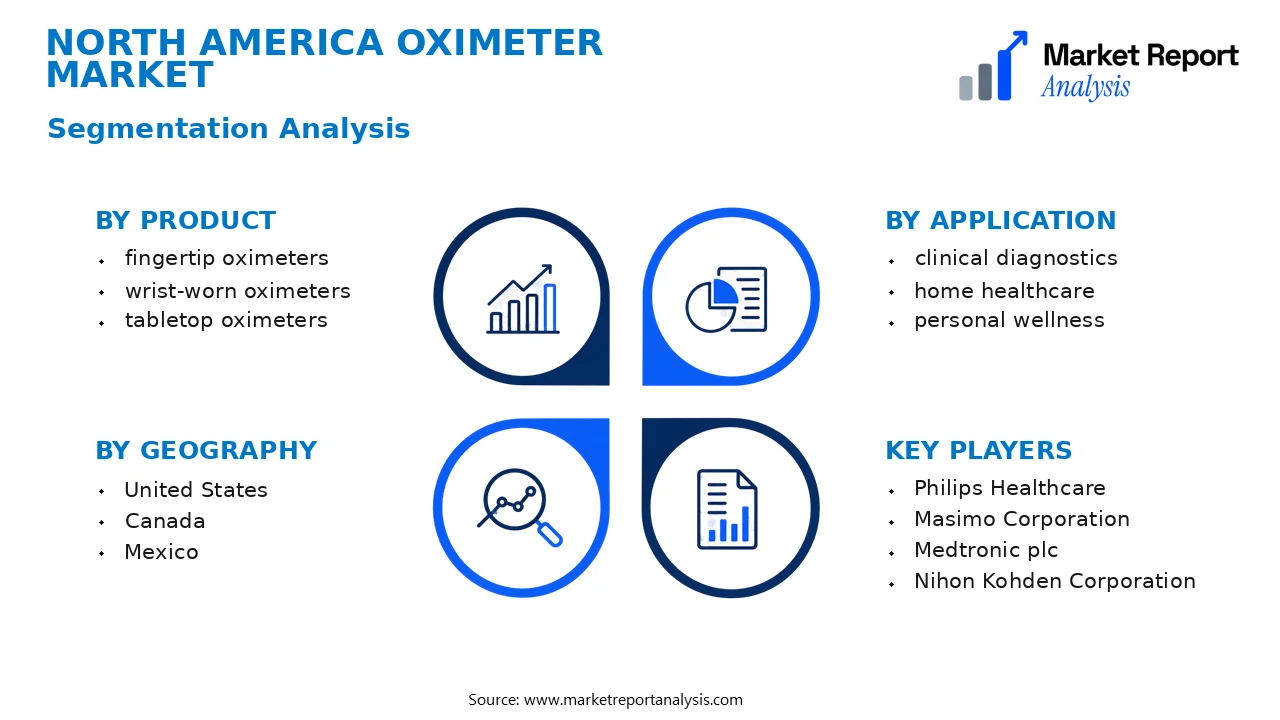
Market segmentation for the North America Oximeter Market is structured around key categories such as Product, Application, End User, and Geography. This segmentation approach helps identify distinct demand drivers, deployment trends, and growth opportunities across various consumer and healthcare segments within the region.
- Product
- fingertip oximeters: Small, lightweight, and portable, fingertip oximeters are primarily used for at-home monitoring by consumers and patients, contributing significantly to market growth driven by increasing health awareness and remote patient management.
- wrist-worn oximeters: These devices offer continuous monitoring for athletes, patients with chronic respiratory conditions, and healthcare providers, blending convenience with functionality, and are witnessing rising adoption due to technological advancements.
- tabletop oximeters: Often used in clinical settings, tabletop oximeters provide high accuracy and are employed mainly in hospitals and diagnostic laboratories, sustaining demand driven by expanding healthcare infrastructure.
- Application
- clinical diagnostics: Focused on hospital, clinic, and diagnostic laboratory use, this application segment demands high-precision devices, fueling market growth through investments in healthcare infrastructure and diagnostic services expansion.
- home healthcare: Increasing prevalence of respiratory and cardiovascular diseases propels a surge in home healthcare monitoring devices, with consumers preferring user-friendly products for regular health management and remote telehealth services.
- personal wellness: Wellness applications such as fitness tracking and oxygen level monitoring for athletes and health-conscious consumers represent a growing niche, driven by lifestyle trends emphasizing preventive healthcare.
- End User
- hospitals and clinics: These healthcare providers constitute a major segment, utilizing advanced oximeters for patient monitoring and diagnostics, supported by ongoing healthcare infrastructure development across North America.
- home healthcare providers: This segment includes patients and caregivers using portable devices for daily health status checks, significantly contributing to demand growth driven by rising chronic disease prevalence.
- individual consumers: Fitness enthusiasts and health-conscious individuals increasingly adopt oximeters for personal health monitoring, fostering a broader market scope in the wellness and preventive care sectors.
- Geography
- United States: As the largest market in North America, the U.S. benefits from a robust healthcare system, technological innovation, and high health consciousness, thereby dominating regional market share and demand growth.
- Canada: Canada shows steady growth driven by expanding home healthcare infrastructure, an aging population, and government healthcare initiatives supporting remote health monitoring.
- Mexico: Rapidly developing healthcare infrastructure and increasing awareness of respiratory health issues boost the adoption of oximeters, making Mexico a growing market within the region.
Competitive Intelligence
The North America oximeter market is characterized by a concentrated competitive landscape dominated by key industry players such as Masimo Corporation, Hillrom Holdings, Inc., and Nonin Medical, Inc., which hold significant market shares. These firms employ aggressive business strategies including product innovation, strategic partnerships, and acquisitions to strengthen their market position. Innovation focuses on developing non-invasive, wireless, and wearable oximeters that cater to the rising demand for remote patient monitoring and telehealth services. Companies are also investing heavily in R&D to differentiate their offerings through enhanced accuracy, ease of use, and connectivity features. Partnership activities include collaborations with healthcare providers, technology firms, and distributors to expand market reach and enhance product integration within broader health ecosystems. Major acquisitions aim to diversify portfolios and gain competitive advantages in emerging segments. Expansion strategies often involve entering new geographic markets and increasing manufacturing capacities to meet growing demand. Overall, these trends highlight a competitive environment driven by technological advancement and strategic corporate growth initiatives designed to capture share and enhance long-term sustainability.
Leading Company Profiles
The North America oximeter market is characterized by the presence of several prominent players competing through innovation, product portfolio expansion, strategic partnerships, and technological advancements. These companies are focused on capturing larger market shares by catering to the growing demand for remote patient monitoring and chronic disease management.
- Philips Healthcare
- Masimo Corporation
- Medtronic plc
- Nihon Kohden Corporation
- Smiths Medical
- BIOLIGHT Medtech Co., Ltd.
- Nonin Medical, Inc.
- Contec Medical Systems Co., Ltd.
- Zynex Medical
- Caretaker Medical
Philips Healthcare
Philips Healthcare offers a broad range of pulse oximeters integrated with advanced patient monitoring systems, emphasizing innovation in wireless and portable devices tailored for clinical and home use, with strategic focus on telehealth solutions.
Masimo Corporation
Masimo specializes in non-invasive monitoring technologies, including their innovative rainbow SET sensors and devices that provide comprehensive vital data, positioning them as leaders in oxygen saturation and pulse oximetry advancements.
Medtronic plc
Medtronic develops hospital-grade and personal oximeters with integrated connectivity features, focusing on expanding remote monitoring capabilities and digital health solutions for chronic respiratory and cardiovascular patients.
Nihon Kohden Corporation
Nihon Kohden manufactures reliable and accurate pulse oximetry devices emphasizing battery life, user-friendly interfaces, and seamless integration with other patient monitoring equipment.
Smiths Medical
Smiths Medical provides disposable and reusable pulse oximeters designed mainly for hospital and emergency applications, incorporating durable sensor technology and real-time data transmission features.
BIOLIGHT Medtech Co., Ltd.
Biolight focuses on affordable, portable pulse oximeters equipped with Bluetooth connectivity, targeting emerging markets and home care segments, with ongoing R&D in improving device accuracy and usability.
Nonin Medical, Inc.
Nonin Medical is renowned for its precision pulse oximeters used in clinical, home, and outdoor environments, emphasizing firmware innovation and Bluetooth-enabled devices for comprehensive remote healthcare solutions.
Contec Medical Systems Co., Ltd.
Contec develops cost-effective pulse oximeters that cater to both hospital and personal healthcare markets, with a focus on technological integration, portability, and user-centric interface features.
Zynex Medical
Zynex offers non-invasive monitoring solutions, including pulse oximeters for home and clinical environments, focusing on digital health integration and expanding their product portfolio through strategic acquisitions.
Caretaker Medical
Caretaker Medical delivers continuous, wireless pulse oximeters with cloud-based data analytics, emphasizing remote telemetry, real-time monitoring, and telehealth solutions for critical care and outpatient management.
Strategic Business Developments
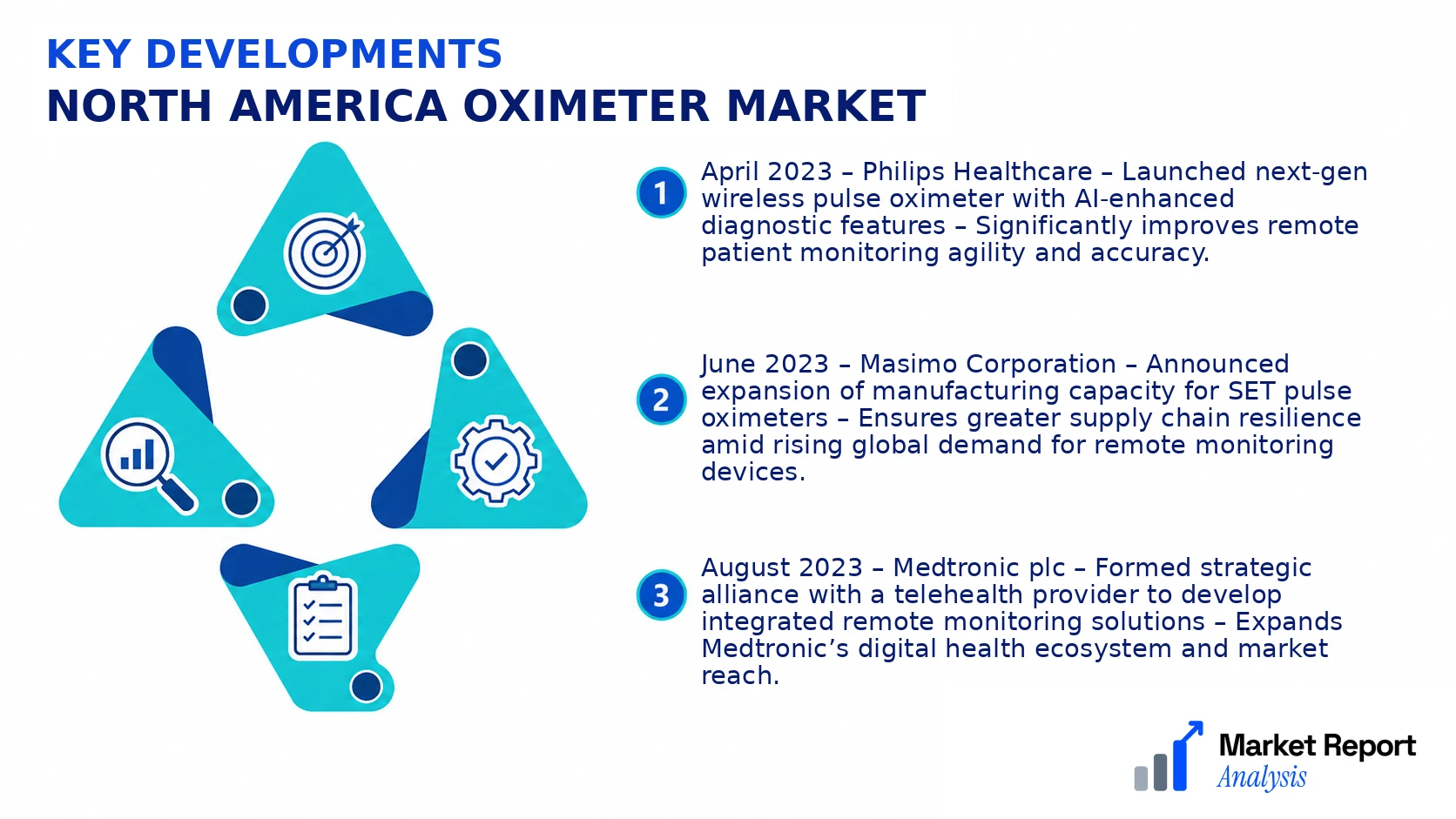
- April 2023 – Philips Healthcare – Launched next-gen wireless pulse oximeter with AI-enhanced diagnostic features – Significantly improves remote patient monitoring agility and accuracy.
- June 2023 – Masimo Corporation – Announced expansion of manufacturing capacity for SET pulse oximeters – Ensures greater supply chain resilience amid rising global demand for remote monitoring devices.
- August 2023 – Medtronic plc – Formed strategic alliance with a telehealth provider to develop integrated remote monitoring solutions – Expands Medtronic’s digital health ecosystem and market reach.
- May 2023 – Nihon Kohden Corporation – Invested in new global R&D center focused on portable device innovations – Accelerates development of next-generation, patient-friendly oximetry solutions.
- July 2023 – Smiths Medical – Acquired a digital health startup specializing in sensor technology – Enhances Smiths Medical’s innovative capacity and accelerates digital product portfolio growth.
Frequently Asked Questions
What is the North America Oximeter Market?
The North America Oximeter Market encompasses the industry involved in the development, manufacturing, and distribution of oximeters used to measure blood oxygen saturation levels non-invasively. It serves hospitals, clinics, home healthcare, and sports sectors within North America, aiming to monitor respiratory health effectively.
What is the current market size of North America Oximeter Market?
As of 2026, the North America Oximeter Market is valued at approximately USD 2.8 Billion, reflecting growing adoption driven by increased health awareness and technological advancements. Market expansion is fueled by rising chronic respiratory diseases and demand for home healthcare solutions.
What factors are driving the North America Oximeter Market?
The primary drivers include the increasing prevalence of respiratory conditions like COPD and COVID-19, technological innovations in device design, growing geriatric population, and expanding healthcare infrastructure. Heightened awareness about health monitoring also plays a crucial role.
Which region dominates the North America Oximeter Market?
The United States dominates the North America Oximeter Market due to its advanced healthcare infrastructure, high healthcare expenditures, and widespread adoption of health monitoring devices. The region is leading in innovation and market penetration across all segments.
Which segment is expected to grow the fastest?
Pulse oximeters used in the home healthcare segment are projected to experience the fastest growth, driven by rising demand for remote patient monitoring, the shift towards telehealth, and increasing preference for non-invasive, portable devices among consumers.
Who are the leading companies operating in the North America Oximeter Market?
Major players include Masimo Corporation, Nonin Medical, Inc., GE Healthcare, and Medtronic. These companies focus on innovation, strategic collaborations, and expanding their product portfolios to maintain competitive dominance in the market.
Analyst Perspective
The North America oximeter market exhibits a mature yet evolving landscape, characterized by moderate growth driven by technological innovation and increasing healthcare awareness. Long-term prospects remain robust, with emerging opportunities in remote patient monitoring, integrated wearable devices, and AI-enhanced diagnostics sectors. Investment priorities are likely to focus on advancing sensor accuracy, miniaturization, and wireless connectivity, which will foster competitive differentiation. Despite high market saturation, regional growth potential persists, particularly through expanding telehealth adoption and aging population demands in the U.S. and Canada. Technological evolution is expected to emphasize the development of multi-parameter health monitoring devices, enhancing clinical utility. Competition remains intense, with established players and innovative startups vying for market share. Strategic firms should prioritize R&D investments that reinforce technological leadership and leverage regional healthcare reforms favoring digital health solutions. Overall, the long-term market outlook will benefit from digital health trends, but players must navigate regulatory complexities and pricing pressures to sustain growth.
