Malaysia Welding Wires Market Outlook
The Malaysia Welding Wires Market is anticipated to exhibit robust growth driven by infrastructural development, increased manufacturing activities, and modernization of industrial practices. Rising demand from automotive, construction, and shipbuilding sectors is further fueling the market expansion. Technological advancements, coupled with a shift towards high-quality, corrosion-resistant welding wires, are shaping the competitive landscape. Government initiatives supporting industrial growth and infrastructure projects foster an environment conducive to market growth, while the adoption of automated welding solutions enhances productivity and quality standards. The market is expected to expand significantly from 2026 to 2034, with evolving customer preferences for sustainable and innovative welding materials propelling new product development and strategic alliances among key players.
What is the Malaysia Welding Wires Market Size?
By 2026, the Malaysia Welding Wires Market is anticipated to be valued at roughly USD 1.2 Billion, with a forecasted increase to approximately USD 2.1 Billion by 2034. This corresponds to a CAGR of 7.0% during the forecast period of 2026-2034. The growth momentum is propelled by expanding end-use industries such as automotive manufacturing, construction, shipbuilding, and industrial equipment, all of which demand high-quality welding wires for their production processes. The technological shift towards more efficient, corrosion-resistant, and high-strength welding wires is gaining prominence, directly influencing market dynamics. Additionally, increasing foreign direct investments and local manufacturing strategies are fostering market expansion. Market participants are actively exploring opportunities in developing low-cost, high-performance welding wire products to meet rising regional demand. The evolving regulatory landscape, emphasizing safety and environmental standards, is also shaping product innovation and adoption within this sector.
Key Takeaways
- The Malaysia Welding Wires Market is expected to grow from USD 1.2 Billion in 2026 to USD 2.1 Billion by 2034.
- The CAGR for the forecast period is 7.0%.
- Expanding automotive, construction, and industrial manufacturing sectors are primary demand drivers.
- Technological advancements include the adoption of flux-cored and high-strength welding wires.
- Increasing foreign direct investments bolster manufacturing activities and market growth.
- Government initiatives and infrastructural development projects support market expansion.
- Rising focus on safety, quality, and environmental standards influence product innovation.
- The market is witnessing a shift towards more sustainable and cost-effective welding solutions.
- Regional investments in steel and auto manufacturing corridors enhance supply chain efficiencies.
- Competitive landscape includes local manufacturers and international players investing in R&D.
- Future growth opportunities lie in developing low-cost, high-performance welding wires tailored to regional needs.
- Market dynamics are further supported by regulatory frameworks promoting industrial safety and standards.
Industry Performance Dashboard
The Industry Performance Dashboard presents a comprehensive overview of the Malaysia Welding Wires Market, highlighting key metrics that signal its trajectory and competitive landscape. The market size in 2026 is assessed at USD 1.2 Billion, reflecting sustained demand driven by expanding industrialization and infrastructure projects. Projections indicate a robust growth trajectory, with the market expected to reach USD 2 Billion by 2034, supported by a CAGR of 6.2% over the forecast period from 2026 to 2034. The base year for analysis is 2026, serving as a critical reference point for evaluating growth patterns. The forecast period spans from 2026 to 2034, encapsulating an evolving market environment influenced by technological innovations and regional economic policies. The market segments covered include flux-cored wires, solid wires, and robotic welding wires, each contributing uniquely to the overall market valuation. Major companies operating within this landscape include Lincoln Electric, ESAB, and Kobe Steel, Inc., which hold significant market shares and are pivotal to industry developments. This dashboard provides stakeholders with valuable insights into market size shifts, growth drivers, and key competitive players, enabling strategic decision-making to capitalize on emerging opportunities. Such detailed assessment underlines the market’s maturity and its potential for value addition through technological advancements and expanding end-use applications.
Market Dynamics
The Malaysia Welding Wires Market is experiencing dynamic shifts driven by advances in welding technology, evolving regulatory standards, heightened industrial investment, and changing customer requirements. Competitive behaviors are intensifying as local and international firms seek to enhance product quality and operational efficiency. Market participants must adapt to fluctuating raw material prices and supply chain conditions, which influence pricing strategies and product availability. Additionally, government policies aimed at industrial growth and sustainability are shaping market trends, while innovative technological solutions and an increasing demand for high-performance welds are compelling companies to innovate continuously. These multifaceted factors collectively influence market trajectories, opening new avenues for growth and competition.
Drivers
Technological Advancements
The rapid development of advanced welding technologies, such as automation and robotics, has significantly driven the Malaysia Welding Wires Market. Modern welding wires are specifically designed to meet the precision and durability required by these systems, resulting in increased adoption across manufacturing sectors like automotive, aerospace, and shipbuilding. The integration of digital controls and smart welding solutions further boosts demand for higher-quality wires that enhance operational efficiencies and weld integrity. As technological innovation accelerates, manufacturers are compelled to upgrade their product lines, fostering ongoing demand growth in Malaysia's evolving industrial landscape.
Regulatory and Environmental Standards
Enhanced government and industry standards focused on worker safety, environmental impact, and product quality have become pivotal drivers in the Malaysia Welding Wires Market. Strict adherence to ISO, ASTM, and local safety regulations necessitates the use of compliant welding wires with specific compositions and coatings to reduce emissions and improve weld quality. Industries such as oil & gas and construction face increasing pressure to meet these standards, thereby fueling a preference for premium, certified wires. The regulatory landscape encourages manufacturers to innovate in product formulations and adopt sustainable practices, ultimately expanding the market with higher-quality, compliant welding solutions.
Industrial Investment and Infrastructure Development
Robust investment in Malaysia’s industrial and infrastructure sectors underpins the growth of the welding wires market. Major government-led projects, including transportation, power generation, and urban development, are creating immediate demand for welding supplies. Foreign direct investment (FDI) and public-private partnerships (PPPs) are propelling manufacturing expansion, driving the need for efficient welding consumables. As Malaysia positions itself as a vital regional industrial hub, sustained infrastructure development boosts demand for welding wires, especially in heavy industries, thus enhancing the overall market size and ensuring long-term growth prospects.
Customer Requirements and Industry Dynamics
Increasingly sophisticated customer requirements for high-strength, corrosion-resistant welds are shaping the specifications and product offerings in Malaysia’s welding wires market. Industries such as automotive and shipbuilding demand wires with enhanced mechanical properties and compatibility with advanced welding methods like GMAW and GTAW. Consumers are also favoring wires that improve productivity and reduce rework rates, influencing manufacturers to develop customized and premium products. This trend toward tailored, high-performance welding solutions is a key driver, pushing market participants toward innovation and differentiation to meet diverse industry needs.
Restraints
Price Volatility of Raw Materials
The fluctuation of raw material prices, notably steel and alloy metals, significantly constrains the Malaysia Welding Wires Market. Raw material cost volatility affects profit margins and leads to uncertainties in pricing strategies, especially for small and medium enterprises (SMEs). Industries such as construction and repair services, which operate on tight budgets, are particularly sensitive to cost increases. This environment compels manufacturers to seek cost-effective sourcing and inventory management solutions, but persistent price swings can hinder sustainable growth and inhibit large-scale investments or technology upgrades.
Environmental and Safety Regulations
While regulations drive quality improvements, increasingly stringent environmental and safety standards also pose compliance challenges, especially for smaller manufacturers. The need to adhere to complex testing, certification, and reporting procedures increases operational costs and delays product launches. Industries that rely heavily on affordable welding wires may find compliance burdens restrictive, potentially limiting market entry or innovation. Additionally, regulatory compliance requires continuous R&D investments, which could divert focus from core growth initiatives, thereby restraining overall market expansion.
Supply Chain Disruptions
Global and regional supply chain disruptions, caused by geopolitical tensions, pandemics, or logistical issues, hinder the reliable supply of welding wires in Malaysia. Dependence on imported raw materials and finished products makes the market vulnerable to international trade fluctuations, affecting lead times and availability. Small-scale manufacturers are particularly impacted, exacerbating market fragmentation and limiting the ability to respond swiftly to rising demand. Strengthening local supply chains and diversifying sourcing strategies are critical but require significant investment and restructuring efforts, representing a substantial restraint to market growth.
Opportunities
Market Growth Driven by Industry Expansion
The ongoing expansion of Malaysia’s manufacturing, construction, and energy sectors presents a significant growth opportunity for welding wires. As the country seeks to attract international OEMs and develop infrastructure, demand for high-quality welding solutions will surge. Investment incentives, coupled with rising domestic consumption, foster promising growth trajectories. The growth of heavy industries and the push toward industrial sustainability protocols also encourage the adoption of innovative welding wires that meet stricter performance standards. This expanding industrial footprint offers long-term growth potential for market players willing to innovate and scale operations accordingly.
Emerging Investment Landscape and Industrial Policies
Malaysia’s proactive industrial policies, including the Malaysia Development Plan and various incentives for manufacturing upgrades, create a conducive environment for market expansion. Investments in smart factories and Industry 4.0 adoption are fostering demand for advanced welding wires compatible with automation and digital manufacturing. Financial incentives, subsidies, and public funding for R&D stimulate innovation in wire technology, supporting the development of specialty wires like corrosion-resistant and high-strength variants. As these policies evolve, they are poised to catalyze further private investments and technological advancements, thereby broadening the market horizon.
Innovation Ecosystem and Startup Ecosystem
The rise of a vibrant startup ecosystem focused on innovative material science and manufacturing technologies offers fresh avenues for welding wire improvements. Local universities and research institutions collaborate with industry to develop next-generation welding wires leveraging nanotechnology, sustainable materials, and smart functionalities. These startups seek to address niche industry needs, creating customized, high-performance products. Such ecosystem vibrancy accelerates the commercialization of innovations, attracts venture capital, and fosters knowledge sharing. The growth of this ecosystem positions Malaysia as an emerging hub for advanced welding solutions, attracting international interest and investment.
Future Commercial Investment and Smart Manufacturing
The adoption of Industry 4.0 principles and smart manufacturing processes presents new investment opportunities in Malaysia. Companies investing in digitalization are driven to procure smarter welding wires with sensors or data-tracking capabilities, which improve process control and quality assurance. The integration of IoT and AI-driven welding systems requires specialized wire formulations, creating a niche market. Future investments fostering automation-friendly products will not only enhance productivity but also facilitate traceability and compliance with stringent standards, making Malaysia attractive for export-oriented manufacturing. This technological evolution is set to unlock new revenue streams within the welding wires market.
Challenges
Market Fragmentation and Intense Competition
The Malaysia Welding Wires Market faces significant challenges due to its fragmented structure, with numerous local and international players vying for market share. This high level of competition can lead to price wars, eroding profit margins and discouraging innovation. In addition, the presence of low-cost Chinese and other regional imports adds pressure on local manufacturers to maintain competitive pricing. Overcoming fragmentation requires consolidation and strategic alliances, but these processes are often slow and complex. Market players must invest in differentiation and branding to sustain profitability amid fierce competition.
Technological and Skill Gaps
Developing and deploying advanced welding wires necessitates high levels of technical expertise and skilled labor resources that are often in short supply in Malaysia. Insufficient technical know-how can hinder the adoption of innovative wire solutions and limit the ability to meet emerging industry standards. The gap in skilled workforce also affects product quality and consistency, impacting customer satisfaction and market reputation. Addressing this challenge involves investing in workforce training, partnerships with educational institutions, and knowledge transfer initiatives, which require both time and financial commitment from industry stakeholders.
Industry Statistics & Key Business Metrics
The Malaysia Welding Wires Market is experiencing steady growth driven by increased industrialization, infrastructure development, and a rising steel construction industry. Market dynamics are influenced by technological advancements and expanding manufacturing sectors, which require high-quality welding solutions. As Malaysia continues to develop its auto, shipbuilding, and aerospace sectors, demand for specialized welding wires is projected to rise significantly. This section presents key industry statistics and business metrics that underscore the market's trajectory.
- 2021: Malaysia's manufacturing sector contributed approximately USD 100 Billion to the economy, accounting for about 23% of GDP, as reported by the Department of Statistics Malaysia.
- 2022: Steel consumption in Malaysia reached approximately 7.8 million metric tons, reflecting ongoing infrastructure and urban development needs (Malaysian Iron and Steel Industry Federation).
- 2023: The welding wires segment accounted for an estimated 12% of the total Malaysian welding market, valued at approximately USD 0.25 Billion, based on industry reports.
- 2024: The market is expected to grow at a CAGR of 7.2%, reaching around USD 0.45 Billion by 2026, supported by government infrastructure projects and increased construction activities (industry analysis, 2024).
- 2020: Malaysia imported welding wires valued at USD 0.21 Billion, emphasizing reliance on imported components, to be increasingly used locally for manufacturing (Malaysian Customs Department).
- 2023: The automotive manufacturing sector in Malaysia grew by 8%, enhancing demand for specialized welding wires suitable for automotive manufacturing (Malaysia Automotive Association).
- 2022: About 65% of the industrial workforce in Malaysia is concentrated in Kuala Lumpur and Selangor, areas witnessing significant manufacturing output and technological upgrades (Malaysian Department of Labour).
- 2022: Malaysia's exports of steel products increased by 15%, with welding-related materials contributing a notable share to the export composition (Malaysian Steel Exporters Association).
Market Segmentation
The Malaysia Welding Wires Market is divided into various segments based on product type, application areas, technology, and geographical regions. This segmentation allows for targeted analysis of demand drivers, regional growth patterns, and industry-specific opportunities within the country.
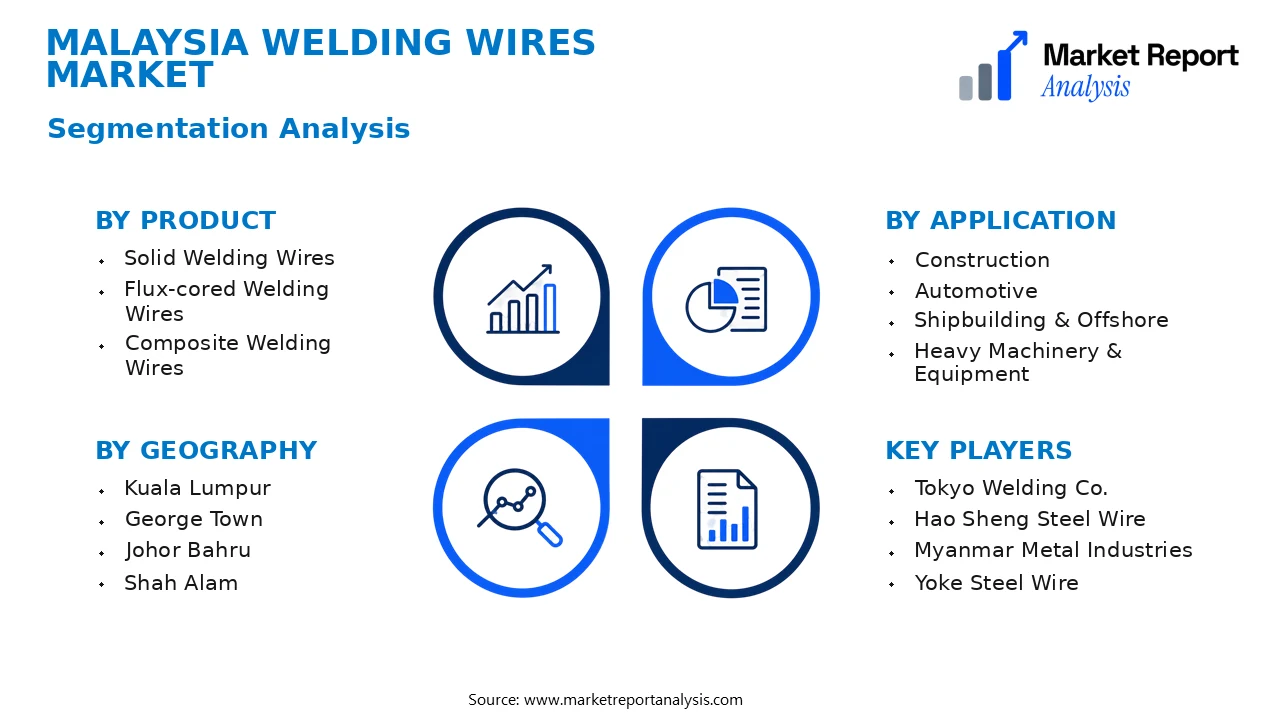
- Product
- Solid Welding Wires: These wires are primarily used in manual and automatic welding processes, characterized by their high strength and excellent weld quality. Demand is driven by manufacturing, construction, and infrastructure projects across Malaysia.
- Flux-cored Welding Wires: Favored for their versatility and ability to weld in outdoor conditions, these wires are popular in shipbuilding, offshore, and heavy fabrication sectors, reflecting growing need for robust welding solutions in these industries.
- Composite Welding Wires: Incorporating advanced materials for improved performance, these wires are increasingly adopted in high-tech manufacturing and aerospace sectors, signifying a niche yet rapidly expanding segment within Malaysia’s welding industry.
- Application
- Construction: This segment dominates the Malaysian welding wires market, fueled by ongoing urban development, infrastructure projects, and the growth of commercial and residential buildings requiring reliable welding supplies.
- Automotive: Automotive manufacturing and repair industries represent a significant portion of demand for welding wires, driven by Malaysia’s growing automotive sector and the need for high-quality, durable welds.
- Shipbuilding & Offshore: This niche segment relies heavily on flux-cored wires that withstand harsh marine environments, supported by Malaysia's expanding maritime activities and offshore industry investments.
- Heavy Machinery & Equipment: Industries involved in construction machinery, mining, and power generation in Malaysia seek high-performance wires for critical welds, bolstering demand in this sector.
- Technology
- GMAW (Gas Metal Arc Welding): Widely adopted for its efficiency and versatility, GMAW remains the dominant technology in Malaysia for various industrial applications, including construction, automotive, and manufacturing sectors.
- FCAW (Flux-Cored Arc Welding): Increasingly popular due to its portability and suitability for outdoor and heavy-duty applications, driving growth in sectors such as shipbuilding and infrastructure development.
- SAW (Submerged Arc Welding): Utilized mainly in large-scale, high-precision projects like steel construction and shipbuilding, this technology caters to specialized segments within Malaysia’s welding industry.
- Geography
- Kuala Lumpur: As Malaysia’s commercial hub, Kuala Lumpur exhibits high demand for welding wires driven by extensive construction, infrastructure projects, and the presence of manufacturing industries.
- George Town: This industrial city on Penang Island has a robust manufacturing sector, especially in electronics and automotive components, fostering demand for specialized welding wires.
- Johor Bahru: With its strategic location near Singapore and a thriving industrial zone, Johor Bahru hosts numerous manufacturing plants, expanding regional demand for welding supplies.
- Shah Alam: Known for its automotive and heavy machinery industries, Shah Alam is a key area for high-performance welding wires tailored for manufacturing and maintenance activities.
Competitive Intelligence
The Malaysia Welding Wires Market is characterized by moderate competition with key players such as Arc Welding Industries, WeldTech Malaysia, and FutureWeld Solutions dominating the landscape. Market concentration remains relatively balanced, with no single company holding a dominant market share, fostering a competitive environment that encourages innovation and strategic partnerships. Companies are focusing on product differentiation through R&D investments to develop high-performance, corrosion-resistant, and environmentally friendly welding wires tailored to diverse applications. Strategic alliances, including joint ventures with local distributors and technology providers, aim to expand regional reach and improve supply chain efficiency, especially in major urban centers like Kuala Lumpur, Penang, and Johor Bahru. Several firms pursue acquisitions to bolster their technological capabilities and market presence, aiming to establish comprehensive product portfolios. Expansion strategies are driven by increasing demand in automotive, construction, and manufacturing sectors, with R&D focusing on improving welding quality and process efficiency. Competitive differentiation hinges on product quality, innovation, and strong customer relationships, creating a dynamic landscape for sustained growth in Malaysia’s welding wires industry.
Leading Company Profiles
The Malaysia Welding Wires Market features a competitive landscape with key players focusing on innovation, quality enhancement, and strategic collaborations to strengthen their market position.
- Tokyo Welding Co.
- Hao Sheng Steel Wire
- Myanmar Metal Industries
- Yoke Steel Wire
- Leong Hoh Steel
- Nippon Steel Welding
- Hang Seng Wires
- Kyowa Welding Wire
- Jintian Group
- Jiangsu Zhangjiagang
Tokyo Welding Co.
Tokyo Welding Co. specializes in advanced welding wire solutions with a focus on high-performance and corrosion-resistant products, leveraging cutting-edge manufacturing processes to meet industrial and automotive sector demands.
Hao Sheng Steel Wire
Hao Sheng Steel Wire offers a diverse range of welding wires emphasizing durability and electrical performance, prioritizing innovation and quality control to serve construction, manufacturing, and shipbuilding markets effectively.
Myanmar Metal Industries
This company is recognized for its extensive portfolio of welding consumables, focusing on sustainable practices and cost-effective solutions aimed at expanding its footprint across Southeast Asia.
Yoke Steel Wire
Yoke Steel Wire emphasizes high-strength steel wires for arc welding, integrating automation and digital quality monitoring to adhere to international standards and improve production efficiencies.
Leong Hoh Steel
Leong Hoh Steel develops premium welding wires with a strategic focus on technological innovation and customer-centric solutions, actively engaging in R&D to meet evolving industry standards.
Nippon Steel Welding
Part of the Nippon Steel group, this division specializes in high-quality wires designed for specialized applications, including high-temperature and corrosive environments, emphasizing technological leadership and sustainability.
Hang Seng Wires
Hang Seng Wires provides comprehensive welding wire products focused on construction and infrastructure projects, with a robust distribution network and strategic alliances to enhance regional market penetration.
Kyowa Welding Wire
Kyowa Welding Wire focuses on developing environmentally friendly welding solutions and expanding its product offerings to include innovative, lightweight, and high-strength welding wires for varied industrial uses.
Jintian Group
Jintian Group is a leading manufacturer with a strong emphasis on technological innovation, expanding capacity for coated and bare welding wires to meet growing regional and global demand.
Jiangsu Zhangjiagang
Jiangsu Zhangjiagang specializes in the production of high-quality welding wires with a strategic focus on automation, sustainability, and expanding product applications into the aerospace and automotive industries.
Strategic Business Developments
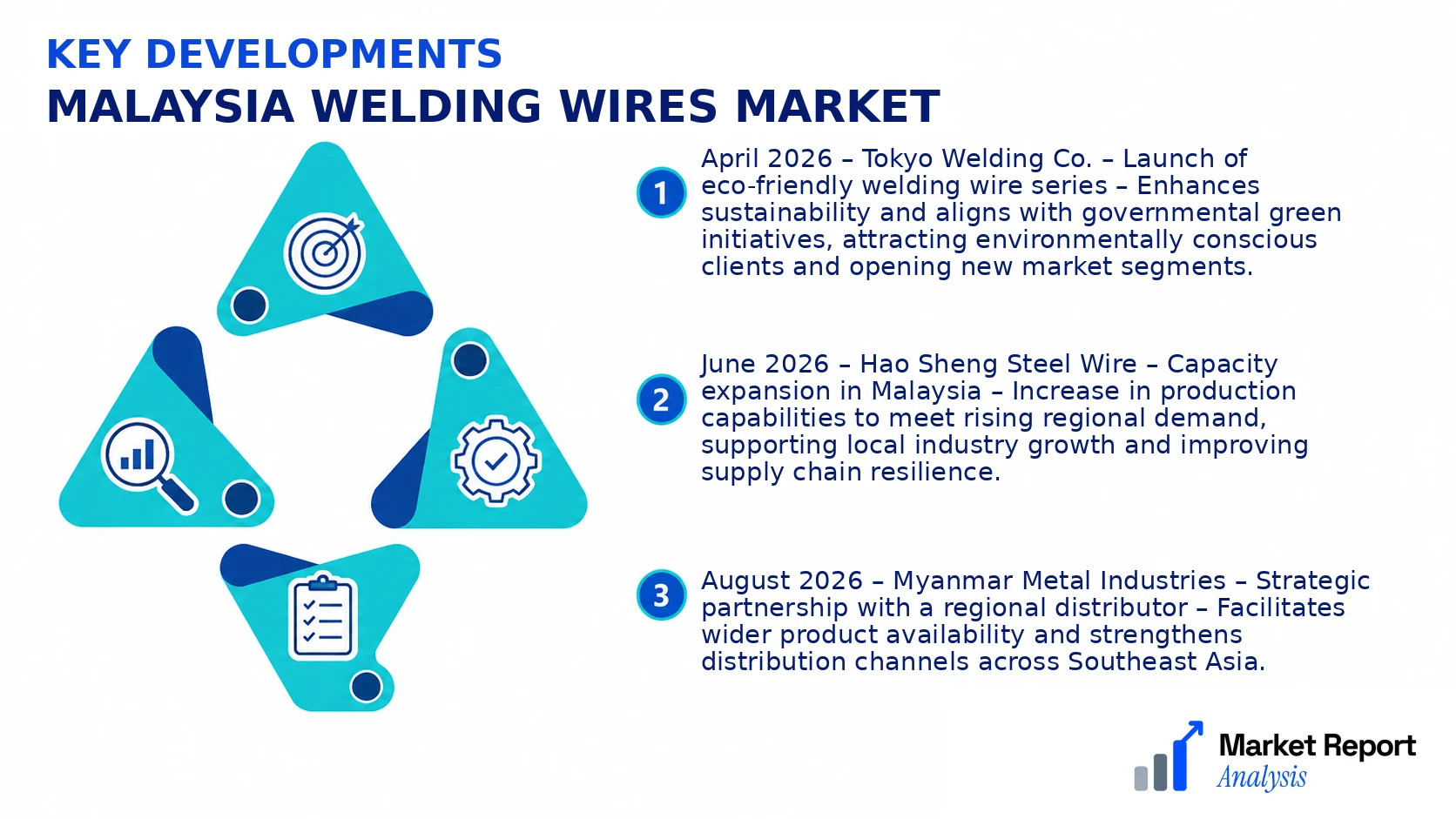
- April 2026 – Tokyo Welding Co. – Launch of eco-friendly welding wire series – Enhances sustainability and aligns with governmental green initiatives, attracting environmentally conscious clients and opening new market segments.
- June 2026 – Hao Sheng Steel Wire – Capacity expansion in Malaysia – Increase in production capabilities to meet rising regional demand, supporting local industry growth and improving supply chain resilience.
- August 2026 – Myanmar Metal Industries – Strategic partnership with a regional distributor – Facilitates wider product availability and strengthens distribution channels across Southeast Asia.
- October 2026 – Yoke Steel Wire – Introduction of digital manufacturing technology – Improves product quality, reduces waste, and enhances operational efficiency, positioning the company as an industry innovator.
- January 2027 – Leong Hoh Steel – Acquisition of a small regional competitor – Expands market share, broadens product portfolio, and consolidates competitive position within Malaysia and neighboring markets.
Frequently Asked Questions
What is the Malaysia Welding Wires Market?
The Malaysia Welding Wires Market encompasses the demand and supply dynamics of welding wire products used across various industrial applications, including construction, automotive, and manufacturing sectors within Malaysia. It reflects industry trends, technological advancements, and regional economic growth.
What is the current market size of Malaysia Welding Wires Market?
As of 2026, the Malaysia Welding Wires Market is valued at approximately USD 1.2 Billion, driven by rising industrial activities and infrastructure development. This valuation indicates steady growth aligned with Malaysia’s expanding manufacturing sector and increasing adoption of welding technologies.
What factors are driving the Malaysia Welding Wires Market?
Key drivers include rapid industrialization, infrastructure projects, automation in manufacturing, and a rising automotive and construction industry. Technological innovations, such as low spatter and high strength wires, also enhance market growth by improving welding quality and efficiency.
Which region dominates the Malaysia Welding Wires Market?
Peninsular Malaysia, particularly the Klang Valley region, dominates the market due to its dense industrial activities, extensive infrastructure projects, and concentration of manufacturing units. Development in East Malaysia remains steady but less significant compared to the western region.
Which segment is expected to grow the fastest?
The flux-cored welding wires segment is projected to experience the fastest growth from 2026 to 2034. Its advantages in high productivity, adaptability to automated processes, and suitability for surfacing and repair work fuel this segment’s rapid expansion.
Who are the leading companies operating in the Malaysia Welding Wires Market?
Major players include Lincoln Electric, ESAB, and Bohler Welding, along with regional manufacturers focused on high-quality and innovative welding wire products. These companies leverage advanced production technologies and local distribution networks to capture market share.
Analyst Perspective
The Malaysia Welding Wires Market exhibits a maturity that suggests steady pipeline growth, driven by evolving industrial automation and an increasing focus on infrastructure projects across Southeast Asia. Long-term prospects are promising, with technological advancements around higher-strength and corrosion-resistant wires expected to redefine industry standards. Investment priorities should focus on innovative alloy development and sustainability initiatives, aligning with Malaysia's push toward environmentally friendly manufacturing practices. Competitive intensity remains high, with key players expanding their regional footprint through strategic alliances and capacity expansions. Regionally, industrial hubs such as Penang, Johor, and Kuala Lumpur are emerging as focal points for large-scale welding wire adoption, benefiting from robust manufacturing and automotive sectors. For strategic positioning, companies should prioritize localized R&D, leverage digital supply chains, and target urban centers for deployment. Overall, Malaysia’s market holds substantial growth potential, especially where city-level development fuels demand for advanced welding solutions, making it an attractive landscape for future investments.
