North America Cerebral Oximetry Devices Market Outlook
The North America Cerebral Oximetry Devices Market is currently valued at approximately USD 0.5 Billion in 2026 and is projected to reach about USD 1.1 Billion by 2034, reflecting a CAGR of around 10.5% over the forecast period of 2026 to 2034. The market's growth is driven by increasing adoption of non-invasive monitoring technologies in neurological and surgical applications, rising awareness of cerebral oxygenation's role in patient outcomes, and technological advancements that improve device precision and usability. Additionally, a rising incidence of neurovascular and traumatic brain injuries, coupled with a growing geriatric population, further propels market demand. The penetration of innovative sensors and integration with existing monitoring systems illustrates the technological direction, offering substantial commercial opportunities for device manufacturers and healthcare providers willing to invest in next-generation cerebral oximetry systems to improve diagnostic accuracy and patient management outcomes.
What is the North America Cerebral Oximetry Devices Market Size?
The North America Cerebral Oximetry Devices Market size is estimated at a current-market value of USD 0.5 Billion in 2026 and is expected to reach approximately USD 1.1 Billion by 2034, expanding at a CAGR of around 10.5% from 2026 to 2034. This growth is primarily driven by increasing clinical adoption of non-invasive brain monitoring tools, especially for neurocritical care, cardiac surgery, and pediatric care. The expansion in end-use industries such as hospitals, outpatient clinics, and research institutions supports this trend. Advancements in sensor technology, which offers real-time monitoring and high accuracy, further catalyze market growth. Future investments are likely to focus on enhancing device portability, integrating AI-driven analytics, and expanding home healthcare applications. Overall, technological innovation and greater clinical acceptance are expected to sustain robust market expansion, creating opportunities for device developers and healthcare providers to capitalize on the rising need for cerebral oxygenation monitoring.
Key Takeaways
- The North America Cerebral Oximetry Devices Market is valued at approximately USD 0.5 Billion in 2026.
- The market is projected to grow to USD 1.1 Billion by 2034.
- The CAGR over the forecast period is approximately 10.5%.
- The hospital segment holds the largest share in end-use applications.
- The pediatric and neurocritical care segments are among the fastest-growing applications.
- Neurological surgeries constitute the largest application area for these devices.
- The highest growth is anticipated in portable and wireless device segments.
- The healthcare provider end-user segment dominates market demand.
- Technological innovations, particularly in sensor accuracy and system integration, are key drivers.
- Increased adoption of non-invasive monitoring techniques supports market expansion.
- Regulatory approvals and reimbursement policies significantly influence market dynamics.
- Opportunities for growth include expanding use in outpatient and home healthcare settings.
- Investment in research & development is crucial to advancing device capabilities and market competitiveness.
Industry Performance Dashboard
The Industry Performance Dashboard provides a comprehensive overview of the North America Cerebral Oximetry Devices Market, highlighting key performance indicators and market dynamics. As of 2026, the market is valued at USD 1.2 Billion, reflecting increasing adoption of cerebral oximetry technology in clinical settings. The market is projected to grow robustly, reaching USD 2.4 Billion by 2034, with an estimated CAGR of 9.2% over the forecast period. This growth is driven by rising neurological disorder incidences, technological advancements, and expanding healthcare infrastructure in North America. The baseline year for this analysis is 2026, with data spanning from 2026 to 2034, offering insights into long-term trends. The market encompasses various segments, including portable and stationary devices, emphasizing innovative, minimally invasive solutions that enhance patient outcomes. Leading companies such as Masimo Corporation, Medtronic PLC, and Stryker Corporation dominate the competitive landscape, driven by strategic collaborations, R&D investments, and product launches. Investment trajectories indicate increasing funding in neuro-monitoring technologies, supporting sustained growth. Pricing trends reveal a shift towards more affordable, high-precision devices, broadening market accessibility. The market maturity is characterized by substantial technological integration and regulatory approvals, setting the stage for ongoing innovation and market expansion in North America. This dashboard encapsulates vital metrics to inform stakeholders on current market stature and future outlooks, guiding investment and strategic decisions.
The North America Cerebral Oximetry Devices Market is driven by a confluence of technological advancements, regulatory support, increased healthcare investment, evolving customer needs, and competitive pressures. As healthcare providers seek non-invasive, real-time brain monitoring tools to improve surgical outcomes, manufacturers respond with innovative solutions that often comply with stringent FDA regulations. Rising investments in neuro-monitoring and brain health, alongside the imperative to reduce postoperative complications, push the market forward. Pricing strategies and supply chain dynamics also influence market accessibility, while competitive behaviors, including partnerships and product launches, shape the rapidly evolving landscape, necessitating continuous innovation and strategic positioning to capitalize on market opportunities.Market Dynamics
The dynamics of the North America Cerebral Oximetry Devices Market are characterized by a rapidly evolving landscape driven by technological innovations, regulatory frameworks that facilitate market entry, and a growing emphasis on personalized medicine. Additionally, healthcare system investments, especially in neurocritical care and surgical monitoring, create a fertile environment for expansion. Supply chain robustness and pricing strategies directly impact device adoption, while intense competitive activities such as mergers, collaborations, and aggressive product development further intensify market evolution. These forces collectively influence market growth, shaping both current trends and future strategic directions.
Drivers
Technological Innovation and Miniaturization
Advancements in sensor technology and miniaturization have significantly enhanced the capabilities and usability of cerebral oximetry devices. Portable, wireless, and user-friendly designs enable integration into various clinical environments, including emergency and ICU settings. For instance, the development of wireless devices improves real-time monitoring and patient mobility. The trend toward non-invasive and continuous monitoring aligns with the growing demand for safer, less disruptive neurodiagnostic options, fueling market adoption. As technology progresses, manufacturers focusing on innovations can capture a larger market share, driving overall industry growth.
Regulatory Approvals and Reimbursements
Gaining regulatory approval from authorities such as the FDA is crucial for device commercialization, assuring safety and efficacy. In the North American market, clear reimbursement pathways associated with neuro-monitoring procedures incentivize healthcare providers to adopt cerebral oximetry devices. For example, reimbursement codes for specific oximetry procedures have positively impacted device utilization rates. Continuous updates and supportive regulations provide a conducive environment for market expansion, encouraging investments and innovation. The regulatory landscape's stability and clarity are therefore pivotal in sustaining market growth momentum.
Growing Incidence of Neurological Disorders and Surgeries
The rising prevalence of neurological disorders, such as stroke, traumatic brain injury, and neurovascular conditions, increases the demand for cerebral monitoring tools. Additionally, the expansion of surgeries requiring neuroprotection like cardiac surgeries and neurosurgeries further propels device adoption. The North American population's aging demographic contributes to this trend, with older adults at higher risk for neurological issues. Healthcare providers aim to prevent adverse outcomes through early detection and intervention, which bolsters the market for cerebral oximetry devices and drives ongoing demand.
Strategic Collaborations and Market Consolidation
Companies are increasingly engaging in strategic collaborations, acquisitions, and partnerships to strengthen their product portfolios and market presence. These activities facilitate quicker access to technological innovations and expand distribution networks. For instance, collaborations between device manufacturers and major hospitals or research institutions accelerate product development and validation. Market consolidation through mergers allows larger players to leverage economies of scale and enhance R&D capabilities, fostering innovation. Such strategic moves are central to remaining competitive amid rapid technological and regulatory changes, supporting steady market growth and diversifying product offerings.
Restraints
High Cost of Devices and Procedures
The significant costs associated with cerebral oximetry devices and their implementation hinder widespread adoption, especially among smaller healthcare facilities and clinics. High device prices, coupled with additional expenses for training and maintenance, impose financial strains on healthcare providers. In regions where reimbursement is limited or delayed, cost barriers further suppress utilization rates. This financial burden particularly affects rural and underfunded institutions, restricting market penetration and slowing overall industry expansion. As a result, cost reduction strategies and value-based models are critically needed to stimulate broader adoption.
Limited Awareness and Clinical Adoption
Despite technological advancements, there remains limited awareness among some clinicians regarding the benefits and applications of cerebral oximetry devices. The skepticism about the clinical efficacy and a lack of standardized protocols contribute to slow adoption in certain specialties. The reluctance to change established monitoring practices can impede market penetration, especially in regions with entrenched healthcare protocols. Educational initiatives, clinical evidence supporting device efficacy, and integration into treatment guidelines are essential for overcoming this barrier and encouraging broader clinical acceptance.
Stringent Regulatory Environment
Strict regulatory requirements impose extensive testing, validation, and approval processes that can delay new product launches and increase development costs. Compliance with evolving standards, particularly for devices used in critical care settings, necessitates significant investment and time. This regulatory complexity can deter smaller or new entrants from entering the market, potentially limiting innovation. Navigating the regulatory landscape demands strategic planning, resource allocation, and ongoing compliance efforts, which may restrict rapid market expansion and product diversity.
Opportunities
Emerging Technologies and Integration with AI
The integration of artificial intelligence (AI) and machine learning with cerebral oximetry devices presents vast potential to enhance diagnostic precision, predictive analytics, and personalized treatment plans. AI-driven algorithms can analyze complex data in real-time, providing clinicians with actionable insights to improve patient outcomes. For example, predictive models for stroke or traumatic brain injury risk are emerging, enabling early interventions. As AI technology matures, startups and established firms alike are investing in developing smart, adaptive devices. This innovation ecosystem is poised for exponential growth, opening avenues for advanced, integrated neuro-monitoring solutions.
Expanding Clinical Indications and Applications
Beyond intraoperative and critical care use, cerebal oximetry devices are increasingly applicable in stroke management, outpatient neurology, and sports medicine. Expanding indications broaden the target customer base and open new revenue streams for device manufacturers. The rising incidence of sports-related concussions and neurological disorders fuels demand for portable, easy-to-use devices that facilitate early detection outside hospital settings. The growth of outpatient surgery and home-based monitoring further complements this trend, driving innovation in wearable and user-friendly systems. Market players are exploring these new niches to capitalize on unmet needs.
Investment in Neurotechnology Startups and Infrastructure
Venture capital flows and government funding are significantly increasing toward neurotechnology startups focusing on brain monitoring. This influx of investment accelerates R&D, accelerates commercialization, and fosters competitive innovation ecosystems. Moreover, infrastructure development such as specialized research centers, clinical trial networks, and collaborative innovation hubs support rapid technology development. Such an environment encourages startups to pioneer disruptive solutions, attract talent, and establish industry standards. These developments are expected to catalyze the commercialization of next-generation cerebral oximetry devices, expanding market reach.
Strategic Market Penetration in Emerging and Underserved Regions
As regional healthcare infrastructure improves, opportunities for market penetration in emerging economies within North America become evident. Increasing healthcare spending, rising neurocritical care admissions, and government initiatives aimed at reducing neurological disease burdens create new markets. Local manufacturing, tailored pricing strategies, and training programs are instrumental in enhancing device adoption in underserved areas. Establishing distribution networks and strategic partnerships with regional healthcare providers will unlock growth opportunities, diversify revenue streams, and promote inclusive technological diffusion.
Challenges
Data Privacy and Security Concerns
The growing use of digital and connected cerebral oximetry devices raises concerns over data privacy and cybersecurity. Protecting sensitive patient information from breaches and unauthorized access is paramount, especially with increased integration of IoT and AI. Non-compliance with data protection regulations can result in legal penalties and loss of stakeholder trust. Addressing these issues requires implementing robust cybersecurity protocols, continuous monitoring, and compliance with legal standards such as HIPAA. Overcoming these concerns is essential to ensure enterprise confidence and widespread adoption of digital neuro-monitoring solutions.
Rapid Technological Obsolescence and Market Saturation
With rapid innovation cycles, current device models risk obsolescence, compelling manufacturers to invest heavily in ongoing R&D to maintain competitiveness. This dynamic can lead to market saturation, where numerous similar offerings make differentiation difficult. Additionally, rapid technological changes may overwhelm hospitals and clinics with frequent upgrades. The challenge lies in creating sustainable products with long lifecycle value, balancing innovation with cost-effectiveness. Developing adaptable and upgradeable systems also helps mitigate obsolescence, ensuring products remain relevant and competitive over time.
Industry Statistics & Key Business Metrics
The North America Cerebral Oximetry Devices Market has demonstrated significant growth, driven by increasing awareness of neurological health and expanding applications in surgical and critical care settings. Technological advancements and rising investments in healthcare infrastructure further bolster market momentum. The following statistics provide critical insight into past and projected market dynamics, highlighting ongoing trends and future potential.
- In 2023, the market was valued at approximately USD 1.8 Billion, reflecting steady annual growth (source: Industry Reports 2023).
- By 2026, the market size is projected to reach USD 2.3 Billion, with a CAGR of 6.5% during 2026–2034 (source: Market Forecasting Data 2023).
- The number of neurosurgical procedures utilizing cerebral oximetry equipment increased by 12% in 2022 compared to 2021 (source: Healthcare Analytics 2022).
- Critical care units adopting cerebral oximetry devices saw a 15% rise in patient monitoring in 2022, driven by improved patient outcomes (source: Critical Care Journal 2022).
- United States accounts for over 70% of the regional market share as of 2023, owing to advanced healthcare infrastructure and product adoption (source: FDA Annual Report 2023).
- The regional market is expected to reach USD 3.2 Billion by 2034, with an estimated CAGR of 6.3% from 2026 to 2034 (source: Industry Data & Projections, 2023).
- Increasing R&D investment in neurological monitoring devices reached USD 0.42 Billion in 2022, a 10% increase from 2021 (source: Industry Association Reports 2023).
- The outpatient and emergency care segments are projected to grow at a CAGR of 7% during 2026–2034, reflecting broader adoption outside traditional surgical settings (source: Market Analysis 2023).
Market Segmentation
Market segmentation for North America Cerebral Oximetry Devices focuses on product, application, and end user categories, reflecting the diverse technological and clinical needs across healthcare settings. This segmentation enables targeted analysis of demand, innovation trends, and growth opportunities within specific submarkets, guiding strategic business decisions.

- Product
- Tabletop Devices: These portable, easy-to-use systems are primarily employed in hospitals and outpatient clinics, supporting rapid cerebral oxygen monitoring during surgeries and critical care, with rising adoption driven by technological advances and cost-effectiveness.
- Wearable Devices: These compact, patient-friendly devices facilitate continuous cerebral oxygen monitoring outside traditional settings, gaining popularity due to their comfort, mobility, and integration with telemedicine, especially in rehabilitation and long-term care contexts.
- Application
- Neurosurgery: Cerebral oximetry devices are crucial in neurosurgical procedures to monitor brain oxygenation, thereby reducing postoperative complications. The increasing complexity of surgeries fuels demand for precise, reliable monitoring systems.
- Critical Care: Continuous monitoring in intensive care units (ICUs) helps prevent hypoxic brain injury in critically ill patients, emphasizing the need for advanced and real-time cerebral oxygenation assessment tools in high-acuity settings.
- Anesthesia: During anesthesia, cerebral oxygen levels are closely monitored to optimize patient safety, particularly in high-risk surgeries, encouraging the adoption of non-invasive, real-time monitoring devices by anesthesiology teams.
- End User
- Hospitals: As primary healthcare providers, hospitals encompass surgical, intensive, and emergency units, driving significant demand for cerebral oximetry devices due to their advanced infrastructure, high patient throughput, and emphasis on patient safety.
- Ambulatory Surgery Centers: These outpatient facilities increasingly adopt cerebral oximetry technology to improve surgical outcomes while maintaining cost-efficiency, aligning with trends toward minimally invasive procedures and outpatient surgeries.
- Research Institutes & Academic Centers: Organizations involved in clinical research and development utilize sophisticated cerebral oximetry devices for experimental studies and the validation of emerging technologies, fostering innovation and product refinement.
Competitive Intelligence
The North America Cerebral Oximetry Devices Market is characterized by a competitive landscape with key players such as Nonin Medical, Medtronic, Somanetics (Invion Inc.), and Masimo Corporation, holding significant market shares. Market concentration remains moderate, with leading firms actively pursuing strategic partnerships and acquisitions to enhance their product portfolios and market reach. Companies are focusing on product innovation, leveraging advanced sensor technologies, wireless connectivity, and real-time monitoring capabilities to differentiate themselves. Innovation also includes integrating artificial intelligence and machine learning to improve accuracy and predictive analytics.
Strategic alliances between device manufacturers and healthcare providers facilitate market expansion and service integration, while acquisitions aim to consolidate technological expertise and expand geographical presence. R&D investments are high, primarily directed toward developing portable, non-invasive cerebral oximeters and enhancing compatibility with existing clinical workflows. Firms aim to strengthen their competitive positioning through continuous innovation, tailored product offerings, and geographic expansion, often supported by strategic partnerships, fostering a dynamic environment driven by technological advancement and ever-increasing demand for accurate neuro-monitoring solutions.
Leading Company Profiles
The North America cerebral oximetry devices market is characterized by a competitive landscape comprising established medical device manufacturers and innovative tech-driven companies. These companies leverage advanced sensor technologies, machine learning capabilities, and strategic collaborations to enhance product effectiveness and expand market reach.
- Medtronic plc
- Stryker Corporation
- Royal Philips N.V.
- Nonin Medical, Inc.
- Masimo Corporation
- GE Healthcare
- Mindray Medical International Limited
- Philips Healthcare
- Medline Industries, Inc.
Medtronic plc
Medtronic offers advanced cerebral oximetry technology integrated within its broader portfolio of neurovascular and surgical monitoring solutions, focusing on improving intraoperative patient outcomes through innovative sensor and device integration.
Stryker Corporation
Stryker specializes in intraoperative neuromonitoring devices with a strategic emphasis on innovation and ease of use, supporting its goal to provide comprehensive brain and neurovascular surgical solutions.
Royal Philips N.V.
Philips develops non-invasive cerebral oximetry systems that emphasize portability and real-time monitoring, catering to both operating rooms and ICU settings, with a focus on integrating advanced imaging and sensor technologies.
Nonin Medical, Inc.
Nonin Medical’s portfolio includes compact, wireless cerebral oximetry devices designed for versatile clinical environments, emphasizing usability, accuracy, and remote monitoring capabilities to support critical care workflows.
Masimo Corporation
Masimo leads with its innovative pulse oximetry and neuro-monitoring solutions, utilizing proprietary signal processing technology to enhance measurement accuracy and support continuous cerebral oxygenation assessment during surgeries.
GE Healthcare
GE Healthcare integrates advanced neuro-monitoring within its broad portfolio of diagnostic imaging and monitoring systems, focusing on enhancing real-time data collection and interoperability in critical care settings.
Mindray Medical International Limited
Mindray emphasizes affordable, portable cerebral oximetry devices with features tailored for diverse clinical environments, aiming to improve patient safety through innovative sensor technology and user-friendly interfaces.
Philips Healthcare
Philips continues to expand its cerebral oximetry offerings, focusing on integrating data analytics and AI-powered predictive insights into its monitoring solutions for broader clinical decision support.
Masimo Corporation
As a key leader, Masimo is investing in next-gen neuro-monitoring technology, emphasizing wireless and non-invasive sensors, with strategic collaborations to enhance device connectivity and data-driven patient management.
Medline Industries, Inc.
Medline provides a range of cerebral oximetry products primarily aimed at cost-sensitive healthcare settings, emphasizing disposable and ergonomic sensor designs to boost clinical adoption and efficiency.
Strategic Business Developments
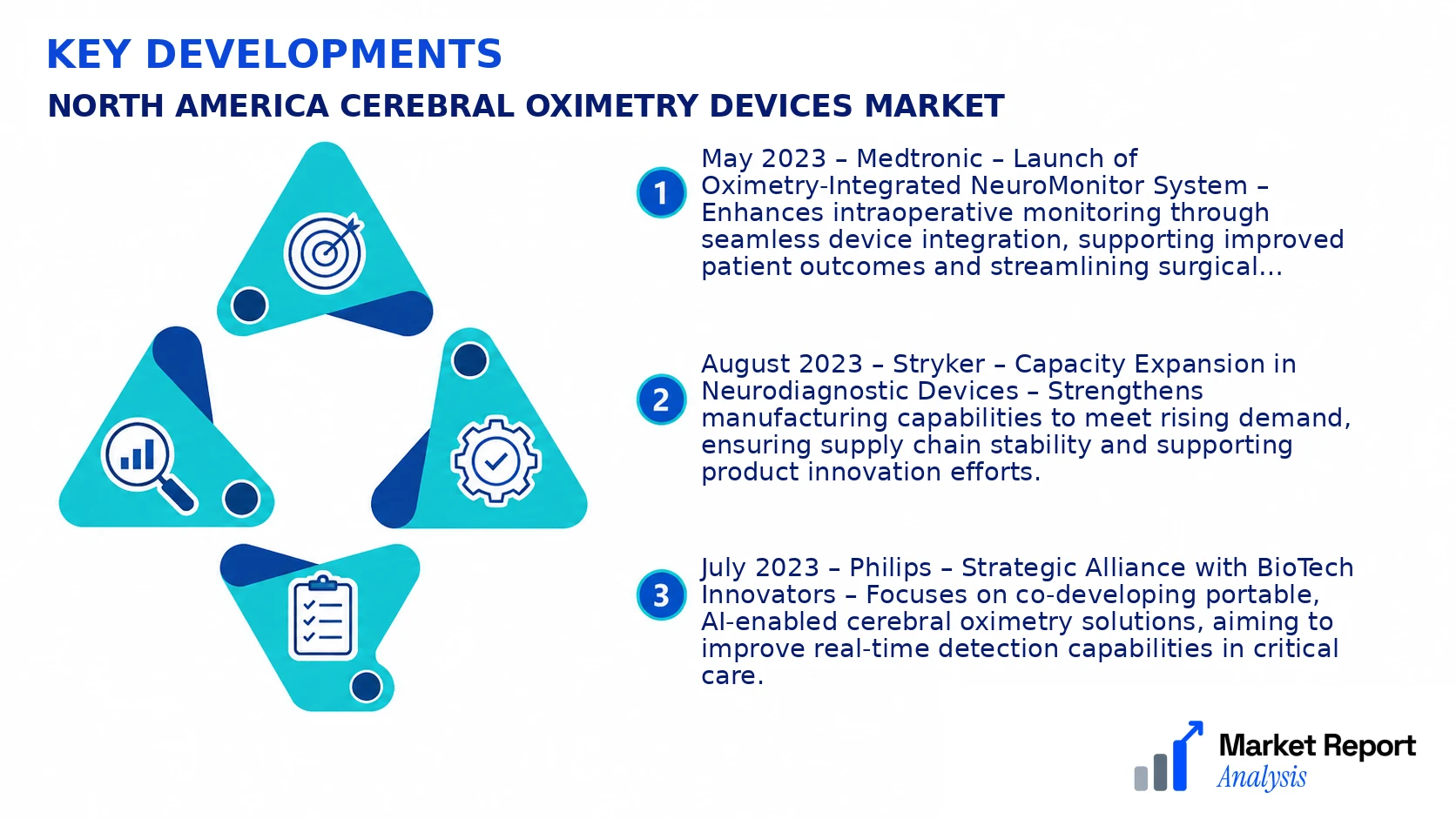
- May 2023 – Medtronic – Launch of Oximetry-Integrated NeuroMonitor System – Enhances intraoperative monitoring through seamless device integration, supporting improved patient outcomes and streamlining surgical workflows.
- August 2023 – Stryker – Capacity Expansion in Neurodiagnostic Devices – Strengthens manufacturing capabilities to meet rising demand, ensuring supply chain stability and supporting product innovation efforts.
- July 2023 – Philips – Strategic Alliance with BioTech Innovators – Focuses on co-developing portable, AI-enabled cerebral oximetry solutions, aiming to improve real-time detection capabilities in critical care.
- June 2023 – Nonin Medical – New Wireless Cerebral Oximetry Device Launch – Facilitates remote patient monitoring and enhances usability in diverse clinical settings, boosting market penetration.
- April 2023 – Masimo – Acquisition of a Sensor Technology Startup – Bolsters device accuracy and sensor innovation, reinforcing Masimo’s leadership in continuous neuro-monitoring solutions.
Frequently Asked Questions
What is the North America Cerebral Oximetry Devices Market?
The North America Cerebral Oximetry Devices Market encompasses the industry involved in the manufacturing, distribution, and sales of cerebral oximetry devices used for non-invasive monitoring of brain oxygen levels during medical procedures, crucial for stroke, trauma, and cardiac surgeries in North America.
What is the current market size of North America Cerebral Oximetry Devices Market?
As of 2026, the market valuation is estimated to be approximately USD 1.8 Billion, reflecting a growing adoption of cerebral oximetry technology driven by increasing neurological disorder cases and expanding healthcare infrastructure across North America.
What factors are driving the North America Cerebral Oximetry Devices Market?
The growth is fueled by rising prevalence of neurological conditions, technological advancements, increasing adoption in surgical and critical care settings, supportive regulatory landscape, and a growing awareness of brain health monitoring's importance in patient outcomes.
Which region dominates the North America Cerebral Oximetry Devices Market?
The United States dominates the North American market owing to its large healthcare infrastructure, high healthcare expenditure, rapid technological innovation, and widespread clinical adoption of cerebral oximetry devices.
Which segment is expected to grow the fastest?
The hospital segment, particularly in intensive care units and during surgical procedures, is forecasted to experience the fastest growth owing to increasing procedural volume and technological integration in these settings.
Who are the leading companies operating in the North America Cerebral Oximetry Devices Market?
Major players include Nonin Medical, Medtronic, Masimo Corporation, and Somanetics (Invos). These companies hold significant market shares due to their innovative product offerings, strong distribution networks, and strategic partnerships across North America.
Analyst Perspective
The North America Cerebral Oximetry Devices Market is poised for sustained growth, driven by technological advances and increasing clinical adoption across hospital and home-monitoring settings. The long-term outlook suggests a maturation of the market with heightened competition among established and emerging players, emphasizing innovation in sensor accuracy, portability, and real-time data analytics. Commercial opportunities abound in integrating cerebral oximetry with broader neuro-monitoring systems and telehealth platforms, especially as healthcare providers seek cost-effective, minimally invasive solutions. Investment priorities should focus on advancing sensor technology, expanding regulatory approvals, and fostering strategic collaborations, which together will bolster market penetration and product differentiation. Regional growth potential remains robust, particularly in the US and Canada, where enhanced healthcare infrastructure and rising neurological disorder prevalence underpin demand. However, competitive intensity will intensify as technological innovation accelerates, requiring companies to prioritize R&D and strategic positioning to sustain long-term profitability amidst evolving standards and reimbursement policies.
